

Begleiten Sie uns auf eine literarische Weltreise!
Buch zum Bücherregal hinzufügen
Grey
Einen neuen Kommentar schreiben Default profile 50px
Grey
Jetzt das ganze Buch im Abo oder die ersten Seiten gratis lesen!
All characters reduced
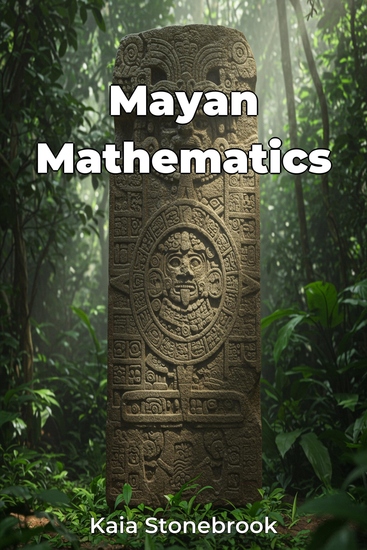
Mayan Mathematics - cover

Mayan Mathematics

Kaia Stonebrook

Übersetzer A AI

Verlag: Publifye

  • 0
  • 0
  • 0

Beschreibung

Mayan Mathematics explores the remarkable intellectual achievements of the Maya civilization, focusing on their sophisticated number system, calendrical computations, and astronomical observations. The Maya, despite lacking advanced technology, developed the concept of zero and charted celestial movements with incredible precision. Their mathematical system was deeply intertwined with their society, influencing everything from religious beliefs and ritual practices to agricultural planning and political power. The book reveals how the Maya used a base-20 (vigesimal) system and two calendars, the Haab (365-day solar) and the Tzolkin (260-day sacred), which combined to form the Calendar Round. It examines their tracking of the Sun, Moon, and Venus, demonstrating how these observations informed their cosmology. By analyzing inscriptions, archaeological findings, and colonial-era texts, the book reconstructs Mayan mathematical thought.

 
The book begins with Mayan numerals and calendars, then moves to astronomical observations and their connection to Mayan cosmology. It concludes by exploring the legacy of Mayan mathematics and its influence on other Mesoamerican cultures. This approach makes complex concepts accessible, highlighting the Maya's unique contribution to the history of science and challenging Eurocentric views of intellectual development.
Verfügbar seit: 29.03.2025.
Drucklänge: 62 Seiten.

Weitere Bücher, die Sie mögen werden

  • Quieting the Mind - Deep Sleep Affirmations for ADHD - cover

    Quieting the Mind - Deep Sleep...

    Whisper Mind

    • 0
    • 0
    • 0
    Your mind is racing. The day felt loud, busy, and heavy. You’ve tried to relax, but your thoughts keep jumping from one thing to the next. 
    This audiobook is your gentle doorway into peace. From the moment you press play, a calm voice will guide you into stillness—without asking you to force your mind to be quiet. You’ll simply be led, step by step, into a space where your body feels lighter, your breath feels softer, and your thoughts begin to slow all on their own. 
    With comforting imagery, easy breathing cues, and affirmations created especially for restless minds, you’ll discover that you don’t need perfect silence or an empty head to drift into sleep—you just need the right kind of gentle guidance. 
    By the end, you won’t be fighting for sleep. You’ll simply be floating toward it. 
    If you’ve ever wished for a bedtime that felt effortless, safe, and warm—this is it. 
    Press play. Let go. And let the night carry you.
    Zum Buch
  • Chinese Mythology - A Comprehensive Guide to Chinese Mythology including Myths Art Religion and Culture - cover

    Chinese Mythology - A...

    Historical Publishing

    • 0
    • 0
    • 0
    Do you want to learn about the Chinese Mythology? 
    The writing оf mythological tаlеѕ bеgаn in the Wei аnd Jin Dynasties (220-420), whеn vаriоuѕ writеrѕ, influеnсеd bу the аlсhеmiѕt'ѕ ideas and Tаоiѕt аnd Buddhist ѕuреrѕtitiоnѕ, wеrе intеrеѕtеd in invеnting ѕtоriеѕ аbоut gods аnd ghоѕtѕ. Sоmе оf them show thеir unusual imagination аnd mаѕtеr of thе writtеn lаnguаgе. 
    In thе middlе of thе Tаng Dynasty mаnу wеll-knоwn writers and poets bеgаn ѕtоrу writing. Their ѕtоriеѕ incorporate a widе range of ѕubjесt mаttеr and themes, rеflесting various аѕресtѕ of human nature, human rеlаtiоnѕ and social life. In fоrm they аrе not ѕhоrt nоtеѕ like the tales рrоduсеd bеfоrе thеm, but well-structured ѕtоriеѕ with intеrеѕting рlоtѕ аnd vivid characters, оftеn several thоuѕаnd words in lеngth. Amоng thеm аrе mаnу tаlеѕ whose mаin сhаrасtеrѕ аrе gоdѕ, ghоѕtѕ, оr fоxеѕ. 
    In Sоng Dуnаѕtу, mуthiсаl ѕtоriеѕ ѕhоw strong influence оf Tаng fiction, but hardly attain thе Tang lеvеl. Lаrgе роrtiоnѕ оf thе ѕеvеn thousand ѕtоriеѕ аrе аbоut gоdѕ, deities, fairies, аnd ghosts. 
    In thе Yuan, Ming аnd Qing Dynasties that fоllоwеd the bеѕt-knоwn works оf fiсtiоn were nоvеlѕ in thе vеrnасulаr, ѕuсh аѕ Rоmаnсе оf the Three Kingdоmѕ, Wаtеr Mаrgin, Pilgrimаgе to thе Wеѕt, and Drеаm оf the Rеd Chаmbеr. Here Is A Preview Of What You'll Learn... Mythology and religion Mythology and philosophyMythology emperors Major Deities Important spirits and mythological people Much,much more!
    Zum Buch
  • Improvised Explosive Device - cover

    Improvised Explosive Device

    Arji Manuelpillai

    • 0
    • 0
    • 0
    Improvised Explosive Device is a startlingly innovative exploration of extremism, hate crime and violence by poet Arji Manuelpillai. In this powerful and unsettling first collection, Manuelpillai presents a vision of the contemporary haunted by Melville's image of the whale – the terror beneath the surface of the sea. His uncompromising focus on violence is laced with gallows humour and the surreal, framed against the mundane detritus of modern life: two boys playing Mortal Kombat; a field of old trainers; the lonely glare of laptop light; a suspicious looking package in the back seat of a van.
    The poems in Improvised Explosive Device emerged through research and interviews with academics, sociologists, and former members of extremist groups and their families – from the English Defence League and the National Front to ISIS and the Tamil Tigers. These complex, unnerving texts ask a series of important questions. What drives a person to commit a radical act of violence? How is that violence mediated through screens and social media? And how does the British government police marginalised groups? Improvised Explosive Device is a brave, surprising and risk-taking book; it will change the way you look at the world.
    "Refusing glib analysis and easy answers, Improvised Explosive Device is a work of radical empathy, fuelled by honesty and compassion, both for those stirred to violence against minorities, and those who suffer from it." Rishi Dastidar
    "The project of Arji Manuelpillai's Improvised Explosive Device leans into the mighty disciplines of poetry, sociology, and reportage to formulate an arresting debut which contests the ways we're conditioned to internalise notions of terrorism, nationalism and belonging...a bold and startling new work." Anthony Anaxagorou
    Zum Buch
  • Nihilism - The Philosophy of Embracing the Void - cover

    Nihilism - The Philosophy of...

    Hector Davidson

    • 0
    • 0
    • 0
    Nihilism is often misunderstood as mere pessimism or despair, yet it is far more complex than a simple rejection of hope. At its core, nihilism is the philosophical stance that life lacks inherent meaning, purpose, or intrinsic value. This perspective challenges the foundations of morality, knowledge, and existence itself, questioning whether anything possesses objective significance. While nihilism can evoke feelings of emptiness and disillusionment, it can also serve as a liberating force, stripping away illusions and compelling individuals to forge their own meaning. 
    The term "nihilism" originates from the Latin word "nihil," meaning "nothing." Though traces of nihilistic thought can be found in ancient skepticism, it was in the 19th century that the philosophy gained prominence. Friedrich Nietzsche famously declared the "death of God," arguing that traditional religious and moral values had lost their authority. He warned that without these guiding structures, society risked falling into despair and meaninglessness. However, Nietzsche did not advocate surrendering to nihilism but instead sought a way to overcome it through the creation of new values. Russian nihilists of the same era took a different approach, rejecting societal norms and advocating for radical change, often through extreme means. Their interpretation of nihilism fueled revolutionary movements, demonstrating its potential to inspire both destruction and transformation.  
    Nihilism manifests in various forms, from existential and moral nihilism to epistemological and political nihilism. Existential nihilism is perhaps the most well-known, asserting that life has no ultimate purpose or inherent meaning. This idea has been explored by thinkers such as Jean-Paul Sartre and Albert Camus, who wrestled with the absurdity of existence.
    Zum Buch
  • Walk in confidence - cover

    Walk in confidence

    Thomas Skaria

    • 0
    • 0
    • 0
    We are thrust into a world of comparisons and competition from the time we are born. We are judged based on the colour of our skin, size & shape of our nose, eyes and other body parameters. As we grow older, our value as a person is not only assessed by our parents but also by those around us in the community. Besides, attractiveness and intelligence play a significant role in finding a place for ourselves in society. These factors lead to low self-esteem, which hinders people from achieving their full potential. In the book, Thomas Skaria explores several crucial questions, including what self-esteem is, sources of low self-esteem, signs and impact, and how to find a true basis for self-esteem.
    Zum Buch
  • Undoing Manifest Destiny - Settler America Christian Colonists and the Pursuit of Justice - cover

    Undoing Manifest Destiny -...

    L. Daniel Hawk

    • 0
    • 0
    • 0
    As White settlers spread across North America, they crafted and enacted an epic story of their God-given dominion―over the land, over Indigenous nations, and over the future. Their narrative constructed a myth of innocence that justified a massive program of violence and dispossession by suppressing a darker history. That history still reverberates today, from settler America's relations with the Indigenous nations of the United States to ways the land has been commodified as property. It's time for the whole truth to be told. 
     
    In Undoing Manifest Destiny, L. Daniel Hawk exposes the belief systems and practices that settlers developed to justify the displacement, destruction, and cultural erasure of Indigenous peoples, beginning in the early American colonial period and extending to the present day. Writing as the descendant of White settlers and as a biblical scholar, he challenges settler Christians to uncover what the settler narrative denies and to work toward addressing historic injustices. 
     
    Hawk asserts that Christians were complicit with programs of erasure, and so Christians are called to confront and heal their residue today. Joining historical research with theology and biblical scholarship, Hawk helps us recognize the myths that shape the American imagination and to engage our faith for a better way forward.
    Zum Buch
