Rejoignez-nous pour un voyage dans le monde des livres!
Ajouter ce livre à l'électronique
Grey
Ecrivez un nouveau commentaire Default profile 50px
Grey
Abonnez-vous pour lire le livre complet ou lisez les premières pages gratuitement!
All characters reduced
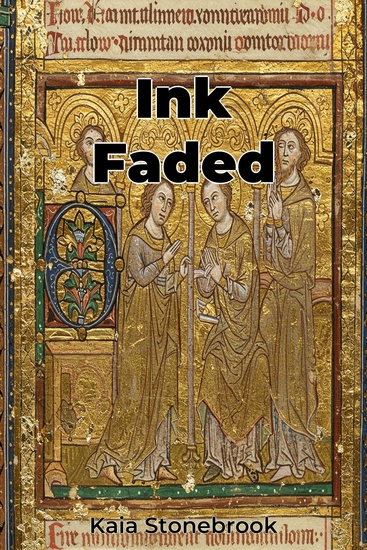
Ink Faded - cover

Ink Faded

Kaia Stonebrook

Traducteur A AI

Maison d'édition: Publifye

  • 0
  • 0
  • 0

Synopsis

"Ink Faded" explores the fascinating intersection of history and science in the context of manuscript preservation. It delves into the degradation processes affecting ancient manuscripts, revealing how environmental factors, chemical reactions, and even biological agents contribute to the decay of parchment, inks, and pigments. Understanding these decay mechanisms is crucial, as manuscripts serve as direct links to our past, containing invaluable literary, scientific, and personal narratives. 

 
The book uniquely balances the science of material degradation with the art of conservation. It showcases cutting-edge preservation techniques, from non-invasive imaging to meticulous chemical treatments, employed by conservators to stabilize and safeguard these historical artifacts. For example, did you know that spectroscopic analysis helps determine the composition of inks, aiding in targeted preservation efforts? Or that climate control plays a vital role in slowing down decay? 

 
"Ink Faded" progresses systematically, first introducing the materials of ancient manuscripts, then exploring the science of their degradation, and finally examining modern preservation techniques. By integrating materials science, chemistry, history, and conservation, the book highlights the challenges and possibilities of preserving our cultural heritage, making it an invaluable resource for historians, archivists, and anyone passionate about safeguarding our collective memory.
Disponible depuis: 03/03/2025.
Longueur d'impression: 76 pages.


D'autres livres qui pourraient vous intéresser

  • Allen Dulles: The Life of the CIA’s Most Powerful and Notorious Director - cover

    Allen Dulles: The Life of the...

    Editors Charles River

    • 0
    • 0
    • 0
    The 28-year period from 1933-1961, bracketed on one end by Hitler’s rise to power in Germany and on the other by the very height of the Cold War, was marked by a remarkably stable succession of American presidents. In fact, only three men held office in this period, and that predictability led to a general stability among government agencies. Conversely, the CIA had five different directors in its first 15 years, from 1946-1961, and then nine different directors in the next 20, with four of those directors serving less than a year. But of all the CIA’s directors, none wielded the immense influence or power of Allen Dulles, who, together with his brother, Secretary of State John Foster Dulles, became arguably the two most powerful people in the government after the president.  
    	To this day, Dulles’ eight-year tenure in that office is the longest, and as one of the country’s leading experts in international law, intelligence, and spycraft, he became renowned for his unwavering anti-communist ideology and readiness to take decisive measures to counter what he perceived as a menace to American safety. As such, it would be Dulles who sanctioned many of the CIA’s most notorious operations, including the ousting of Iran's democratically elected government in 1953, spying and experimentation on American citizens, and the disastrous Bay of Pigs. That last episode cost him his job, though he continued to play a role in American political life after President John F. Kennedy forced him out of the CIA in 1961.  
    	By then, however, Dulles had already had an outsized influence on the direction of the country, and to this day his legacy can be felt, even as his reputation continues to be a source of much debate. 
    Voir livre
  • Ludlow Massacre The: The History of the National Guard’s Attack on Striking Miners during the Colorado Coalfield War - cover

    Ludlow Massacre The: The History...

    Editors Charles River

    • 0
    • 0
    • 0
    As labor unions and movements began to form and coalesce in the 19th century, the tensions between workers and companies led to demonstrations, encounters, and even conflicts that descended into violence. Among those, few were as notorious as the fight that took place on April 20, 1914 at Ludlow in the southern Colorado coalfields, during which two units of the Colorado National Guard had a firefight with striking miners who lived in a United Mine Workers (UMW) camp. The Guardsmen had at least one machine gun, and the strikers were also armed. The gunfire lasted most of the day, and at the day’s end, the miners were routed and fled the camp with their families.  
    	Perhaps as many as a dozen miners in the camp were killed during the fighting, but after it was over, the Guardsmen cautiously entered the camp, did some looting, and then soaked the miners’ tents with kerosene in order to burn the whole camp to the ground. The Guard’s arsonists were unaware that in one tent, four women and 11 children had hidden themselves in a sort of cellar under a tent, seeking protection from the gunfire. After the camp burned, a deeply disturbing aspect of the fighting was discovered: two of those women and all 11 children had been asphyxiated from the smoke of their burning tent. 
    	These grim deaths marked Ludlow as more than just another regrettable coal war battle and earned it the title of the Ludlow Massacre. In the previous several decades, there had been a number of violent incidents during strikes in several states that killed more people, but in 1914, Victorian sentimentality about women and children was still prevalent, and the Ludlow tragedy deeply shocked the nation.
    Voir livre
  • Finding Oneself in the Other - cover

    Finding Oneself in the Other

    G. A. Cohen

    • 0
    • 0
    • 0
    This is the second of three volumes of posthumously collected writings of G. A. Cohen, who was one of the leading, and most progressive, figures in contemporary political philosophy. This volume brings together some of Cohen's most personal philosophical and nonphilosophical essays, many of them previously unpublished. Rich in first-person narration, insight, and humor, these pieces vividly demonstrate why Thomas Nagel described Cohen as a "wonderful raconteur.? The nonphilosophical highlight of the book is Cohen's remarkable account of his first trip to India, which includes unforgettable vignettes of encounters with strangers and reflections on poverty and begging. Other biographical pieces include his valedictory lecture at Oxford, in which he describes his philosophical development and offers his impressions of other philosophers, and "Isaiah's Marx, and Mine," a tribute to his mentor Isaiah Berlin. Other essays address such topics as the truth in "small-c conservatism," who can and can't condemn terrorists, and the essence of bullshit. A recurring theme is finding completion in relation to the world of other human beings. Engaging, perceptive, and empathetic, these writings reveal a more personal side of one of the most influential philosophers of our time.
    Voir livre
  • De-Integrate! - A Jewish Survival Guide for the 21st Century - cover

    De-Integrate! - A Jewish...

    Max Czollek

    • 0
    • 0
    • 0
    Max Czollek's De-Integrate! is a polemical, often humorous examination of Jewish life in contemporary Germany that speaks to the position of minorities the world over. Rooted in sociological theory, the book offers an engaging and approachable critique of Germany's much-lauded traditions of memory culture and Vergangenheitsbewältigung—its "successful" negotiation of its Nazi past. 


    Although modern Reunified Germany presents itself as having overcome historical trauma and integrated its now diverse, multicultural society, Czollek argues that this public image is merely a "Theater of Integration:" showcasing those minoritized stories to bolster Germany's positive self-image, while sidelining the true potential of the country's radical diversity. Czollek posits that today's German minorities must embrace their differences and "de-integrate" from mainstream society in order to counter the rise of rightwing nationalism. 


    On the one hand a stirring look at integration, belonging, and cultural diversity, and on the other a passionate denunciation of bigotry and virulent nationalism, De-Integrate! speaks across cultural, racial, and national divisions and points to a livelier future for all of us.
    Voir livre
  • Rome's Influence on Western Civilization - A Legacy of Empire - cover

    Rome's Influence on Western...

    Rogan Fish

    • 0
    • 0
    • 0
    The foundations of Roman culture are deeply rooted in the ancient traditions, myths, and social structures that shaped one of the most influential civilizations in history. Emerging from a small settlement on the banks of the Tiber River, Rome's development into a powerful republic and then an empire was significantly shaped by its cultural origins. The myths and legends that surrounded the birth of Rome, the establishment of the Roman Republic, and the codification of laws under the Twelve Tables all played crucial roles in shaping Roman identity and values. 
    The mythological origins of Rome are centered around the legendary figures of Romulus and Remus, twin brothers said to have been raised by a she-wolf. According to tradition, Romulus founded Rome after a violent conflict with Remus, establishing the city on April 21, 753 BCE. This foundational myth not only explained the city’s origin but also conveyed key themes of strength, resilience, and divine favor, which resonated throughout Roman culture. Other myths, such as the story of Aeneas, a Trojan hero who journeyed to Italy and became an ancestor of the Romans, linked Roman culture to the ancient and revered traditions of the Trojan War. These legends fostered a sense of pride and divine destiny among the Roman people, reinforcing their belief in their city’s exceptionalism. 
    The establishment of the Roman Republic in 509 BCE marked a turning point in Roman cultural development. Rejecting monarchy, the Romans developed a political system characterized by a complex balance of power among elected officials, the Senate, and the people. This republican model introduced concepts such as civic duty, shared governance, and public accountability, all of which became integral to Roman identity. The Republic’s values shaped the cultural ethos of Rome, emphasizing the importance of law, duty, and loyalty to the state.
    Voir livre
  • British Traitors - Betrayal and Treachery in the Twentieth Century - cover

    British Traitors - Betrayal and...

    Gordon Kerr

    • 0
    • 0
    • 0
    Capital punishment was abolished for murder in Great Britain in 1969, but remained as the punishment for high treason until as recently as 1998, demonstrating how seriously we take the crime of betraying your country. But even with the threat of the noose hanging over them, many still chose the path of treachery during the cataclysmic events of last century. 
     
    British Traitors examines the lives and motivations of a number of the perpetrators of this most heinous of crimes, following the footsteps of Fascist traitors such as William Joyce (Lord Haw-Haw) and John Amery to the gallows, investigating what drove men such as Wilfred Macartney and John Herbert King to betray their country during the war to end all wars and delving into the mysterious web of espionage and subterfuge surrounding the Cambridge Spy Ring that spied for the Soviet Union from the nineteen-thirties until the early nineteen-fifties. 
     
    People commit treason for many reasons - some seek adventure, some seek reward, some are motivated by political philosophy, while others are sucked into it by their own foolishness. British Traitors provides a fascinating look at the lives and impulses of those who chose to betray their country.
    Voir livre