Join us on a literary world trip!
Add this book to bookshelf
Grey
Write a new comment Default profile 50px
Grey
Subscribe to read the full book or read the first pages for free!
All characters reduced
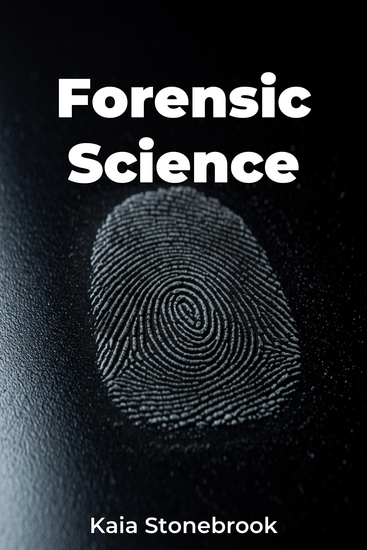
Forensic Science - cover

Forensic Science

Kaia Stonebrook

Translator A Ai

Publisher: Publifye

  • 0
  • 0
  • 0

Summary

"Forensic Science" explores how scientific principles are applied to solve crimes, bridging the gap between science and the pursuit of justice. The book delves into how seemingly insignificant details at a crime scene can provide crucial insights, showcasing the power of forensic techniques in modern criminal investigations. Readers will discover how forensic science has evolved, with fingerprint analysis as a long-standing method and DNA profiling offering precise identification. Trace evidence, like fibers and soil, further connects people, objects, and locations.

 
The book systematically introduces foundational concepts such as crime scene investigation and evidence collection before delving into specific areas like fingerprint analysis, DNA profiling, and trace evidence examination. Later chapters explore specialized fields including forensic entomology and digital forensics. Real-world case studies and examples enhance understanding, demonstrating how forensic science has revolutionized crime solving.

 
By understanding the scientific principles behind these methods, readers gain a profound appreciation for the power of forensic science and how it shapes our understanding of true crime. The unique value of this book lies in its accessible approach to complex topics, making it suitable for students, legal professionals, and anyone interested in crime solving. It emphasizes the importance of accuracy and impartiality in the criminal justice system and highlights the ethical considerations that guide forensic scientists.
Available since: 03/06/2025.
Print length: 76 pages.

Other books that might interest you

  • Speak Her Name - Stories from a Life in True Crime - cover

    Speak Her Name - Stories from a...

    M.D. Mary Jumbelic

    • 0
    • 0
    • 0
    When a family friend died unexpectedly, Dr. Mary Jumbelic was pulled into the investigation-and uncovered the true cause of death. This woman was one of hundreds uanble to move, unable to speak, laying on autopsy tables due to violent crimes. Mary uses her unique voice to speak for these victims and seek justice. Throughout her career as a medical examiner, Mary saw female bodies that had been sexually violated, battered, stabbed, and shot. Their corpses were dismembered. Some were buried in shallow graves, while others meticulously hidden. A majority of these deaths had been caused by someone the women knew-just like her friend. As a woman in a man's world, Mary spent her life honing her forensic skills. Through this work, she came to terms with events in her own life. Experiencing motherhood in juxtaposition with her job provided constant reminders of her two lives: one with the living, and one with the dead. Personal and professional experiences are interwoven in this tapestry of memoir. 
    Real Women. True stories. 
    We bear witness and use the truth to effect change. Together, we speak her name.
    Show book
  • Hacker Chronicles The - Volume 1: Origins - Ten Cases That Made Cybersecurity Necessary 1971-1998 - cover

    Hacker Chronicles The - Volume...

    Ronan Blake

    • 0
    • 0
    • 0
    Between 1971 and 1998, the networks the modern world was being built on had no defences worth the name. This is the story of ten cases that changed that. 
    In 1971, a blind eight-year-old in Boston discovered he could whistle into a telephone and place free long-distance calls. In 1986, an astronomer at Berkeley traced a 75-cent accounting discrepancy to a West German intelligence operation. In 1988, a Cornell graduate student released a program that took down ten per cent of the internet by accident. In 1995, a Russian mathematician with no internet connection at home moved ten million dollars out of Citibank. In 1998, the United States Deputy Secretary of Defense told a Senate committee that the most coordinated attack on Pentagon networks ever recorded had been conducted by two teenagers in California. 
    The Hacker Chronicles is a narrative history of cybercrime, drawn from court records, contemporary press accounts, published memoirs, and the established historical literature. The ten cases that follow — Captain Crunch, the 414s, the Cuckoo's Egg, the Morris Worm, the Citibank heist, Solar Sunrise, and four others — are the cases that made cybersecurity necessary as a discipline. 
    The series continues in Volume Two: Going Pro (1999-2010), Volume Three: Going Geopolitical (2010-2020), and Volume Four: Going Strategic (2020-2025).
    Show book
  • No Haven - The Connecticut Mob and the Rise of America's Model City - cover

    No Haven - The Connecticut Mob...

    Paul Bleakley

    • 0
    • 0
    • 0
    With Boston to the north and New York City to the south, Connecticut's history of organized crime is often overlooked. This is the untold story of New Haven's illegal past. 


    One of America's most historic and enduring cities, New Haven has wrangled with a perpetual identity struggle, torn between worlds that occasionally converged in chaos and violence. In the 1930s, Connecticut became a region where Mafia families like the Genoveses, Gambinos, Colombos, and Patriarcas shared turf—working together with enough profits to go around or descending into open war to rival that experienced in any major city. Central to this conflict were three men who were, at different times, cautious allies or sworn nemeses. Representing the Genoveses, Midge Renault reigned supreme thanks to his reputation for wanton violence. Meanwhile, Colombo capo Ralph "Whitey" Tropiano maintained a lower profile, which belied his reputation as a vicious killer. But it was his lieutenant, Billy "The Wild Guy" Grasso, who ultimately rose to the top after joining the New England Patriarca Family, enjoying a short rule that ended with a murder plot that left him on the wrong end of a bullet.
    Show book
  • Give Us More Guns - How South Africa's Gangs were Armed - cover

    Give Us More Guns - How South...

    Mark Shaw

    • 0
    • 0
    • 0
    ‘With remarkable courage, insight and access, Mark Shaw takes the reader into the darkest corners of South Africa’s ganglands.’ – Mandy Wiener 
    The assassination of police investigator Charl Kinnear in Cape Town in 2020 was yet one more in a spate of murders related to the so-called ‘guns to gangs’ saga, in which state weapons are sold to South Africa’s criminal underworld. 
    It began in 2007 when Colonel Christiaan Prinsloo and his cronies began selling thousands of decommissioned police weapons to gang lords. Prinsloo’s motive: to fund his son’s university fees. The sale of weapons to criminals, which the police service has tried to downplay, has resulted in a killing spree of unprecedented proportions. Cape Town is now one of the most violent places on earth, and in 2019 the army was called in to patrol gang-infested areas. 
    Give us more Guns, based on hundreds of interviews with police, experts and the gangsters themselves, tells the story of this callous crime for the first time. Mark Shaw explores how the guns get into the hands of South Africa’s crime bosses and describes the bloodshed that ensues. He also uncovers accounts of rampant corruption within the police and in the state’s gun-licensing system, probing the government failure that has been instrumental in arming the country’s gangsters.
    Show book
  • A Bar in Toledo - The Untold Story of a Mafia Frontman and a Grammy-winning Song - cover

    A Bar in Toledo - The Untold...

    Stephanie Abbajay, Dominic Vaiana

    • 0
    • 0
    • 0
    When Duane Abbajay took over his brother’s bankrupt nightclub in Toledo, Ohio in 1962, he promised his wife it would be a quick turnaround to bail his brother out and clear the family name. Instead, he became the face of a bar that transformed the city’s entertainment scene and inspired a Grammy-winning country song—all under the thumb of a trigger-happy mafia boss. 
    Informed by interviews with crime historians, employees, and patrons and corroborated by FBI and police reports, Dominic Vaiana and Stephanie Abbajay have crafted a Rust Belt psychodrama that offers a unique perspective into the worlds of organized crime and the music business, which were closely entwined. 
    Duane Abbajay, the 10th child of Syrian immigrants, went from having a Norman Rockwell-like all-American family life to owning and operating the most successful nightclub outside of Detroit and Chicago, all with the help of the mob, a secret he kept from his family. 
    A Bar in Toledo is a story of rock and roll, the Rust Belt, and redemption. It’s a story of the American Dream and the cost of success. Of a man who wanted it all, got it all, and the high price he paid to keep it. 
    Emotional, theatrical, and dripping with nostalgia, A Bar in Toledo is a love letter to the golden age of American music—and the dark underworld that helped make it all possible.
    Show book
  • Serial Killers - Biographies of Ted Bundy Al Capone and Jack the Ripper - cover

    Serial Killers - Biographies of...

    Kelly Mass

    • 0
    • 0
    • 0
    Today, you will be introduced to three sick serial killers. Their biographies will be summarized and explained. The said individuals are as follows: 
    Ted Bundy - Ted Bundy was one of the most infamous rapists and sexual predators, necrophiles, and murderers in the western part of the United States. Having been abused in his childhood and fed pornographic material from an early age, his crimes became more daring, violent, and vicious as he got a thrill from dismembering or sexually tormenting one victim after another. 
    At the end of his life, after several escapes from prison, he was convicted and got the electric chair. Even then, despite his confessions, his manipulative ways seemed to have so much influence on the women he had dated, that many still proclaimed their love for him and were sad to see him leave this world. 
    Al Capone - Al Capone was an infamous mob boss between the two world wars, in the city of New York and surrounding areas. His name and style have been emulated in movies. The mass shootings, tax evasion, and revenge on Italian murders in the mafia gangs on the United States east coast were so notorious that they have become iconic and stereotyped. 
    How did Al Capone get the scars on his face? How did he manage to control so much of the gangs in the cities? How was he able to bribe the police, evade taxes, and become a terror for anyone who opposed him? And how did his life finally come to an end? 
    Jack the Ripper - Jack the Ripper was an unknown serial killer active in the mainly poor parts around the Whitechapel district of London in the year 1888. In both the criminal case files and modern journalistic books, the killer was referred to as the Whitechapel Killer and Leather Apron. 
    He caused quite some havoc, going after some of the most impoverished neighborhoods and killing victim after victim, without ever being found.
    Show book