Rejoignez-nous pour un voyage dans le monde des livres!
Ajouter ce livre à l'électronique
Grey
Ecrivez un nouveau commentaire Default profile 50px
Grey
Abonnez-vous pour lire le livre complet ou lisez les premières pages gratuitement!
All characters reduced
Egyptian Astronomy - cover

Egyptian Astronomy

Kaia Stonebrook

Traducteur A AI

Maison d'édition: Publifye

  • 0
  • 0
  • 0

Synopsis

Egyptian Astronomy explores the profound celestial knowledge of ancient Egyptians, revealing their sophisticated understanding of the cosmos and its influence on their civilization. The book illustrates how they meticulously mapped stars and constellations, and ingeniously developed early timekeeping methods, such as shadow and water clocks. A key insight is how astronomical precision guided the alignment of pyramids and temples, reflecting a deep connection between earthly structures and celestial events. 

 
The book progresses through key areas, starting with Egyptian cosmology and celestial deities, followed by an examination of star mapping and constellations. It then analyzes the astronomical alignments of pyramids and temples, and investigates timekeeping methods. By combining archaeological evidence, textual analysis, and astronomical calculations, Egyptian Astronomy offers a holistic view. It demonstrates how practical applications of celestial observations were intertwined with religious beliefs and societal needs.
Disponible depuis: 29/03/2025.
Longueur d'impression: 60 pages.

D'autres livres qui pourraient vous intéresser

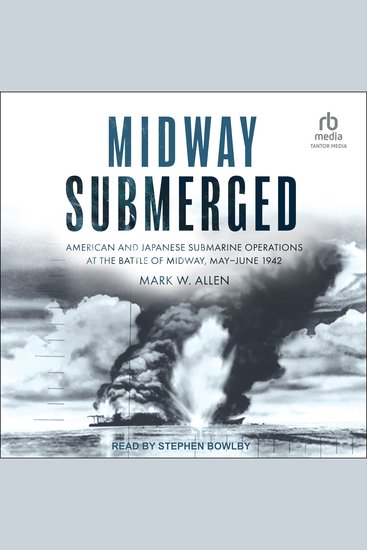
  • Midway Submerged - American and Japanese Submarine Operations at the Battle of Midway May–June 1942 - cover

    Midway Submerged - American and...

    Mark W. Allen

    • 0
    • 0
    • 0
    Most books gloss over submarines at Midway and, if they are mentioned at all, conclude they failed miserably and had little impact on the outcome of the battle. It is undeniable that carrier aviation and intelligence saved the day, but the role of the submarine was an important one in defense of an anticipated amphibious assault. 


    Midway Submerged is a comprehensive examination of a little-known aspect of this pivotal naval battle, explaining how Nimitz used his submarines at Midway and the Japanese misused theirs based on a flawed tactical plan. Based on in-depth archival research not only into the battle itself, but also submarine design and construction, and tactical and operational doctrine for both the United States and Japan, it brings a whole new dimension to the discussion of the battle of Midway. It examines the intended role of the submarine in the plans and doctrine of both navies, and what the submarines were expected to accomplish for both fleets during the battle, before assessing the actual accomplishments, successes, and failures of the submarine forces on both sides. Of particular importance, the book offers an analysis of how well these vessels fulfilled the expectations placed on them by their naval planners, concluding that submarines played a more important role in the outcome than has been previously understood.
    Voir livre
  • Why should I worry when I can face the world? - cover

    Why should I worry when I can...

    Shibu Nair

    • 0
    • 0
    • 0
    All of us want to be happy yet why do we never make sincere efforts to become happy? All of us want peace of mind yet why do we keep worrying and overthinking for most part of our life? We are all born happy yet why do we fall prey to anxiety and depression as we grow in age? We all know we have to enjoy our present yet why do we regret our past and fear our future? 
    'Why should I worry when I can face the world?' is a sincere attempt to provide credible answers to all these questions. If read, understood and practiced well, this book can help you overcome your worries and bring you everlasting peace and happiness.
    Voir livre
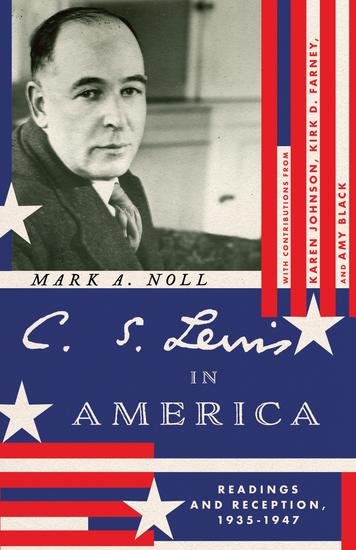
  • C S Lewis in America - Readings and Reception 1935–1947 - cover

    C S Lewis in America - Readings...

    Mark A. Noll

    • 0
    • 0
    • 0
    "An invaluable assessment of Lewis's reception in the United States, offering important insights into both Lewis's significance and the distinctives of the American religious mind." – Alister McGrath, Oxford University
    Perhaps no other literary figure has transformed the American religious landscape in recent history as much as C. S. Lewis. Even before the international publication and incredible success of his fictional works such as The Chronicles of Narnia or apologetic works like Mere Christianity, Lewis was already being read "across the pond" in America. But who exactly was reading his work? And how was he received?
    With fresh research and shrewd analysis, this volume by noted historian Mark A. Noll considers the surprising reception of Lewis among Roman Catholic, mainline Protestant, and evangelical readers to see how early readings of the Oxford don shaped his later influence.
    Based on the annual lecture series hosted at Wheaton College's Marion E. Wade Center, volumes in the Hansen Series reflect on the imaginative work and lasting influence of seven British authors: Owen Barfield, G. K. Chesterton, C. S. Lewis, George MacDonald, Dorothy L. Sayers, J. R. R. Tolkien, and Charles Williams.
    Voir livre
  • The Dangerous Life and Ideas of Diogenes The Cynic - cover

    The Dangerous Life and Ideas of...

    Jean-Manuel Roubineau

    • 0
    • 0
    • 0
    The ancient philosopher Diogenes—nicknamed "The Dog" and decried by Plato as a "Socrates gone mad"—was widely praised and idealized as much as he was mocked and vilified. A favorite subject of sculptors and painters since the Renaissance, his notoriety is equally due to his eccentric behavior, scorn of conventions, and biting aphorisms, and to the role he played in the creation of the Cynic school, which flourished from the 4th century B.C. to the Christian era. Jean-Manuel Roubineau paints a new portrait of an atypical philosopher whose life left an indelible mark on the Western collective imagination and whose philosophy courses through various schools of thought well beyond antiquity. 


    Roubineau sifts through the many legends and apocryphal stories that surround the life of Diogenes. Was he a counterfeiter? Did he meet Alexander the Great? Was he an apologist for incest, patricide, and anthropophagy? How did he actually die? Roubineau retraces the known facts of Diogenes' existence. 


    Beyond the rehashed clichés, this book inspires us to rediscover Diogenes' philosophical legacy—whether it be the challenge to the established order, the detachment from materialism, the choice of a return to nature, or the formulation of a cosmopolitan ideal strongly rooted in the belief that virtue is better revealed in action than in theory.
    Voir livre
  • Economic Recovery Program - cover

    Economic Recovery Program

    Ronald Reagan

    • 0
    • 0
    • 0
    On February 18, 1981, Reagan laid out his economic recovery program before a Joint Session of Congress. Reagan had previously outlined his recovery program in an Oval Office address on February 5, 1981, in which he displayed a dollar bill and 36 cents to show how inflation had reduced the value of a dollar since 1960.  
    Reagan made a further plea for enactment of his recovery program on April 28, 1981, following the assassination attempt on his life. Many economists credit this recovery program for reducing the inflation rate and igniting one of the longest and most robust economic expansions in U.S. history. 
    Reagan paints a grim picture of inflation, the national debt, and lagging productivity plaguing the economy. $41.4 billion of reduced spending is proposed with no reduction for “the poverty stricken, the disabled, the elderly, [and] all those with true need”. Subsidies of the synthetic fuel program, the Export-Import Bank, and the Economic Development Administration are targeted.  
    Block grants to states are proposed, along with changes to Medicaid, the space program, the Postal Service, and the Department of Energy. To counter the Soviet Union’s military build-up, defense is the one department with an increased budget. 
    A 10-percent tax cut for individual taxpayers is proposed for each of the next 3 years, along with increased depreciation allowances to allow business the capital needed to modernize.  
    We “must come to grips with inefficient and burdensome regulations, eliminate those we can and reform the others.”  
    To reduce inflation and interest rates, we need to slow the growth of our money supply. 
    This is our proposal for America’s new beginning. “I'm here tonight to ask you to join me in making it our plan.” Government “must not be used to regulate the economy or bring about social change.” 
    Audio recording courtesy of the Ronald Reagan Presidential Library. 
    AspenLeafMedia.com
    Voir livre
  • X Properties (EN) - Berlin Journals—On the History and Present State of the City #11 - cover

    X Properties (EN) - Berlin...

    Joerg Franzbecker, Naomi Hennig,...

    • 0
    • 0
    • 0
    Berlin Journals—On the History and Present State of the City #11. X Properties negotiates the power of finance capital over the social and cultural production of the city, its relations and subjects.
    Voir livre