Begleiten Sie uns auf eine literarische Weltreise!
Buch zum Bücherregal hinzufügen
Grey
Einen neuen Kommentar schreiben Default profile 50px
Grey
Jetzt das ganze Buch im Abo oder die ersten Seiten gratis lesen!
All characters reduced
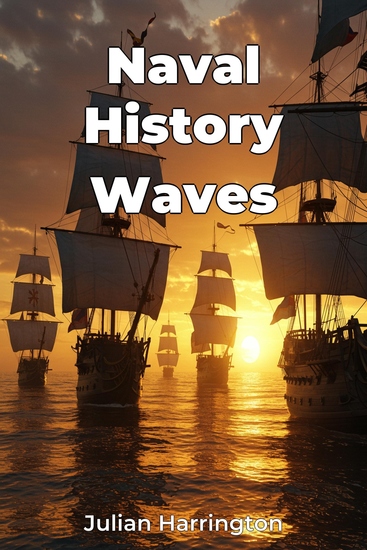
Naval History Waves - cover

Naval History Waves

Julian Harrington

Übersetzer A AI

Verlag: Publifye

  • 0
  • 0
  • 0

Beschreibung

Naval History Waves explores how naval power has shaped history, offering insights into modern geopolitical strategies. The book examines the critical role of navies in warfare, trade, and diplomacy from ancient times to the modern era. One intriguing fact is how superior naval capabilities have historically given nations significant strategic advantages, influencing global power balances and trade routes.

 
The book emphasizes the interconnectedness of naval technology, maritime strategy, and international relations, crucial for grasping global power struggles. The book approaches its subject by first grounding the reader in historical context, tracing shipbuilding and naval organization across civilizations. It then analyzes key periods like the age of sail and the industrial revolution, detailing naval strategies.

 
Ultimately, Naval History Waves explores the contemporary role of naval power in the 21st century, considering emerging technologies and geopolitical challenges. By analyzing historical precedents, the book provides insights into contemporary strategic decision-making related to maritime security and power projection.
Verfügbar seit: 05.05.2025.
Drucklänge: 64 Seiten.

Weitere Bücher, die Sie mögen werden

  • Napoleon’s Escape from the Middle East: The History of the French General’s Flight from the Levant and Egypt - cover

    Napoleon’s Escape from the...

    Editors Charles River

    • 0
    • 0
    • 0
    In addition to being unable to be reinforced or supplied by sea, Napoleon's ambitions to establish a permanent presence in Egypt were further frustrated by a number of uprisings. Early in 1799, Napoleon advanced against France’s erstwhile enemy, the Ottoman Empire, invading modern Syria (then the province of Damascus) and conquering the cities of Gaza, Jaffa, Arish and Haifa. However, with the plague running rampant through his army and his lines of supply from Egypt stretched dangerously thin, Napoleon was unable to destroy the fortified city of Acre and was forced to retreat. The retreat cost him almost all of his wounded as, harassed by enemy forces, he was forced to abandon most of his casualties to the Ottomans’ mercy, or lack thereof. Most of the wounded were tortured and beheaded. 
    	Napoleon harbored all kinds of delusions about his time in Egypt that were not based in reality, but he definitely left a lasting legacy in the region, one he would never live to see or appreciate. By shifting the theater of operations to Africa and the Middle East, Napoleon inadvertently ensured the Europeans would fight there in the future, and the French occupation impressed upon the locals the necessity of catching up to the modern world in terms of technology. Ancient tactics could not prevail against a modern army, no matter the numbers, but while that was a lesson Napoleon consistently taught his enemies in Egypt and the Levant to their detriment, the French also sped up the occupied populations’ technological advances as well. Perhaps more importantly, the Egyptian Scientific Institute introduced numerous modern innovations, perhaps most importantly the printing press, which in turn encouraged literacy. This brought about the emergence of nationalism and liberalism, leading eventually to the establishment of Egyptian independence and modernization under the rule of Muhammad Ali Pasha in the first half of the 19th century.
    Zum Buch
  • Peter the Hermit and the People’s Crusade: The Controversial History of the First European Army to Head for Jerusalem - cover

    Peter the Hermit and the...

    Charles River Editors

    • 0
    • 0
    • 0
    Of the many campaigns during the Middle Ages, few are as remarkable or seemingly impossible to win at the start as the First Crusade (1095-99), and the true crowning achievement of that crusade, which resulted in two centuries of Western European Christian states in the Middle East and the permanent firing of the European imagination, was the conquest of Jerusalem on July 15, 1099 after three weeks of siege. That victorious siege came four years after the call for a crusade first went out, and had the Crusaders not taken Jerusalem, the First Crusade would not likely have been followed by any more and the campaign might have been no more than an historical footnote of what could have been.  
    	What’s often forgotten about the First Crusade is that it started inauspiciously for the Europeans, and the first army to arrive in the Middle East had an extremely checkered history even before it was decimated. On October 21, 1096, in the proximity of Helenopolis, which is now known as the village of Hersek in Bithynia, a contingent of Crusader pilgrims was massacred by the Seljuk Turkish Army, which had strategically positioned itself in anticipation of an ambush. The event took place in a significantly symbolic location in the Christian tradition. Indeed, the name Helenopolis is derived from the legend that Helen, the mother of Constantine and a notable proponent of her son's conversion, was born there. This was where the castle of Kibotos, also known as Civetot, once stood, constructed under Byzantine Emperor Alexius Comnenus’s orders. It was near this castle that Crusader pilgrims established their encampment, leaving behind women, children, and the elderly as they prepared to launch an attack on the Turkish forces in Anatolia. The surprise attack was brought to a swift end by the Turkish forces’ superior tactics and equipment, which ultimately resulted in the massacre of the Christian population and the capture of numerous prisoners.
    Zum Buch
  • The Life in the UK Test Questions & Study Guide 2026 - cover

    The Life in the UK Test...

    Michael Condon

    • 0
    • 0
    • 0
    Your One & Only Guide to Pass the Life in the UK Test in 2026—Including 3 Practice Exam Tests  
    Are you ready to take the next step in your journey? The Life in the UK Test Questions & Study Guide 2026 is more than just a book—it's your gateway to passing the UK citizenship test and becoming a proud UK citizen.Why This Book Is a Must-Have: 
    • Navigate with Confidence: Understanding the UK’s complex systems can be daunting. Our book breaks down essential topics—like the government system, history, and cultural etiquette—into easy-to-digest sections, so you’ll feel at home in no time. 
    • Master the Citizenship Test: The UK citizenship test can be challenging, but with our comprehensive guide, you’ll get all the insights you need. We provide practice questions, expert tips, and 3 practice exam tests. 
    • Embrace the Culture: Immerse yourself in British culture through engaging stories and practical advice. Learn about customs, local traditions, and the history that shapes everyday life, so you can connect with your community and build lasting relationships.Why Wait? 
    Embarking on your journey in the UK is an exciting adventure, and with this guide, you’ll be equipped to face it head-on. Don’t leave your future to chance—arm yourself with knowledge, confidence, and the tools you need to succeed. 
    Get your copy today and turn your aspirations into reality, your new life awaits!
    Zum Buch
  • Mad Dogs and Englishmen - Shooting Cartoons by Bryn Parry - cover

    Mad Dogs and Englishmen -...

    Bryn Parry

    • 0
    • 0
    • 0
    Bryn Parry (1956–2023) was one of Britain's best-known countryside cartoonists. This re-issue of Mad Dogs and Englishmen is a superb collection of Bryn's shooting and dog cartoons. It gives an insight into a world that can really only be understood by a participant for whom it is more than a sport; it is a way of life.
    Zum Buch
  • Where One Hears the Rain - Finding Your Voice and Crafting Your Story from Inspiration to Publication - cover

    Where One Hears the Rain -...

    Chris Epting, John Oates

    • 0
    • 0
    • 0
    Where One Hears the Rain is a comprehensive, entertaining, and informative guide that explores the art of memoir writing and provides aspiring authors with the tools and inspiration to craft their own compelling personal narratives. 
      
    Drawing on his journey as an author, collaborative writer, and decade-long tenure as a memoir writing workshop instructor, Chris Epting offers invaluable insights and practical advice to guide writers to their unique voice and shape their personal stories. This book delves into the essential aspects of memoir writing, from uncovering inspiration to developing compelling narratives to organizing and structuring the autobiographical narrative for maximum emotional impact. 
      
    What sets Where One Hears the Rain apart is Epting’s incorporation of lessons learned from his mentor, the legendary author John Cheever. Epting weaves Cheever’s teachings seamlessly into the fabric of the book, enriching readers’ understanding of the craft and exposing them to the wisdom passed down from one literary generation to another. 
      
    This book is a treasure trove of knowledge for aspiring memoirists, covering every aspect of the writing and publishing process, including the intricacies of the publishing industry. Epting’s exhaustive approach ensures that readers are equipped with the tools and know-how to navigate the path to publication successfully. Moreover, the inclusion of personal anecdotes from Epting’s own writing experiences adds depth and authenticity, making the book both engaging and instructional. 
      
    Where One Hears the Rain: Finding Your Voice and Crafting Your Story, from Inspiration to Publication is an indispensable resource for anyone seeking to embark on the memoir writing journey. Chris Epting’s expertise, combined with his passion for storytelling, makes this book an invaluable companion that will inspire, educate, and empower writers as they strive to share their own unique narratives with the world.
    Zum Buch
  • Safe Haven - The United Kingdom's Investigations into Nazi Collaborators and the Failure of Justice - cover

    Safe Haven - The United...

    Robert Sherwood, Jon Silverman

    • 0
    • 0
    • 0
    The controversial 1991 War Crimes Act gave new powers to courts to try non-British citizens resident in the UK for war crimes committed during WWII. But in spite of the extensive investigative and legal work that followed, and the expense of some £11 million, it led to just one conviction: that in 1999 of Anthony (Andrzej) Sawoniuk. 


    Safe Haven considers for the first time why and how convictions failed to follow investigations. Within the broader context of war crimes investigations in the United States, Germany, and Australia, the authors reassess the legal and investigative processes and decisions that stymied inquiries, from the War Crimes Act itself to the restrictive criteria applied to it. Taken together, the authors argue that these—including the interpretations of who could and should be prosecuted and decisions about the nature and amount of evidence needed for trial—meant that many Nazi collaborators escaped justice and never appeared in a criminal court. 


    The authors situate this history within the legacy of the Holocaust: how, if at all, do the belated attempts to address a failure of justice sit with an ever-growing awareness of the Holocaust, represented by memorialization and education? In so doing, Safe Haven provokes a timely reconsideration of the relationship between law, history, and truth.
    Zum Buch