Rejoignez-nous pour un voyage dans le monde des livres!
Ajouter ce livre à l'électronique
Grey
Ecrivez un nouveau commentaire Default profile 50px
Grey
Abonnez-vous pour lire le livre complet ou lisez les premières pages gratuitement!
All characters reduced
Caesar Military Strategy - cover

Caesar Military Strategy

Julian Harrington

Traducteur A AI

Maison d'édition: Publifye

  • 0
  • 0
  • 0

Synopsis

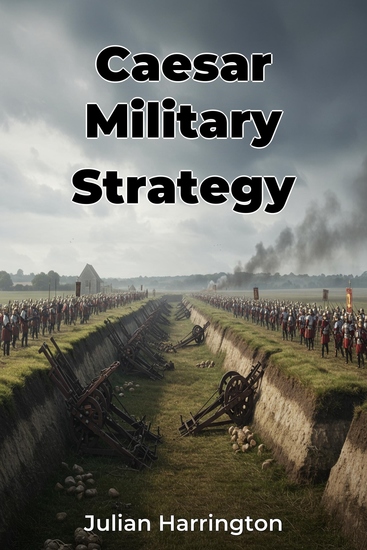
Caesar Military Strategy examines how Julius Caesar, despite limited initial military experience, achieved remarkable military success and political influence through innovative tactics and strategic thinking. The book sheds light on his conquest of Gaul, detailing how Caesar adapted Roman military doctrines to specific battlefield conditions and managed resources effectively. A key aspect of Caesar’s strategy was his ability to integrate military innovation with political maneuvering, challenging simplistic narratives of Roman dominance. The book explores Caesar's adaptive military tactics, logistical prowess, and administrative policies, highlighting how these elements contributed to his victories and political ascent.

 
For example, Caesar’s bridge-building across the Rhine demonstrated his command of infrastructure and supply chains, vital for sustaining his campaigns. The analysis progresses systematically, starting with historical context and Caesar's early career, then examining his tactical innovations, logistical feats, and administrative policies in Gaul.

 
This study provides a balanced assessment of Caesar's military and administrative capabilities, avoiding romanticization while acknowledging his undeniable skill. By examining his strategies as interconnected components of a broader campaign, the book offers a fresh perspective suitable for both academic and general readers interested in military history and the enduring legacy of Roman military leadership.
Disponible depuis: 05/05/2025.
Longueur d'impression: 61 pages.

D'autres livres qui pourraient vous intéresser

  • Justinian I - Biography of the Byzantine Emperor Justinian the Great - cover

    Justinian I - Biography of the...

    Kelly Mass

    • 0
    • 0
    • 0
    Justinian I, known to history as Justinian the Great, ruled as the Byzantine emperor from 527 until his death in 565. His reign is marked by a series of ambitious efforts to revive the grandeur of the Roman Empire, although many of these goals were only partially realized. This vision, known as the renovatio imperii or "reinstatement of the Empire," encapsulated his drive to restore Roman territories lost to barbarian invasions and to reassert imperial authority across the Mediterranean world. 
    One of the most prominent aspects of Justinian's renovatio imperii was the partial reconquest of the western provinces of the fallen Roman Empire. His military campaigns, led by the brilliant general Belisarius, achieved remarkable successes. Belisarius swiftly captured the Vandal Kingdom in North Africa, establishing Byzantine control over the region. Shortly thereafter, he, along with other generals like Narses, waged a series of successful campaigns against the Ostrogoths in Italy, eventually reclaiming key territories such as Dalmatia, Sicily, Rome, and much of Italy. This marked the end of the Ostrogothic Kingdom, which had ruled for over fifty years. Additionally, under the leadership of the praetorian prefect Liberius, the Byzantines reasserted control over the Iberian Peninsula, establishing the province of Spania. These victories re-established Roman dominance in the western Mediterranean and brought in substantial annual revenues, estimated at over a million solidi.
    Voir livre
  • The Dish - The Story of One Restaurant Meal from Farm to Kitchen to Table - cover

    The Dish - The Story of One...

    Andrew Friedman

    • 0
    • 0
    • 0
    “A thorough, lively work of on-the-ground reportage. ... Friedman shares a remarkable story."" —Wall Street Journal 
    Acclaimed “chef writer” Andrew Friedman introduces readers to all the people and processes that come together in a single restaurant dish, creating an entertaining, vivid snapshot of the contemporary restaurant community, modern farming industry, and food-supply chain.  
    On a typical evening, in a contemporary American restaurant, a table orders their dinner from a server. It’s an exchange that happens dozens, or hundreds, of times a night—the core transaction that keeps the place churning. In this book, acclaimed chef writer Andrew Friedman slows down time to focus on a single dish at Chicago’s Wherewithall restaurant, following its production and provenances via real-time kitchen and in-the-field reportage, from the moment the order is placed to when the finished dish is delivered to the table. 
    As various components of this one dish are prepared by the kitchen team, Friedman introduces readers to the players responsible for producing it, from the chefs who conceived the dish and manage the kitchen, to the line cooks and sous chefs who carry out the actual cooking, and the dishwashers who keep pace with the dining room. 
    Readers will also meet the producers, farmers, and ranchers, who supply the restaurant, as Friedman visits each stop in the supply chain and profiles the key characters whose expertise and effort play essential roles in making the dish possible—they will walk rows of crops that line Midwestern farms, feel the chill of the cooler where beef dry-ages, harvest grapes at a Michigan winery, ride along with a delivery-truck driver, and hear the immigration sagas prevalent amongst often unseen and unheralded farm and restaurant workers. 
    The Dish is a rollicking ride inside every aspect of a restaurant dish. Both a fascinating window onto our food systems, and a celebration of the unsung heroes of restaurants and the collaborative nature of professional kitchen work, The Dish will ensure that readers never look at any restaurant meal the same way again.  
    ""Masterful. ... Friedman excels at bringing the dining room to boisterous life with vivid, telling details. ... This will sate gastronomes and casual foodies alike."" — Publishers Weekly (starred review)
    Voir livre
  • The Stranger Who Was Myself - cover

    The Stranger Who Was Myself

    Barbara Jenkins

    • 0
    • 0
    • 0
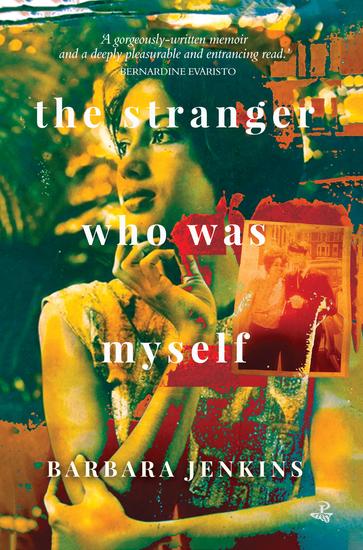
    Barbara Jenkins writes about the experiences of a personal and family-centred life in Trinidad with great psychological acuteness, expanding on the personal with a deep awareness of the economic, social and cultural contexts of that experience. She writes about a childhood and youth located in the colonial era and an adult life that began at the very point of Trinidad's independent nationhood, a life begun in poverty in a colonial city going through rapid change. It is about a life that expanded in possibility through an access to an education not usually available to girls from such an economic background. This schooling gave the young Barbara Jenkins the intense experience of being an outsider to Trinidad's hierarchies of race and class. She writes about a life that has gender conflict at its heart, a household where her mother was subject to beatings and misogynist control, but also about strong matriarchal women.
    As for so many Caribbean people, opportunity appeared to exist only via migration, in her case to Wales in the 1960s. But there was a catch in the arrangement that the years in Wales had put to the back of her mind: the legally enforceable promise to the Trinidadian government that in return for their scholarship, she had to return. She did, and has lived the rest of her life to date in Trinidad, an experience that gives her writing an insider/outsider sharpness of perception.
    'From her childhood in colonial Port of Spain, to becoming a migrant student and young mother in Wales and then returning to Trinidad post-Independence, Jenkins tells her own life story with the emotional sensitivity of a natural storyteller, the insight of a philosopher, the scope of a historian and the good humour of a Trini. This beautifully written and moving memoir will feel achingly familiar to anyone who knows what it is like to navigate race, class and girlhood while growing up in the West Indies, anyone who has ever felt like an outsider.' Ayanna Lloyd Banwo, author of When We Were Birds.
    Voir livre
  • More After the Break - A Reporter Returns to Ten Unforgettable News Stories - cover

    More After the Break - A...

    Jen Maxfield

    • 0
    • 0
    • 0
    A reporter uncovers the rest of the storyIn More After the Break, Jen Maxfield revisits ten memorable stories from her career as a TV news reporter, describing in heart-pounding detail how the events unfolded and revealing what happened after the cameras went away. She introduces readers to unforgettable people who will inspire you with their hopefulness, even when confronting life’s greatest heartbreaks: a young man who lost both legs in a ferry crash, an endurance athlete with stage-four lung cancer, a fifth grader on a doomed field trip, an Ivy League undergrad sentenced to decades in prison, a young woman who gave her life for an animal, a Wall Street executive on an ill-fated bike ride, a preschooler whose health hinged on an immigration battle, a family who lost everything in a hurricane, a mother who fought back against domestic violence, and a man who stood up for his rights while seated in his wheelchair. Returning to find these people years—even decades—after she featured their stories on the news gives Maxfield an opportunity to ask the burning questions she had always pondered: What happened after the live truck pulled away? What is the rest of the story?
    Voir livre
  • As a Man Thinketh - The Original 1902 Classic - The Power of Thought in Shaping Destiny - cover

    As a Man Thinketh - The Original...

    James Allen, Tim Zengerink

    • 0
    • 0
    • 0
    What if your thoughts determined your destiny? 
    James Allen’s masterpiece teaches that our thoughts create our circumstances, and by mastering our thinking, we can control our destiny. 
    More than just a self-help book, this work provides a practical philosophy for success, discipline, and personal transformation. In this modern adaptation, Allen’s insights are presented in a way that makes them easy to understand and apply, ensuring that his wisdom continues to inspire new generations. 
    What You’ll Discover in This Modern Translation: 
    - How your mindset directly influences your success, happiness, and overall well-being. 
    - The discipline and clarity to align your thoughts with your goals and aspirations. 
    - How to Free yourself from destructive thought patterns and replace them with empowering beliefs. 
    - How to cultivate a positive, resilient mindset that leads to greater achievements and inner peace. 
    For over a century, As a Man Thinketh has inspired millions to take control of their lives through the power of thought. Now, it’s your turn. 
    Change your thoughts. Transform your life. Get your copy today.
    Voir livre
  • Great Escapes of the American Civil War The: The History of the Most Daring Prisoner Breakouts during America’s Deadliest Conflict - cover

    Great Escapes of the American...

    Editors Charles River

    • 0
    • 0
    • 0
    During the Civil War, armies took many soldiers captive, but they also captured some civilians as well, such as sutlers, nurses, teamsters, and other service personnel. In addition, both the Union and the Confederacy imprisoned deserters, sympathizers with the enemy, traitors, and draft dodgers. The numbers cited vary somewhat, and often, precise numbers should be regarded with caution because the official numbers do not account for everyone. One somewhat authoritative total is that Confederates confined 7,092 Union officers and 179,091 enlisted men in prison camps, along with 1,962 civilians, for a total of 188,145 (Stack 3). By comparison, the Union captured 35,782 officers, 426,852 enlisted men, and 13,535 Confederate civilians, but this total is misleading because it includes the troops that surrendered when the war ended, including the commands of Robert E. Lee, Joseph E. Johnston, Richard Taylor, and Edmund Kirby Smith. Almost all the troops who surrendered at the end of the war were immediately paroled and allowed to go home. A commonly cited estimate is that 215,000 Confederate and 195,000 Union soldiers were prisoners of war in one of the various prison camp facilities. There were 32 sizable Confederate camps during the war, half of them in South Carolina, Georgia, and Alabama. 
    	Of the Union prisoners, 2,696 escaped from prison, and 3,170 others joined the Confederate armies. Of the Confederates, 2,098 escaped, and 5,432 joined the Union forces. 94,000 Union troops were paroled, and 248,599 Confederates were also released on parole (Stack 4).That said, the number of escapees cited are best regarded as estimates rather than exact totals - record-keeping was accurate in some places and inaccurate in others, and as the Confederacy was in its last months, chaotic conditions prevailed.
    Voir livre