Begleiten Sie uns auf eine literarische Weltreise!
Buch zum Bücherregal hinzufügen
Grey
Einen neuen Kommentar schreiben Default profile 50px
Grey
Jetzt das ganze Buch im Abo oder die ersten Seiten gratis lesen!
All characters reduced
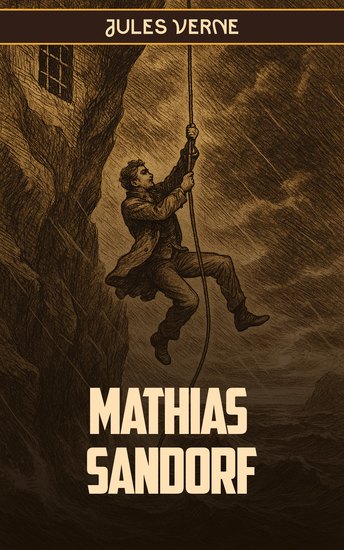
Mathias Sandorf - cover

Mathias Sandorf

Jules Verne

Verlag: CLXBX

  • 0
  • 0
  • 0

Beschreibung

Mathias Sandorf is one of Jules Verne's most dramatic and politically charged adventure novels, often regarded as his tribute to The Count of Monte Cristo. Set against the turbulent backdrop of 19th-century Europe, the story weaves together revolution, betrayal, endurance, and justice in a sweeping journey across continents.

The novel follows Count Mathias Sandorf, a Hungarian patriot falsely accused of treason after a conspiracy for national independence is uncovered by treachery. Condemned to imprisonment under brutal conditions, Sandorf seemingly perishes—yet fate has other plans. Years later, he reemerges under a new identity, having survived unimaginable hardships and traveled across Europe, the Mediterranean, and North Africa.

As Sandorf patiently executes an intricate plan to expose his enemies and restore honor to the innocent, the narrative unfolds through daring escapes, secret alliances, advanced scientific methods, and relentless pursuit. Verne blends thrilling adventure with political intrigue, emphasizing themes of resilience, justice, loyalty, and the moral consequences of betrayal.

Rich in geographic detail and marked by constant movement, Mathias Sandorf is a powerful tale of perseverance and revenge shaped by a journey across continents. It stands as one of Jules Verne's most mature and emotionally compelling works—an epic adventure that combines suspense, intelligence, and the timeless quest for freedom and redemption.
Verfügbar seit: 05.02.2026.
Drucklänge: 520 Seiten.

Weitere Bücher, die Sie mögen werden

  • Natalie - cover

    Natalie

    Ivan Bunin

    • 0
    • 0
    • 0
    A lush, romantic, and intense tale of first lust, first love, and the difference between the two.
    Zum Buch
  • A House of Pomegranates - cover

    A House of Pomegranates

    Oscar Wilde

    • 0
    • 0
    • 0
    A House of Pomegranates is Oscar Wilde’s collection of lush, decadent fairy tales marked by rich symbolism, moral ambiguity, and aesthetic splendor. Unlike traditional children’s stories, these tales—such as “The Young King,” “The Birthday of the Infanta,” and “The Fisherman and His Soul”—explore themes of sacrifice, beauty, suffering, and the conflict between art and morality. Wilde weaves intricate, poetic prose to critique societal norms while celebrating imagination and emotional depth. Intended “for children of all ages,” the stories reveal his signature wit and philosophical complexity, offering haunting reflections on love, power, and redemption through a veil of enchantment.
    Zum Buch
  • Nicholas Nickleby Volume 3 - cover

    Nicholas Nickleby Volume 3

    Charles Dickens

    • 0
    • 0
    • 0
    In "Nicholas Nickleby Volume 3," the gripping finale of Dickens' masterpiece unfolds with fervor and resolution. As Nicholas confronts the darker machinations of society, he champions love and justice, ensuring his family's happiness amidst adversity. James Harrington's narration breathes life into this vivid tapestry of Victorian life, amplifying the heart and humor of Dickens' timeless commentary on human nature and redemption.
    Zum Buch
  • Lady Susan - Full Cast Drama - cover

    Lady Susan - Full Cast Drama

    Jane Austen

    • 0
    • 0
    • 0
    "Lady Susan," a novella by Jane Austen, offers readers a departure from her more well-known novels like "Pride and Prejudice" and "Sense and Sensibility." Written in the form of letters, this epistolary work provides a fascinating glimpse into the life of Lady Susan Vernon, a character who stands apart from Austen's typical heroines. 
     
    The novella's protagonist, Lady Susan, is a cunning and manipulative widow, quite unlike the virtuous heroines that populate Austen's other works. Lady Susan's sharp wit and calculated charm serve as the driving force behind the narrative. Through her letters, we witness her artful maneuvering as she navigates the complexities of society, orchestrates advantageous marriages, and simultaneously manages her own affairs. 
     
    Austen's choice of the epistolary form allows readers to witness the inner workings of Lady Susan's mind as she artfully weaves webs of deception and manipulation. The novella showcases the power of language and rhetoric in social interactions, with Lady Susan employing her mastery of words to control the perceptions of those around her. Her character is both captivating and repulsive, offering a unique exploration of the darker facets of human nature. 
     
    Despite Lady Susan's morally dubious actions, Austen manages to infuse the novella with her trademark wit and humor. The characters surrounding Lady Susan, from her confidante Alicia Johnson to her would-be son-in-law Reginald De Courcy, serve as foils to her cunning, allowing for moments of comedic tension and irony. 
     
    "Lady Susan" is a shorter work compared to Austen's full-length novels, but it remains a testament to her ability to craft engaging characters and intricate social dynamics. In this novella, Austen provides a window into a world of manipulation, ambition, and social stratagems, all while maintaining her distinctive style and narrative prowess.
    Zum Buch
  • A Dialogue Among Clever People - From their pens to your ears genius in every story - cover

    A Dialogue Among Clever People -...

    Leo Tolstoy

    • 0
    • 0
    • 0
    Leo Tolstoy was born in 1828 in the Russian province of Tula to a wealthy noble family. As a child, he had private tutors but he showed little interest in any formal education. When he went to the University of Kazan in 1843 to study oriental languages and law, he left without completing his courses.  Life now was relaxed and idle but with some writing also taking place.  Gambling debts forced an abrupt change of path and he joined the army to fight in the Crimean War.  He was commended for his bravery and promoted but was appalled at the brutality and loss of life.  He recorded these and other earlier experiences in his diaries which formed the basis of several of his works. 
    In 1852 ‘Childhood’ was published to immediate success and was followed by ‘Boyhood’ and ‘Youth’. 
    His experience in the army and the horrors he witnessed resulted in ‘The Cossacks’ in 1862 and the trilogy ‘Sevastopol Tales’. After the war he travelled around Europe, visiting London and Paris and meeting such luminaries as Victor Hugo and Charles Darwin.  
    It was now that Tolstoy began his masterpiece, ‘War and Peace’. Published in 1869 it was an epic work that changed literature. He quickly followed this with ‘Anna Karenina’.  
    These successes made Tolstoy rich and helped him accomplish many of his dreams but also brought problems as he grappled with his faith and the lot of the oppressed poor. These revolutionary views became so popular that the authorities now kept him under surveillance.  
    He led a life of asceticism and vegetarianism and put his socialist ideals into practice by establishing numerous schools for the poor and food programmes. He also believed in giving away his wealth, which caused much discord with his wife.  
    His writing continued to bring forth classics such as ‘The Death of Ivan Ilyich’ and many brilliant and incisive short stories such as ‘How Much Land Does A Man Need’.  
    In 1901 Tolstoy was excommunicated from the Church and controversially deselected for the Nobel Prize for Literature. 
    Whilst undertaking a pilgrimage by train in October 1910 with his daughter Aleksandra he caught pneumonia in the nearby town of Astapovo.  Leo Tolstoy died on November 9th, 1910, he was 82.
    Zum Buch
  • Charitrahin - Saratchandra Chattopadhyay - चरित्रहीन - शरतचंद्र चट्टोपाध्याय - cover

    Charitrahin - Saratchandra...

    Saratchandra Chattopadhyay

    • 0
    • 0
    • 0
    Charitrahin - Saratchandra Chattopadhyay - चरित्रहीन - शरतचंद्र चट्टोपाध्याय 
    Charitrahin by Saratchandra Chattopadhyay is one of the most powerful and controversial novels in Indian literature. This Hindi audiobook brings to life a bold story that questions society's rigid definitions of morality, character, and honor. 
    Set in a traditional social environment, the novel explores the complex lives of Satish, Sarojini, Kiranmayi, and Upendra, whose relationships challenge strict moral standards imposed by society. Through these deeply human characters, the story reveals how easily society judges a woman's character while ignoring the same flaws in men. 
    With emotional depth and psychological insight, Charitrahin exposes the hypocrisy of social norms and highlights the struggles of women forced to defend their dignity in a judgmental world. This timeless story is not just about love and relationships—it is a bold reflection on society, morality, gender inequality, and human emotions. Even today, the questions raised remain highly relevant. 
    🎧 Why Listen? 
    📚 Bold thought-provoking classic of Indian literature 
    👩‍🦰 Powerful portrayal of women's struggles and dignity 
    ⚖️ Deep exploration of morality and social hypocrisy 
    ❤️ Gripping story of love, sacrifice, and emotional conflict 
    📖 Written by legendary Bengali novelist Saratchandra Chattopadhyay 
    Experience this timeless masterpiece and discover why Charitrahin continues to challenge listeners across generations.
    Zum Buch