Unisciti a noi in un viaggio nel mondo dei libri!
Aggiungi questo libro allo scaffale
Grey
Scrivi un nuovo commento Default profile 50px
Grey
Iscriviti per leggere l'intero libro o leggi le prime pagine gratuitamente!
All characters reduced
Facing the Flag - cover

Facing the Flag

Jules Verne

Casa editrice: DigiCat

  • 0
  • 0
  • 0

Sinossi

In "Facing the Flag," Jules Verne crafts a riveting exploration of technological ambition and moral dilemmas against the backdrop of Victorian society's fascination with innovation. The narrative follows the exploits of the nefarious pirate Robur, who seeks to impose his vision of supremacy upon the world through the use of an unprecedented flying machine. Verne employs his characteristic detailed scientific imagination, blending thrilling adventure with philosophical inquiry, which raises questions about the ethics of progress in an increasingly mechanized age. This work exemplifies Verne's fixation on the duality of man's inventiveness and the potential for destruction that it harbors, resonating with the anxieties of his time regarding industrialization and imperialism. Jules Verne, often hailed as the father of science fiction, drew inspiration from his profound fascination with the mechanics of flight and maritime exploration, as well as his experiences growing up in a seafaring family in Nantes, France. His literary career flourished in an age of rapid technological advancement, allowing him to infuse his narratives with significant scientific insights. "Facing the Flag" is emblematic of his broader oeuvre, where he deftly interweaves thrilling plots with profound ethical considerations, reflecting the conflicts of his era. For readers intrigued by the intersection of adventure and moral pondering, "Facing the Flag" is a must-read. It not only captivates with its fast-paced narrative and inventive genius but also invites contemplation on the human condition and the implications of our relentless pursuit of progress. Verne's work remains both prescient and relevant, making it an enduring classic in the canon of speculative literature.
Disponibile da: 11/10/2022.
Lunghezza di stampa: 149 pagine.
Altri libri che potrebbero interessarti

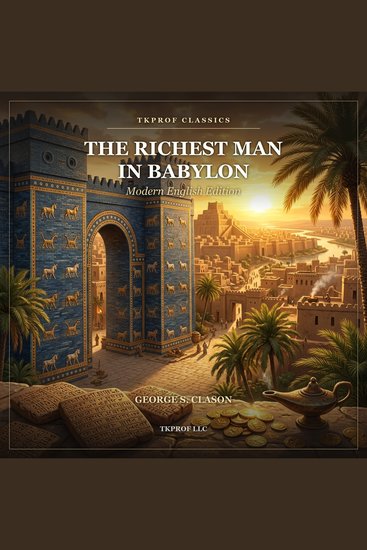
  • Richest Man in Babylon The: Modern English Edition - The Success Secrets of the Ancients - Personal Finance Classic - cover

    Richest Man in Babylon The:...

    George S. Clason

    • 0
    • 0
    • 0
    This audiobook is narrated by an AI Voice. # Introduction 
     
    Welcome to this modernized edition of *The Richest Man in Babylon* by George S. Clason.  
     
    Originally published in 1926, this timeless classic was constructed as a series of parables set in ancient Babylon. Clason used this ancient setting to dispense simple, powerful financial wisdom that remains incredibly relevant today. The concepts of paying yourself first, living within your means, and investing wisely are just as applicable in the modern world as they were when these stories were first penned. 
     
    ## About This Edition 
     
    This specific edition has been carefully adapted for modern casual readers and English as a Second Language (ESL) learners. While the core financial rules, the character voices, and the rich atmospheric vocabulary of Babylon (shekels, gold, clay tablets) have been strictly preserved, the meandering, archaic grammar of the 1920s faux-Biblical style has been updated.  
     
    Sentences have been broken down and simplified to prioritize readability and flow, making this version especially well-suited for casual reading and Text-to-Speech (TTS) listening.  
     
    *Source Note: The raw text for this project was extracted from a 1926 original public domain version sourced from the Internet Archive.* 
     
    Prepare to travel back to the ancient streets of Babylon, and may the wisdom of the ancients lead you to a fatter purse!
    Mostra libro
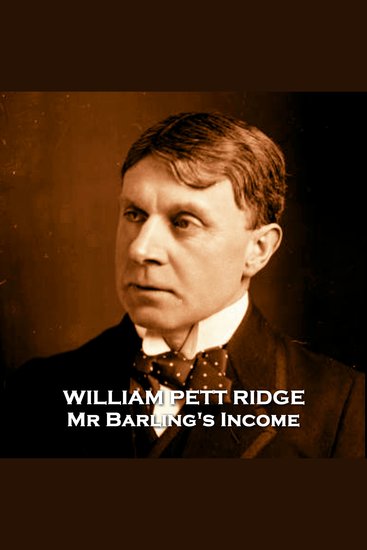
  • Mr Barlings Income - From their pens to your ears genius in every story - cover

    Mr Barlings Income - From their...

    William Pett Ridge

    • 0
    • 0
    • 0
    William Pett Ridge was born at Chartham, near Canterbury, Kent, on 22nd April 1859. 
    His family’s resources were certainly limited. His father was a railway porter, and the young Pett Ridge, after schooling in Marden, Kent became a clerk in a railway clearing-house. The hours were long and arduous, but self-improvement was Pett Ridge’s goal.  After working from nine until seven o’clock he would attend evening classes at Birkbeck Literary and Scientific Institute and then to follow his passion; the ambition to write.  He was heavily influenced by Dickens and several critics thought he had the capability to be his successor. 
    From 1891 many of his humourous sketches were published in the St James's Gazette, the Idler, Windsor Magazine and other literary periodicals of the day. 
    Pett Ridge published his first novel in 1895, A Clever Wife. By the advent of his fifth novel, Mord Em'ly, a mere three years later in 1898, his success was obvious.  His writing was written from the perspective of those born with no privilege and relied on his great talent to find humour and sympathy in his portrayal of working class life. 
    Today Pett Ridge and other East End novelists including Arthur Nevinson, Arthur Morrison and Edwin Pugh are being grouped together as the Cockney Novelists.   
    In 1924, Pugh set out his recollections of Pett Ridge from the 1890s: “I see him most clearly, as he was in those days, through a blue haze of tobacco smoke. We used sometimes to travel together from Waterloo to Worcester Park on our way to spend a Saturday afternoon and evening with H. G. Wells. Pett Ridge does not know it, but it was through watching him fill his pipe, as he sat opposite me in a stuffy little railway compartment, that I completed my own education as a smoker... Pett Ridge had a small, dark, rather spiky moustache in those days, and thick, dark, sleek hair which is perhaps not quite so thick or dark, though hardly less sleek nowadays than it was then”. 
    With his success, on the back of his prolific output and commercial success, Pett Ridge gave generously of both time and money to charity. In 1907 he founded the Babies Home at Hoxton.  This was one of several organisations that he supported that had the welfare of children as their mission.  
    His circle considered Pett Ridge to be one of life's natural bachelors. In 1909 they were rather surprised therefore when he married Olga Hentschel.  
    As the 1920’s arrived Pett Ridge added to his popularity with the movies. Four of his books were adapted into films.  
    Pett Ridge now found the peak of his fame had passed. Although he still managed to produce a book a year he was falling out of fashion and favour with the reading public and his popularity declined rapidly.  His canon runs to over sixty novels and short-story collections as well as many pieces for magazines and periodicals. 
    William Pett Ridge died, on 29th September 1930, at his home, Ampthill, Willow Grove, Chislehurst, at the age of 71. 
    He was cremated at West Norwood on 2nd October 1930.
    Mostra libro
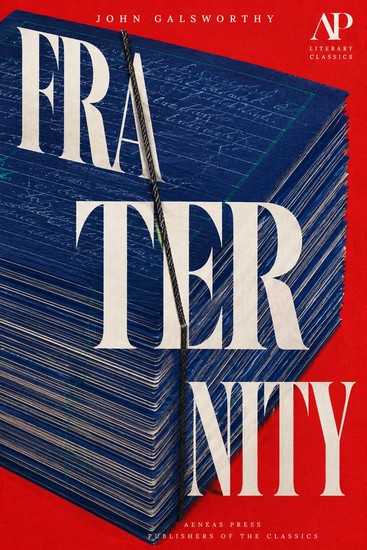
  • Fraternity - cover

    Fraternity

    John Galsworthy

    • 0
    • 0
    • 0
    Two households a hundred yards apart in Kensington: cultivated people who write books about the poor, and the poor, who model for them. Galsworthy trained as a barrister, never practised, and was told to write by Joseph Conrad; this 1909 novel is the sharpest thing he did about his own class — the shadow of the title falls between people who mean well and people who need bread.
    Mostra libro
  • The Devil in the Belfry - cover

    The Devil in the Belfry

    Edgar Allen Poe

    • 0
    • 0
    • 0
    A quiet unchanging town gets a visit from a most peculiar and, we come to find out, dastardly character. 
    Mostra libro
  • The Machine Stops - cover

    The Machine Stops

    E. M. Forster

    • 0
    • 0
    • 0
    Are you a fan of classic literature and looking for a fresh and modern way to experience it? Look no further than the digital audio version of E. M. Forster's "The Machine Stops" and "The Story of the Siren"! 
     
    These short stories are timeless classics that explore the themes of technology, human connection, and the power of storytelling. With our digital audio version, you'll be transported to a world where machines rule and humans struggle to find their place in it. You'll experience the thrill of discovery as the characters navigate a world beyond their comprehension. 
     
    And with the inclusion of "The Story of the Siren", you'll also get to indulge in the beauty of Forster's prose as he unravels the tale of a man's encounter with a mythical creature. This haunting and lyrical story will capture your imagination and leave you breathless. 
     
    Our digital audio version of these stories is perfect for anyone who's always on the go. Listen while you're commuting to work, working out at the gym, or even just while you're doing chores around the house. With our expertly crafted narration and production quality, you'll feel like you're right there in the story, experiencing every moment as if it were real. 
     
    So why wait? Download our digital audio version of "The Machine Stops" and "The Story of the Siren" today and experience the magic of E. M. Forster's writing like never before!
    Mostra libro
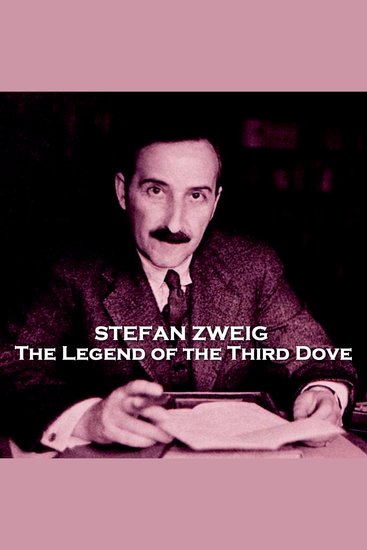
  • The Legend of the Third Dove - From their pens to your ears genius in every story - cover

    The Legend of the Third Dove -...

    Stefan Zweig

    • 0
    • 0
    • 0
    Stefan Zweig was born on the 28th November 1881 in Vienna, then part of the Austro-Hungarian Empire, and into a wealthy Jewish family with interests in banking and textiles. 
    He studied philosophy at the University of Vienna and achieved his degree in 1904. 
    Zweig first published in 1900 and two decades later was a popular and highly regarded author in many parts of the world, although not in England.    
    During the Great War he served in the Archives of the Ministry of War and supported Austria's war effort through his writings in the ‘Neue Freie Presse’.  Whilst his work praised his Country’s progress and, on occasions, its excesses and massacres, he later claimed, in his memoir, that he was a pacifist. 
    In 1912 he began an affair with the married, and mother or two, Friderike Maria von Winternitz, but it was only in 1920 that circumstances allowed them to marry.  She took care of much of his business interests and supported him artistically.  In this decade too many of his most famous works including the short stories; ‘Amok’, and ‘Letter from an Unknown Woman’ (filmed in 1948 by Max Ophüls), novels; ‘Confusion of Feelings’ and biographies including that on Marie Antoinette (filmed by MGM in 1938) were published. 
    He was also the librettist with Richard Strauss of two operas and a keen collector of autographed musical manuscripts.  His collection of over two hundred pieces was later donated to the British Library.  
    In 1934, Zweig, as a Jew, and finding life very difficult under his anti-Semitic government and the neighbouring Nazi’s persuaded him to leave Austria for England.   
    In 1940 Zweig, now divorced and married to his second wife, and former secretary, Lotte Altmann, left London and via New York moved to Petrópolis, a German-colonized town 50 miles north of Rio de Janeiro in Brazil.  Although he continued to write he became, along with his wife, increasingly depressed about the situation in Europe and the future for humanity,  
    His memoir ‘The World of Yesterday’ was completed on the 22nd February 1942. 
    The following day the Zweig’s were found in their house dead of a barbiturate overdose, holding each other’s hand.  He was 60.
    Mostra libro