Rejoignez-nous pour un voyage dans le monde des livres!
Ajouter ce livre à l'électronique
Grey
Ecrivez un nouveau commentaire Default profile 50px
Grey
Abonnez-vous pour lire le livre complet ou lisez les premières pages gratuitement!
All characters reduced
Dick Sands the Boy Captain - Enriched edition - cover

Dick Sands the Boy Captain - Enriched edition

Jules Verne

Traducteur Ellen Elizabeth Frewer

Maison d'édition: Good Press

  • 0
  • 0
  • 0

Synopsis

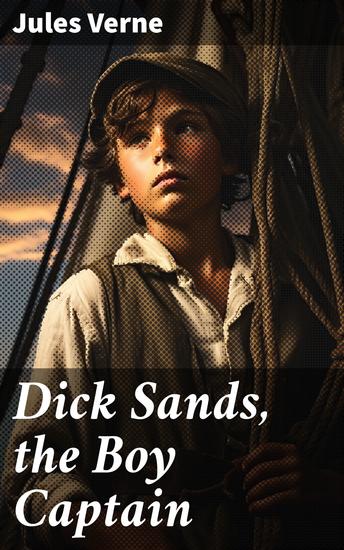
In "Dick Sands, the Boy Captain," Jules Verne crafts an adventurous tale that both captivates and educates. The narrative follows young Dick Sands, who, through a series of unforeseen events, assumes command of a whaling ship. Verne utilizes a vivid, descriptive literary style, blending elements of adventure, exploration, and education, alongside his characteristic fascination with technology and the natural world. Set against the vastness of the ocean and the exotic backdrop of Africa, the book reflects 19th-century concerns about colonialism, imperialism, and the moral dilemmas faced by figures both heroic and villainous. Jules Verne, often hailed as the father of science fiction, was deeply influenced by the scientific advancements and exploratory fervor of his time. Born in France in 1828, Verne's interests in geography, technology, and human ingenuity informed his writing. His extensive travel and exposure to scientific ideas inspired narratives that pushed the boundaries of imagination while being rooted in realistic possibilities, making this novel both timely and timeless. Readers seeking a thrilling yet thought-provoking adventure will find "Dick Sands, the Boy Captain" an essential addition to their literary collection. This novel not only entertains but also invites reflection on leadership, courage, and the human condition amidst the age of exploration, showcasing Verne's prophetic vision and enduring relevance in literature.

In this enriched edition, we have carefully created added value for your reading experience:
- A succinct Introduction situates the work's timeless appeal and themes.
- The Synopsis outlines the central plot, highlighting key developments without spoiling critical twists.
- A detailed Historical Context immerses you in the era's events and influences that shaped the writing.
- An Author Biography reveals milestones in the author's life, illuminating the personal insights behind the text.
- A thorough Analysis dissects symbols, motifs, and character arcs to unearth underlying meanings.
- Reflection questions prompt you to engage personally with the work's messages, connecting them to modern life.
- Hand‐picked Memorable Quotes shine a spotlight on moments of literary brilliance.
- Interactive footnotes clarify unusual references, historical allusions, and archaic phrases for an effortless, more informed read.
Disponible depuis: 18/11/2023.
Longueur d'impression: 258 pages.

D'autres livres qui pourraient vous intéresser

  • The Vampyre - cover

    The Vampyre

    John William Polidori

    • 0
    • 0
    • 0
    Noted as one of the first pieces of literature to feature vampirism effectively, The Vampyre follows the adventures of a wealthy young man named Aubrey who befriends a mysterious, suave nobleman named Lord Ruthven. As Aubrey begins to realize just how dangerous Lord Ruthven is, he discovers that his beloved sister is in the monster's sights. A product of a competition that also produced Mary Shelley's Frankenstein, this classic gothic novella became the foundation of the romantic vampire genre.
    Voir livre
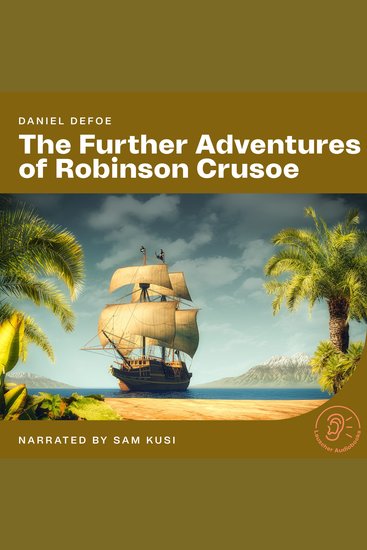
  • The Further Adventures of Robinson Crusoe - cover

    The Further Adventures of...

    Daniel Defoe

    • 0
    • 0
    • 0
    "The Further Adventures of Robinson Crusoe" is a novel by Daniel Defoe, first published in 1719. Just as in its significantly more popular predecessor, Robinson Crusoe (1719), the first edition credits the work's fictional protagonist Robinson Crusoe as its author. It was published under the considerably longer original title: The Farther Adventures of Robinson Crusoe; Being the Second and Last Part of His Life, And of the Strange Surprising Accounts of his Travels Round three Parts of the Globe. Although intended to be the last Crusoe tale, the novel is followed by a non-fiction book involving Crusoe by Defoe entitled Serious Reflections During the Life and Surprising Adventures of Robinson Crusoe: With his Vision of the Angelick World (1720). The story is speculated to be partially based on Moscow embassy secretary Adam Brand's journal detailing the embassy's journey from Moscow to Peking from 1693 to 1695.
    The book starts with the statement about Crusoe's marriage in England. He bought a little farm in Bedford and had three children: two sons and one daughter. Our hero suffered a distemper and a desire to see "his island." He could talk of nothing else, and one can imagine that no one took his stories seriously, except his wife. She told him, in tears, "I will go with you, but I won't leave you." But in the middle of this felicity, Providence unhinged him at once, with the loss of his wife.
    Voir livre
  • To Bow Bridge - From their pens to your ears genius in every story - cover

    To Bow Bridge - From their pens...

    Arthur Morrison

    • 0
    • 0
    • 0
    Arthur Morrison was born on November 1st, 1863, in Poplar, in the East End of London. From the age of 8, after the death of his father, he was brought up, along with two siblings, by his mother, Jane. 
    Morrison spent his youth in the East End. In 1879 he began as an office boy in the Architect's Department of the London School Board and, in his spare time, visited used bookstores in Whitechapel Road. He first published, a humorous poem, in the magazine Cycling in 1880. 
    In 1885 Morrison began writing for The Globe newspaper. In 1886, he switched to the People's Palace, in Mile End and, in 1888, published the Cockney Corner collection, about life in Soho, Whitechapel, Bow Street and other areas of London.  
    By 1889 he was an editor at the Palace Journal, reprinting some earlier sketches, and writing commentaries on books and articles on the life of the London poor. 
    By 1890 he was back at The Globe and published ‘The Shadows Around Us’, a supernatural collection of stories.  Also at this time he began to develop a keen interest in Japanese Art. 
    In October 1891 his short story A Street appeared in Macmillan's Magazine. The following year he married Elizabeth Thatcher and then befriended publisher and poet William Ernest Henley for whom he wrote stories of working-class life in Henley's National Observer between 1892-94.  
    In 1894 came his first detective story featuring Martin Hewitt, described as "a low-key, realistic, lower-class answer to Sherlock Holmes”. 
    Morrison published A Child of the Jago in 1896 swiftly followed by The Adventures of Martin Hewitt. 
    In 1897 Morrison wrote seven stories about Horace Dorrington, a deeply corrupt private detective, described as "a cheerfully unrepentant sociopath who is willing to stoop to theft, blackmail, fraud or cold-blooded murder to make a dishonest penny."  
    To London Town, the final part of a trilogy including Tales of Mean Streets and A Child of the Jago was published in 1899. Following on came a wide spectrum of works, including novels, short stories and one act plays.  
    In 1911 he published his authoritative work Japanese Painters, illustrated with art from his own collection.  
    Although he retired from journalistic work in 1913 he continued to write about Art.  
    In his last decades Morrison served as a special constable, and reported on the first Zeppelin raid on London. Tragically in 1921 his son, Guy, who had survived the war, died of malaria.  
    The Royal Society of Literature elected him as a member in 1924 and to its Council in 1935.   
    In 1930 he moved to Chalfont St Peter, Buckinghamshire. Here he wrote the short story collection Fiddle o' Dreams and More. 
    Arthur Morrison died on the 4th December 1945.  He was 82 years.
    Voir livre
  • Middlemarch (Book 1: Miss Brooke) - cover

    Middlemarch (Book 1: Miss Brooke)

    George Eliot

    • 0
    • 0
    • 0
    Middlemarch (Book 1: Miss Brooke), A Study of Provincial Life is a novel by English author George Eliot, the pen name of Mary Ann Evans. It appeared in eight installments (volumes) in 1871 and 1872. Set in Middlemarch, a fictional English Midlands town, from 1829 to 1832, it follows distinct, intersecting stories with many characters. Issues include the status of women, the nature of marriage, idealism, self-interest, religion, hypocrisy, political reform, and education. Leavened with comic elements, Middlemarch approaches significant historical events in a realist mode: the Reform Act 1832, early railways, and the accession of King William IV. It looks at medicine of the time and reactionary views in a settled community facing unwelcome change. Eliot began writing the two pieces that formed the novel in 1869–1870 and completed it in 1871. Initial reviews were mixed, but it is now seen widely as her best work and one of the great English novels.
    Voir livre
  • Henry Esmond Volume 2 - The English Humourists; The Four Georges - cover

    Henry Esmond Volume 2 - The...

    William Makepeace Thackeray

    • 0
    • 0
    • 0
    Henry Esmond is a historical novel set in early 18th-century England, following the life of Henry Esmond, a loyal, honorable man entangled in the political and domestic intrigues of an aristocratic family. Blending romance, wit, and historical detail, it explores themes of love, legitimacy, and loyalty amid the turbulent reigns of the first two Hanoverian kings. The English Humourists and The Four Georges are companion nonfiction works: the former offers critical portraits of 18th-century satirists like Swift and Fielding, while the latter examines the manners, morals, and monarchs of Georgian England with Thackeray’s trademark irony and social insight.
    Voir livre
  • A Dead Body - cover

    A Dead Body

    Anton Chekhov

    • 0
    • 0
    • 0
    "Dead Body" is one of the stories by Anton Chekhov, a classic of world literature. The story is about two men serving and protecting a dead man. This story is based on an incident that happened to the author of the story in Zvenigorod.
    Voir livre