Rejoignez-nous pour un voyage dans le monde des livres!
Ajouter ce livre à l'électronique
Grey
Ecrivez un nouveau commentaire Default profile 50px
Grey
Abonnez-vous pour lire le livre complet ou lisez les premières pages gratuitement!
All characters reduced
The Bird - cover

The Bird

Jules Michelet

Maison d'édition: DigiCat

  • 0
  • 0
  • 0

Synopsis

In "The Bird," Jules Michelet embarks on a lyrical exploration of avian life that transcends mere natural observation, immersing readers in the interconnectedness of nature and humanity. Written in the mid-19th century, the book reflects the Romantic literary style, characterized by vivid imagery and an emotional connection to the subject matter. Michelet employs an almost poetic prose, weaving together scientific observations with philosophical musings, ultimately revealing his reverence for birds as symbols of freedom and inspiration amidst the industrial age's encroachments on nature. The work stands as a testament to the burgeoning interest in biology and environment during the Enlightenment period, positioning birds as integral elements of the ecosystem worthy of admiration and protection. Jules Michelet (1798-1874), a prominent French historian and naturalist, is often noted for his passionate engagement with the natural world and its historical context. His background in history, combined with his fascination for nature, led him to reconcile the scientific and the spiritual in his writing. This duality is evident in "The Bird," where his admiration for the natural world is steeped in a historical narrative that reveals both human and avian evolution, reflecting the interconnectedness of all living things. For readers seeking a unique blend of nature writing and historical insight, "The Bird" offers a captivating journey into the world of birds, encouraging a deeper appreciation of their role in our lives and the environment. Michelet's evocative prose invites both ornithologists and casual readers alike to reflect on the beauty of nature and the urgency of its preservation. This work is essential reading for anyone interested in the intersections of literature, nature, and history.
Disponible depuis: 20/07/2022.
Longueur d'impression: 292 pages.

D'autres livres qui pourraient vous intéresser

  • The Sociology of Deviance - Understanding Rule-Breaking and Its Impact on Society - cover

    The Sociology of Deviance -...

    Fred Grandsen

    • 0
    • 0
    • 0
    Deviance is not an inherent quality of an action or behavior but rather a label assigned by society based on cultural norms, values, and historical context. What is considered deviant in one society may be perfectly acceptable in another, highlighting the socially constructed nature of rule-breaking. This means that deviance is not a fixed concept but a fluid one, constantly evolving as societies change over time. 
    Norms, or the unwritten rules that govern behavior, play a central role in determining what is labeled as deviant. These norms vary across cultures, social groups, and historical periods, meaning that what is seen as unacceptable in one setting may be tolerated or even encouraged in another. For example, attitudes toward tattoos, same-sex relationships, and gender roles have shifted dramatically over time, illustrating how deviance is shaped by broader social forces rather than existing as an objective reality. 
    One of the key aspects of the social construction of deviance is the process of labeling. According to labeling theory, deviance is not just about breaking rules but also about how society reacts to those who violate norms. When a person is labeled as deviant, they may experience stigma, discrimination, or exclusion, reinforcing their deviant identity. This can lead to a self-fulfilling prophecy where individuals internalize their label and continue engaging in deviant behavior. For instance, a teenager who is repeatedly told they are a troublemaker may begin to see themselves that way and act accordingly.
    Voir livre
  • Philosophy of Mind - A Very Short Introduction - cover

    Philosophy of Mind - A Very...

    Barbara Gail Montero

    • 0
    • 0
    • 0
    Philosophy of Mind: A Very Short Introduction probes some of the great philosophical questions about the mind: What is the relationship between mind and matter? Can science unravel the mystery of consciousness? How can our thoughts represent things in the world? Are computers genuinely intelligent?In the book, Barbara Gail Montero highlights key thought experiments used by philosophers to explore the nature of mind and how mind and body relate to each other (the mind-body problem). She leads listeners through the strengths and weaknesses of the proposed solutions to the mind-body problem and explores the philosophical conundrums associated with sensation, perception, cognition, and emotion.While keeping an eye on the contemporary philosophical debate, Montero also considers the cross-cultural roots of philosophy of mind, and its connections to psychology, neuroscience, evolutionary biology, and physics.
    Voir livre
  • Lost Loot - Cursed Treasures and Blood Money - cover

    Lost Loot - Cursed Treasures and...

    Jim Willis

    • 0
    • 0
    • 0
    Legendary treasures. Mythical robberies. Lost riches. Buried plunder and fabulous wealth. Hidden dangers. Ancient curses and deathbed jinxes. Captivating tales of lost fortunes, hidden caches, the eternal allure of wealth, and the heartbreak of mysterious curses! 


    Hear about the pursuit of riches turning to grief in this mesmerizing story collection! A thrilling exploration of the world's most intriguing and dangerous treasure hunts, Lost Loot: Cursed Treasures and Blood Money collects dozens of fascinating stories of reward, riches, greed, and ruin, including curses, deaths, and centuries-old treasure on Oak Island; searchers hunted down and killed before finding a gangster's stolen riches; the eternal quest for D. B. Cooper and his hijack ransom; elaborate booby traps protecting ill-gotten gains; cursed Aztec wealth lost as it journeyed to Spain; mysterious caves holding secrets in the Grand Canyon; Montezuma's revenge; the train-robbing Robin Hood myth of the Sam Bass Gang; the missing Fabergé eggs; John Dillinger's suitcase; King Kamehameha's burial chamber; Captain Kidd's buried treasure; and more stories of doomed pursuits of plundered riches. 


    Tales of bewitching riches and hunts gone wrong, yet hope springs eternal. Lost Loot unfolds like a treasure map—but beware of the hidden, deadly obstacles!
    Voir livre
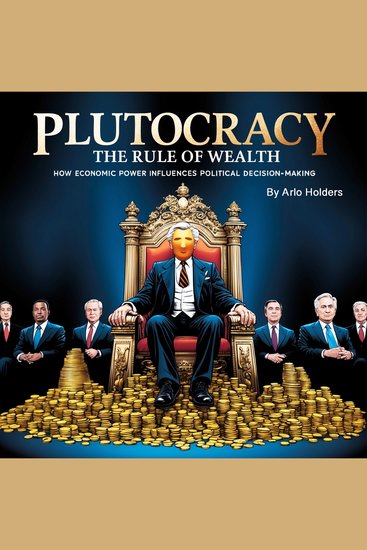
  • Plutocracy - The Rule of Wealth: How Economic Power Influences Political Decision-Making - cover

    Plutocracy - The Rule of Wealth:...

    Arlo Holders

    • 0
    • 0
    • 0
    Plutocracy, often described as the rule of wealth, refers to a political system in which economic elites hold significant influence over government decisions, shaping policies to favor their interests. This concentration of power is not limited to authoritarian regimes or monarchies but can also be observed in modern democracies, where wealth and power are deeply intertwined. In such systems, political decisions are often made in ways that protect and increase the wealth of the rich, while the needs and concerns of the broader population are sidelined. 
    The concept of plutocracy is not a recent phenomenon. Throughout history, societies have been dominated by a small group of wealthy individuals or families who controlled vast resources and used their wealth to influence political outcomes. Whether through the control of land, natural resources, or capital, the wealthy elite have been able to dictate the direction of national policies, often at the expense of the lower classes. From the Roman Empire to the monarchies of Europe, political power and economic power have often been inextricably linked. 
    In modern democracies, the influence of wealth on politics is more subtle but no less pervasive. Campaign financing, lobbying, and the revolving door between government and corporate sectors are just a few examples of how wealth can shape political agendas. Political campaigns are expensive, and politicians often rely on wealthy donors and interest groups to fund their campaigns. In return, these donors and groups expect favorable legislation or regulatory policies. As a result, the political system becomes more responsive to the needs of the wealthy, while the voices of ordinary citizens are drowned out.
    Voir livre
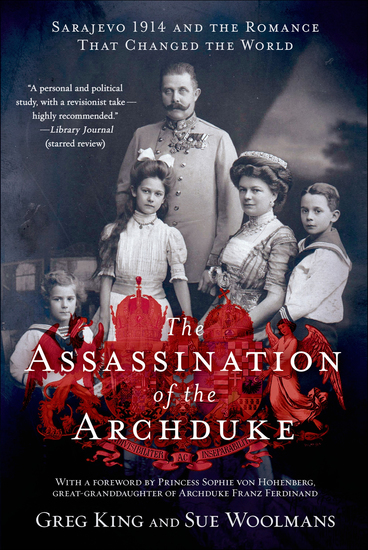
  • The Assassination of the Archduke - Sarajevo 1914 and the Romance That Changed the World - cover

    The Assassination of the...

    Greg King, Sue Woolmans

    • 0
    • 0
    • 0
    Drawing on unpublished letters and rare sources, this is the true story behind the tragic romance and brutal assassination that ignited World War I.In the summer of 1914, three great empires dominated Europe: Germany, Russia, and Austria-Hungary. Four years later all had vanished in the chaos of World War I. One event precipitated the conflict, and at its heart was a tragic love story. When Austrian heir Archduke Franz Ferdinand married for love against the wishes of the emperor, he and his wife Sophie were humiliated and shunned, yet they remained devoted to each other and to their children. The two bullets fired in Sarajevo not only ended their love story, but also led to war and a century of conflict.Set against a backdrop of glittering privilege, Greg King and Sue Woolmans's The Assassination of the Archduke combines royal history, touching romance, and political murder in a moving portrait of the end of an era. One hundred years after the event, it offers the startling truth behind the Sarajevo assassinations, including Serbian complicity and examines rumors of conspiracy and official negligence. Events in Sarajevo also doomed the couple's children to lives of loss, exile, and the horrors of Nazi concentration camps, their plight echoing the horrors unleashed by their parents' deaths.Challenging a century of myth, The Assassination of the Archduke resonates as a very human story of love destroyed by murder, revolution, and war.With a foreword by Princess Sophie von Hohenberg, great-granddaughter of Archduke Franz Ferdinand
    Voir livre
  • This American Planet - cover

    This American Planet

    Joe King

    • 0
    • 0
    • 0
    In This American Planet, Joe King transports readers to a dystopian world where the boundary between humans and insects fades into a chaotic blur. The story follows Greg, an ancient cockroach wizard burdened by his knowledge of forgotten magic, and Curtis, a streetwise housefly drug runner caught in a web of political intrigue. As their fates intertwine, they must navigate a crumbling society dominated by ruthless factions and corrupt overlords, each seeking power at any cost.
    Voir livre