Begleiten Sie uns auf eine literarische Weltreise!
Buch zum Bücherregal hinzufügen
Grey
Einen neuen Kommentar schreiben Default profile 50px
Grey
Jetzt das ganze Buch im Abo oder die ersten Seiten gratis lesen!
All characters reduced
World War II Story of Nazi Espionage - The Kuehn Family Spies Pearl Harbor Betrayal and a Granddaughter's Journey to Hidden Truth - cover

World War II Story of Nazi Espionage - The Kuehn Family Spies Pearl Harbor Betrayal and a Granddaughter's Journey to Hidden Truth

Judy S. Maxwell

Verlag: BookRix

  • 0
  • 0
  • 0

Beschreibung

What if you discovered your grandfather was the only person ever convicted for Pearl Harbor?Christine Kuehn thought she knew her family. Her father was a decorated WWII veteran. Her grandparents had ordinary lives. Then a mysterious letter arrived in 1994, and everything she believed shattered.The truth was impossible. Her grandfather, Otto Kuehn, wasn't a retired naval officer who died in a car accident. He was a Nazi spy. Her aunt Ruth wasn't just eccentric—she was Joseph Goebbels' teenage mistress. Her grandmother Friedel wasn't a housewife—she was the mastermind behind six years of meticulous intelligence gathering that helped Japan plan the attack on Pearl Harbor.For three decades, Christine couldn't let it go.She uncovered FBI files documenting her family's lavish Hawaiian lifestyle funded by Japanese intelligence. She found coded messages, signaling systems, and evidence that 2,403 American deaths were enabled by people who shared her blood. She traced how her grandfather faced a firing squad, how her father—just fifteen years old—chose America over family, and how one boy's courage became the only redemption in a story soaked in betrayal.This isn't just history. It's a warning.As Christine researched, swastikas appeared in her quiet Maryland neighborhood. Antisemitism surged. Authoritarian movements gained ground. The same patterns that seduced her family in 1930s Berlin were repeating in modern America. She realized her family's secret wasn't just shameful—it was essential.Because ordinary people enable extraordinary evil.Otto Kuehn wasn't a monster. He was ambitious, greedy, and willing to rationalize terrible choices. Sound familiar? This gripping account reveals how economic hardship, nationalist promises, and moral compromise transform regular families into accomplices to catastrophe—and why that matters urgently today.With the pacing of a spy thriller and the emotional depth of a personal memoir, this book exposes a hidden chapter of Pearl Harbor while asking the question every generation must answer: When confronted with evil, what will you choose?The past isn't past. It's happening again.Your family's secrets might be buried. Christine's changed history.
Verfügbar seit: 07.02.2026.
Drucklänge: 203 Seiten.

Weitere Bücher, die Sie mögen werden

  • It's Okay to Talk About Adoption - An Invitation for Change Awareness and Belonging - cover

    It's Okay to Talk About Adoption...

    Marcy Bursac

    • 0
    • 0
    • 0
    Adoption isn’t a secret. 
    But it often stays quiet—held back by fear, uncertainty, or not knowing what to say. It’s part of our neighborhoods, our classrooms, our workplaces, our faith communities, and our lives. Yet too often, it remains invisible. 
    This book is a conversation starter. It shines a light on what adoption really looks like today: complex, layered, and deeply human. 
    Whether you’re an adoptee, adoptive parent, birth parent, kinship caregiver, teacher, employer, spiritual leader, policymaker, or simply someone who wants to be an ally or advocate, this book offers the language, insight, and practical steps to make adoption a visible and respected part of how we live and relate to one another. 
    Featuring real voices and stories from people with lived experience and those working to support them. Because when we break the silence and move beyond stigma, we make space for truth, healing, and belonging.
    Zum Buch
  • Reform or Revolution - cover

    Reform or Revolution

    Rosa Luxemburg

    • 0
    • 0
    • 0
    "Reform or Revolution" by Rosa Luxemburg is a seminal work in political theory that explores the fundamental question of whether social change is best achieved through gradual reforms or revolutionary upheavals. Luxemburg critically examines the limitations of reformist approaches within the capitalist system, arguing that true liberation requires a radical transformation of the existing socio-economic order. Through a nuanced analysis of class struggle, imperialism, and the dynamics of capitalism, Luxemburg presents a compelling argument that challenges prevailing notions of incremental change. This work remains a key text for those interested in understanding the complex interplay between reformist and revolutionary strategies in the pursuit of social justice.
    Zum Buch
  • The Birth of Anarchism - 1849-1887 - cover

    The Birth of Anarchism - 1849-1887

    Pierre-Joseph Proudhon, Mikhail...

    • 0
    • 0
    • 0
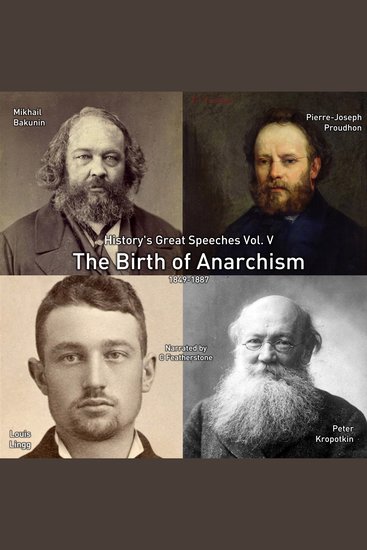
    Mankind can rule itself without the force of top-down authority, and freedom is more than just choosing how to meet the needs and demands of capital. Inequality is structural and intentional, not inevitable and necessary. It does not have to be this way. In solidarity, we are better.Think for yourself, and question authority.This is the essence of anarchism, which has a bad name and reputation because it attacks the necessity of centralised power and authority. The media archetype is Tyler Durden, filled with violence and nihilism – yet anarchism is the most positive of political philosophies, one that Jesus and Buddha both preached, stating that empathy and a rejection of authority were key to human flourishing. Neither would disagree with most early anarchists.Proudhon, whose “property is robbery” is perhaps the most well-known anarchist slogan, lays out the conceptual foundation for key anarchist ideas. He argues that usury (charging interest) is a fundamental harm to society, that there is enough for everyone if we simply take other values to be higher than capital gain, that mutualism is inevitable, and that all governments and ideologies make the same mistake, in trying to change society from the top. Positive change must arise from the great masses of humanity, not from their rulers.Bakunin's speeches are about solidarity arising from the masses, and the ground for a global reconfiguration.Louis Lingg was convicted to death with six others, for being one of the ‘Chicago Anarchists’. They were executed to make a political point, based on corrupted evidence and perjury. His statement is one of contempt for the powers that be, and his belief that mankind should be free and should fight until it is.We end with Kropotkin, who firmly believed in decentralized society. He believed that the greatest strength of mankind lies in the masses, not their rulers, and exhorts us to “Act for Yourselves”.
    Zum Buch
  • Economic Theories and Policies - Understanding Key Economic Systems and Strategies (4 in 1) - cover

    Economic Theories and Policies -...

    Arlo Holders

    • 0
    • 0
    • 0
    Take a look at this book bundle! It contains the following books: 
      - Mercantilism Explained: Mercantilism, a dominant economic theory from the 16th to the 18th century, played a pivotal role in shaping the economic and political landscape of early modern Europe. Rooted in the belief that a nation's wealth and power were measured by its stockpile of precious metals, particularly gold and silver, mercantilism emphasized the importance of maintaining a favorable balance of trade. Nations sought to maximize exports while minimizing imports, often employing protectionist policies to achieve this goal. This approach reflected the belief that global wealth was finite, creating fierce competition among nations to secure the largest share of resources and economic advantage. 
      - The Neoliberal Revolution: Neoliberalism is a term widely used to describe a set of economic policies and ideas that emphasize the importance of free markets, deregulation, privatization, and limited government intervention. Emerging in the mid-20th century, neoliberalism represented a distinct shift away from the welfare state and Keynesian economics, which had dominated Western economies in the post-World War II era. 
      - The Venture Capital Playbook: Venture capitalists, typically investors or firms, provide capital in exchange for equity ownership in the company. This investment is usually made in industries that are considered innovative or disruptive, such as technology, healthcare, and biotechnology. 
      - Venture Capital Explained: The venture capital industry is an essential component of the startup ecosystem, providing financial backing to companies that may not yet be profitable but have strong potential. Many of the world’s most successful companies, including Amazon, Google, and Facebook, received early funding from venture capital firms. 
     
    Zum Buch
  • A Time for Choosing - cover

    A Time for Choosing

    Ronald Reagan

    • 0
    • 0
    • 0
    Ronald Reagan hosted the General Electric Theater TV series which ran from 1953 to 1962. During this time Reagan visited GE’s 135 plants across the country and spoke to audiences of GE’s 250,000 employees. Reagan’s speech focused on the growing power of federal, state, and local governments and the dangers this posed to free market competition and to American liberty. Over the years Reagan continually refined and improved what came to be known as “The Speech”. 
    Reagan was asked to record a version of his speech to be used to support the presidential campaign of Barry Goldwater during the 1964 presidential campaign. The speech, entitled “A Time for Choosing”, was presented to a national television audience on October 27, 1964, as part of a program titled Rendezvous with Destiny. 
    David Broder of the Washington Post said the speech was "the most successful national political debut since William Jennings Bryan electrified the 1896 Democratic Convention with his 'Cross of Gold' speech." Following the speech, Reagan was elected Governor of California in 1966. This speech launched Reagan’s career on the national stage and contributed to his reputation as “the Great Communicator”. 
    Audio recording courtesy of the Ronald Reagan Presidential Library. 
    AspenLeafMedia.com
    Zum Buch
  • Codebreakers - How Allied Intelligence Cracked Enemy Codes and the Tide - cover

    Codebreakers - How Allied...

    Sage Winters

    • 0
    • 0
    • 0
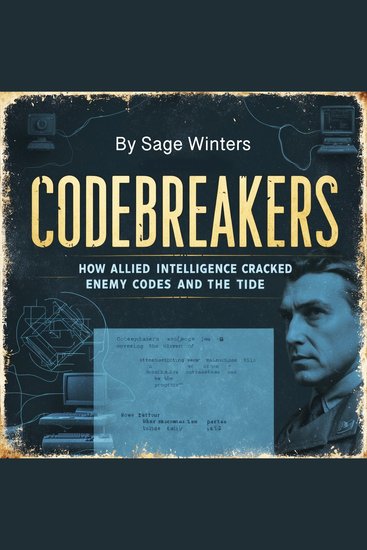
    The art of codebreaking has long been an essential aspect of warfare, serving as a hidden weapon that can change the course of history. During World War II, intelligence efforts were not only about gathering information; they were about deciphering the secrets encoded by the enemy to gain a strategic advantage. As technology evolved, so did the complexity of military ciphers, making the task of breaking enemy codes more challenging and more critical than ever. "Codebreakers: How Allied Intelligence Cracked Enemy Codes and the Tide" delves into the extraordinary efforts of Allied cryptographers, whose tireless work behind the scenes helped secure victories that shifted the balance of the war. 
      
    The importance of cryptography in World War II cannot be overstated. The ability to read an enemy’s messages before they had time to act was a decisive factor in numerous key battles and campaigns. The German Enigma machine, a sophisticated encryption device, represented the pinnacle of Nazi Germany’s efforts to protect its communications. Breaking this code was essential to the Allied success, and it was a challenge that seemed insurmountable at the time. However, a group of brilliant minds, including Alan Turing, led the charge in deciphering the Enigma cipher, providing the Allies with invaluable intelligence that allowed them to anticipate German movements, thwart attacks, and save countless lives. 
      
    At the heart of this monumental achievement was Bletchley Park, a secret British facility that became the epicenter of codebreaking during the war. Here, the brightest mathematicians, linguists, and engineers worked tirelessly, often under immense pressure, to crack the German and later the Japanese codes.
    Zum Buch