

Rejoignez-nous pour un voyage dans le monde des livres!
Ajouter ce livre à l'électronique
Grey
Ecrivez un nouveau commentaire Default profile 50px
Grey
Abonnez-vous pour lire le livre complet ou lisez les premières pages gratuitement!
All characters reduced
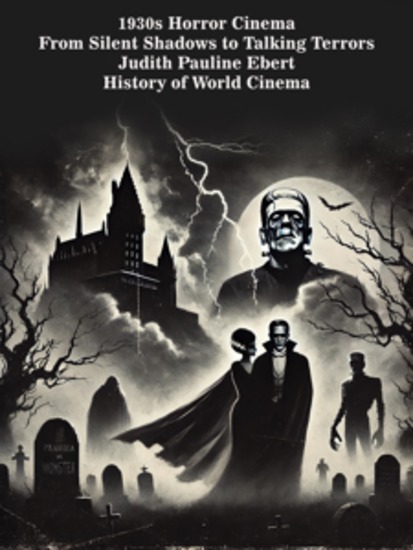
1930s Horror Cinema - From Silent Shadows to Talking Terrors - cover

1930s Horror Cinema - From Silent Shadows to Talking Terrors

Judith Pauline Ebert

Maison d'édition: self-publishing

  • 0
  • 0
  • 0

Synopsis

A Journey into the Shadows of a Defining DecadeStep back into a decade where fear took form on the silver screen, and the Gothic imagination found its cinematic voice. 1930s Horror Cinema is a comprehensive and compelling exploration of one of the most formative eras in horror film history — a time when monsters, mad scientists, and haunted souls first captivated global audiences and forever shaped the genre.What’s Inside?Origins and Cultural ContextThe book begins by tracing the historical and cultural roots of horror cinema, setting the stage for the innovations of the 1930s. From economic depression to shifting worldviews, this decade was rife with the anxieties that horror thrives on.Development Around the WorldFar from being limited to Hollywood, horror cinema of the 1930s blossomed across borders. The book explores:- The United States, home to Universal Pictures and icons like Dracula and Frankenstein.- Germany and Austria, still echoing with Expressionist aesthetics.- France, with its surreal shadows and poetic terror.- The United Kingdom, drawing on literary horror and subtle psychological frights.- Plus chapters on Italy, Czechoslovakia, Mexico, the Soviet Union, and Japan—each contributing unique flavors to the genre.Significant DirectorsMeet the masterminds behind the fear:- James Whale, visionary director of Frankenstein and The Invisible Man.- Tod Browning, the mind behind Dracula and the cult classic Freaks.- Karl Freund, cinematographer turned director (The Mummy).- Carl Theodor Dreyer, who brought poetic dread to life in Vampyr.- Also featured: Rowland V. Lee and Erle C. Kenton, directors who helped close the decade with cinematic chills.Each director’s life, artistic vision, key works, and thematic signatures are explored in depth, along with fascinating curiosities and legacies.Iconic Actors and ActressesDive into the careers of the genre’s unforgettable faces:- Bela Lugosi, whose Dracula became the definitive vampire.- Boris Karloff, the tragic monster of Frankenstein.- Elsa Lanchester, Gloria Stuart, Lionel Atwill, and Fay Wray, who gave depth, sensuality, and suspense to horror’s golden age.Explore their lives, careers, screen personas, and the impact they left on cinema.Themes in 1930s Gothic HorrorUncover the psychological and philosophical dimensions behind the fear:- The Fear of the Other- Science and Hubris- Death and Immortality- The Supernatural vs. Rationality- Eroticism and Repression- The Haunted Past These themes are not just analyzed — they're brought to life through aesthetic interpretations, cultural context, and their lasting impact on audiences.Ten Definitive MasterpiecesThe book closes with in-depth studies of ten essential films that defined the decade:- Dracula (1931) - Frankenstein (1931) - Vampyr (1932) - The Mummy (1932) - Freaks (1932) - The Old Dark House (1932) - The Invisible Man (1933) - Island of Lost Souls (1932) - Bride of Frankenstein (1935) - Son of Frankenstein (1939) Each chapter offers plot breakdowns, cast highlights, thematic analysis, directorial insights, and plenty of behind-the-scenes trivia.Why Read 1930s Horror Cinema?Whether you're a film scholar, horror enthusiast, or vintage movie buff, this eBook is your ultimate guide to the decade that gave birth to modern horror. It's rich with historical insight, cinematic analysis, biographical profiles, and a deep appreciation for the artistry and atmosphere that made 1930s horror a timeless genre. Illustrated.
Disponible depuis: 19/04/2025.

D'autres livres qui pourraient vous intéresser

  • How to Raise an Art Star - cover

    How to Raise an Art Star

    Ara Tucker

    • 0
    • 0
    • 0
    Gus Hempelstein had only wanted to change things a little bit. He was about to find out that when you were dealing with Vabeh Gregson Bennett, you had to go big or find another playground. 
    Morgan and Devon Gregson Bennett are an interracial creative power couple living happily enough in Brooklyn until a freak accident leaves a little girl orphaned in Los Angeles. Setting aside reservations about the price motherhood will exact on their marriage and careers, Morgan and Devon agree to adopt Vabeh, a bi-racial ethnic-hair-products heiress. Vabeh touches down in New York, wearing last season’s fur and on a mission to quickly distinguish herself from the other bold-faced names at her new school, the tony School for Spoiled Kids. 
    Vabeh’s meteoric ascension as a painter isn’t enough to quell her ambition, so she opens the Walk-In Art Gallery. Soon, she has collectors and classmates clamoring for her attention. All is proceeding according to plan, until her trusted gallerina, Gus Hempelstein, turns in his skinny jeans and defects to open a rival gallery, the Sit Down, backed by Devon’s ex-lover and powerful art world patron, Pim Logan. 
    Even with a publicist and therapist working overtime on Vabeh’s behalf to protect her art world darling status, Morgan and Devon’s parenting skills are put to the test as the press breathlessly covers their every move. 
    Will Vabeh crumple under the weight of Gus’s devastating betrayal, or will she dust it off, chalking it up to just another day on the playground?
    Voir livre
  • Dancing with Muddy - Muddy Waters Eric Clapton and My Lucky Life In and Out of the Blues - cover

    Dancing with Muddy - Muddy...

    Jerry Portnoy

    • 0
    • 0
    • 0
    Jerry Portnoy grew up in Chicago hearing the blues being played outside his father's rug store on famed Maxwell Street during the late 1940s and early '50s. After dropping out of college, he became immersed in the colorful world of pool hustlers as he managed the largest pool hall in Chicago. During a stint as a paratrooper early in the Vietnam war, he applied for discharge as a conscientious objector, and lived in San Francisco during 1967's "summer of love." While bumming around Europe the following year, Portnoy heard the blues again on a record by Sonny Boy Williamson and became obsessed with mastering blues harmonica.He returned to Chicago and in 1974 he was playing in small Black clubs at night when Muddy Waters plucked him from his day job at Cook County Jail to fill the harmonica chair in his fabled band. Eric Clapton followed suit in 1991. In a career that took him from ghetto taverns to the White House and the Royal Albert Hall, he went from the raggedy vans and cheap roadside motels of the blues world to the private jets and five-star hotels of the rock world. Between those two very different gigs was a struggle to survive the vagaries of the music business and the pressures of life on the road. In a remarkable life, he also assisted in surgery, lodged in a Moroccan house of ill repute, and dined at Giorgio Armani's. 
    Voir livre
  • Scotland in 100 Buildings - cover

    Scotland in 100 Buildings

    Roger Emmerson

    • 0
    • 0
    • 0
    Scotland in 100 Buildings by architect Roger Emmerson is a captivating journey through the architectural marvels of Scotland, seen uniquely through Emmerson's personal experiences.
    This isn't a dry history or textbook – it's a lively, intimate account where each building tells its own story. Emmerson has visited every site featured, offering first-hand insights that bring these places to life, from iconic landmarks to hidden gems. His reflections aim to inspire readers to explore for themselves, rather than simply inform, making this book easy to pick up at any page. 
    Ideal for architecture enthusiasts, travellers and locals alike, Scotland in 100 Buildings will appeal to anyone curious about Scotland's diverse buildings and the personal tales they inspire. It's perfect for those seeking an approachable and authentic look at Scotland's architectural legacy.
    Voir livre
  • Crying With My Pussy - cover

    Crying With My Pussy

    Isabel Hillborg

    • 0
    • 0
    • 0
    Prepare for a literary eruption. Crying with My Pussy, the incendiary debut novel from Swedish writer Isabel Hillborg, arrives as a fierce and unfiltered exploration of trauma, desire, and resilience in modern womanhood. Brutally honest, violently funny, and gorgeously subversive, Hillborg's voice cuts through cultural taboos with an emotional scalpel.In this unflinching narrative, protagonist Jennie navigates the aftermath of childhood trauma through a series of intense relationships. As she spirals through the complexities of millennial femininity, mental illness, and erotic compulsion, Jennie's journey becomes a powerful meditation on how we try to heal from our deepest wounds. Hillborg masterfully chronicles a woman's quest to reclaim her identity in a world that constantly attempts to define her.Hillborg dares to ask: What if the only thing keeping you alive is the one thing society says should shame you?With echoes of Virginie Despentes, Chris Kraus, and Phoebe Waller-Bridge, Crying with My Pussy is not only literary but political. It's for readers who want their fiction fierce, flawed, and female as hell—yet its themes of survival, identity, and the search for authentic connection will resonate with anyone who has ever felt broken and sought to put themselves back together.
    Voir livre
  • Captivating Adventures in Enchanted Realms Await You - "Transform your exploration with our immersive audiobook guiding you through captivating enchanted realms!" - cover

    Captivating Adventures in...

    Jorvan Tristam

    • 0
    • 0
    • 0
    Enchanting Journeys Through Magical Realms Await You 
    ⭐⭐ A Simplified Guide and Insights Included ⭐⭐ 
    Are you eager to advance your career and strengthen your knowledge through immersive storytelling experiences? 
    In search of a complete guide that encompasses everything you need for a magical journey? 
    Your quest ends here! 
    This guide acts as your ultimate companion for enhancing your understanding, applying your skills, and engaging in delightful narratives. With this resource, you are prepared for success. 
    Updated with the latest storytelling structures. 
    Key features of this enriched guide: 
    - In-depth insights into the enchanting world of storytelling 
    - Comprehensive explanations of the magic and wonder within narratives 
    - Effective strategies for preparing for a captivating journey and overcoming obstacles 
    Our guide stands out with its thorough coverage, which is vital for your adventure's success. Concepts are not just lightly touched upon; they are explored with clarity and detail. 
    Please note that this guide is an independent resource and is not affiliated with any official storytelling entity, serving solely for your enrichment. 
    Designed with a logical structure and accessible language, our Enchanted Realms Guide ensures seamless transitions between topics. Say goodbye to convoluted language and embrace clear, precise, and engaging content. 
    So, why wait? Click the BUY NOW button, secure your guide, and embark on your enchanting journey today!
    Voir livre
  • Nok Civilization - The Mysterious Sculptor of Terracotta and West Africa's Early Culture - cover

    Nok Civilization - The...

    Rolf Hedger

    • 0
    • 0
    • 0
    The Nok civilization is one of the most fascinating and mysterious ancient cultures of West Africa. It flourished between approximately 1500 BCE and 500 CE, making it one of the earliest known complex societies in sub-Saharan Africa. The Nok people are best known for their remarkable terracotta sculptures, which provide valuable insights into their artistry, beliefs, and way of life. Despite their historical significance, much about the Nok civilization remains unknown, leaving archaeologists and historians to piece together their story from scattered artifacts and excavation sites. 
    The first discovery of Nok artifacts occurred in 1928, when British archaeologist Bernard Fagg came across a series of terracotta figurines in central Nigeria. These artifacts, found near the village of Nok, revealed an advanced artistic style that was distinct from any previously known African culture. The sculptures depicted human figures with intricate hairstyles, elaborate jewelry, and expressive facial features, suggesting a highly developed artistic tradition. This discovery marked the beginning of a deeper exploration into the Nok civilization, leading to further excavations that uncovered tools, pottery, and evidence of early ironworking. 
    One of the most significant aspects of Nok’s discovery was its role in the history of metallurgy in Africa. Archaeological findings suggest that the Nok people were among the earliest in West Africa to practice iron smelting, a technological advancement that contributed to agricultural development and societal growth. The presence of iron tools indicates that they engaged in farming, hunting, and trade, supporting the idea that Nok society was well-organized and economically active.
    Voir livre
