Begleiten Sie uns auf eine literarische Weltreise!
Buch zum Bücherregal hinzufügen
Grey
Einen neuen Kommentar schreiben Default profile 50px
Grey
Jetzt das ganze Buch im Abo oder die ersten Seiten gratis lesen!
All characters reduced
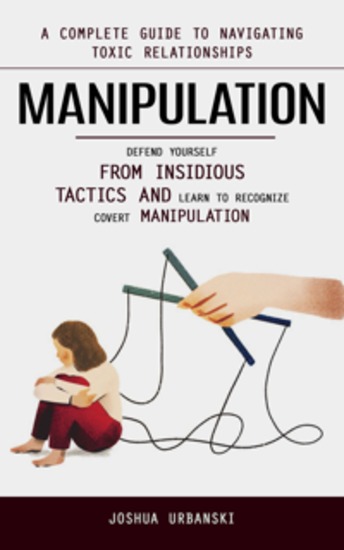
Manipulation: A Complete Guide to Navigating Toxic Relationships (Defend Yourself From Insidious Tactics and Learn to Recognize Covert Manipulation) - cover

Manipulation: A Complete Guide to Navigating Toxic Relationships (Defend Yourself From Insidious Tactics and Learn to Recognize Covert Manipulation)

Joshua Urbanski

Verlag: Akshat Akshat

  • 0
  • 0
  • 0

Beschreibung

Dark psychology is the study of the darker aspects of human behavior, focusing on tactics, techniques, and strategies individuals use to manipulate, control, or exploit others.Individuals who employ dark psychology often do so with malicious intent, seeking to influence, control, or exploit others for various forms of personal gain—financial, emotional, sexual, social, or other self-serving incentives.Dark psychology includes a diverse set of methods and approaches aimed at influencing and controlling others, frequently through discreet and underhanded means to fulfill the manipulator's goals.The unique aspects covered in the book:Explores the swedish political model, offering a critical lens on its impact on societal governance.Provides a comprehensive look at ethics in governance, challenging traditional perceptions.Critiques established social models, revealing how they can be manipulated.Discusses manipulation and power dynamics, offering insights into underlying global political strategies.Offers global political insights into the manipulation of societal ideals.It focuses on improving transparency and corruption measures in political systems.Containing a fascinating exploration of the depths of the human mind, this insightful book takes readers on a deep dive to discover the hidden parts of the psyche. Covering the subtle world of body language and non-verbal communication, along with the lesser-known secrets of human behavior, you’ll discover how you can draw on a rich collection of insights to protect yourself from manipulators and abusers.
Verfügbar seit: 13.06.2025.
Drucklänge: 150 Seiten.


Weitere Bücher, die Sie mögen werden

  • Secret Societies - cover

    Secret Societies

    Philip Gardiner

    • 0
    • 0
    • 0
    Throughout Secret Societies, Gardiner; uncovers an ancient secret society thought to have died out many years ago and gets to the core of the secret societies’ belief systems. He explores the secret origins of Freemasonry and the links to secret Serpent Cults, Investigates the secret hidden meaning of King Arthur and Robin Hood and examines the claimants to the name of Illuminati, and analyzes the history of the group in Europe and America. Gardiner reveals the secret links within the Vatican and the Nazi Party and looks in-depth at the white-powdered gold theory supposedly kept secret by orders throughout time and radically re-appraises it. He also shows the link between the so-called enlightenment experience and the control of our minds. 
     
    Nobody in the genre involves themselves in the tale in the same way that Gardiner does, and here he shows that the search for ultimate truth can often be a terrifying one.
    Zum Buch
  • This is Not New - Art Culture and the Promise of Change - cover

    This is Not New - Art Culture...

    David Balzer

    • 0
    • 0
    • 0
    Praise for Curationism: "Balzer writes with zest, skepticism, and sly humor" —Sheila Heti, author of Pure Colour 


    What does it mean to call something "new"? Why is Western art and culture, even after postmodernism, still so obsessed with the concept? What are the consequences of relying on culture to bring about social change? 


    In this provocative book, David Balzer argues that Western culture was never designed to produce truly new or original artifacts. Rather, we move from fixation to fixation, trend to trend—a cycle of creation and destruction with deep origins in Judeo-Christianity and the paganism that preceded it. The culture industry promises its own form of change while preserving existing systems of power exactly as they are. 


    From the New Jerusalem to the New Left, from Vannevar Bush to Kate Bush, This is Not New asks difficult questions about the role of culture not in making change, but in delaying—even preventing—it.
    Zum Buch
  • The Way of Dante - Going Through Hell Purgatory and Heaven with C S Lewis Dorothy L Sayers and Charles Williams - cover

    The Way of Dante - Going Through...

    Richard Hughes Gibson

    • 0
    • 0
    • 0
    Rediscovering Dante with Lewis, Sayers, and Williams
    For centuries, readers have marveled at the imaginative brilliance of authors like C. S. Lewis, Dorothy L. Sayers, and Charles Williams. But what inspired these literary giants? The Way of Dante takes you on a journey of discovering how the medieval poet Dante Alighieri and his masterwork, The Divine Comedy, shaped their thoughts, artistry, and faith.
    In The Way of Dante, Richard Hughes Gibson reveals the profound influence of The Divine Comedy on the writings of Sayers, Williams, and Lewis through
    
    - Following the authors as they read, reflect on, and debate Dante's allegorical journey through hell, purgatory, and heaven
    - Challenging common misconceptions about Dante's work
    - Exploring how Dante prompts reflection on sin, love, and glory
    - Revealing the psychological, social, and theological lessons learned
    The Way of Dante is ideal for readers, scholars, teachers, and students interested in The Divine Comedy; the works of Sayers, Lewis, and Williams; or the spiritual dimensions of storytelling. Step into the minds of three of the 20th century's most beloved writers and be inspired to view Dante through a new lens.
    About the Series
    The Hansen Series celebrates the literary and spiritual contributions of seven British authors whose works have captivated readers across generations: Owen Barfield, G. K. Chesterton, C. S. Lewis, George MacDonald, Dorothy L. Sayers, J. R. R. Tolkien, and Charles Williams. These seven authors were all deeply involved in the friendships and intellectual exchanges that shaped the Inklings, a mid-twentieth-century group of Christian writers and thinkers in Oxford, England. This series invites readers to deepen their engagement with these timeless voices and their enduring influence on literature, faith, and the life of the imagination.
    Zum Buch
  • Most Important Capitals of Ancient Egypt The: The History of Memphis Thebes and Alexandria - cover

    Most Important Capitals of...

    Editors Charles River

    • 0
    • 0
    • 0
    Africa may have given rise to the first humans, and Egypt probably gave rise to the first great civilizations, which continue to fascinate modern societies across the globe nearly 5,000 years later. From the Library and Lighthouse of Alexandria to the Great Pyramid at Giza, the Ancient Egyptians produced several wonders of the world, revolutionized architecture and construction, created some of the world’s first systems of mathematics and medicine, and established language and art that spread across the known world. With world-famous leaders like King Tut and Cleopatra, it’s no wonder that today’s world has so many Egyptologists. 
    	For almost four millennia, the Great Pyramids of Ancient Egypt have been widely hailed as the single greatest archeological feat man has ever accomplished. The Great Pyramid at Giza is the only one of the seven wonders of the ancient world to have survived into the modern age. Unlike so many pieces of the historical record which have been “re-discovered,” relatively recently (in the grand scheme of things,” in their four thousand years of existence, the Great Pyramids have never allowed themselves to be truly forgotten by the human civilization which has never ceased to regard them with wonder and awe.  
    	This audiobook examines the history of the cities that served as capitals for Egypt for millennia, including their architectural, religious, cultural, and historical characteristics.
    Zum Buch
  • Mad Max and Philosophy - Thinking Through the Wasteland - cover

    Mad Max and Philosophy -...

    William Irwin

    • 0
    • 0
    • 0
    Beneath the stylized violence and thrilling car crashes, the Mad Max films consider universal questions about the nature of human life, order and anarchy, justice and moral responsibility, society and technology, and ultimately, human redemption. In Mad Max and Philosophy, a diverse team of political scientists, historians, and philosophers investigates the underlying themes of the blockbuster movie franchise, following Max as he attempts to rebuild himself and the world. 


    This book guides you through the barren wastelands of a post-apocalyptic future as you explore ethics and politics in The Wasteland, the importance of costumes and music, humankind's relationship with nature, commerce, gender, religion, madness, and more. 


    ● Covers all of George Miller's Mad Max films 


    ● Discusses connections between Mad Max and major philosophers 


    ● Follows Max's journey from policeman and family man to lost soul in search of redemption 


    ● Examines the future of technology and possible impacts on society, the environment, and access to natural resources 


    ● Delves into feminist themes and relationships between power and procreation
    Zum Buch
  • Tutan Hamen And The Discovery Of His Tomb - cover

    Tutan Hamen And The Discovery Of...

    Howard Carter

    • 0
    • 0
    • 0
    “First steps of tomb found,” British archaeologist Howard Carter excitedly wrote across a page of his pocket diary on November 4, 1922. The next day’s excavation in the Valley of the Kings on the west bank of the Nile River would reveal a tantalizing entrance. He quickly sent a telegram to Lord Carnarvon, who had been sponsoring his (mostly unsuccessful) investigations of Egyptian antiquities for several years and had reluctantly backed this final season: “At last have made wonderful discovery in Valley; a magnificent tomb with seals intact.” 
     
    The subsequent opening of Pharaoh Tutankhamun’s long untouched tomb and its burial chamber—and the dissemination of its treasures through photography, film, and traveling exhibitions—would captivate the world and transform a young Egyptian king whose reign was brief and little remembered into an icon of ancient mysteries. 
     
    Because Tutankhamun’s tomb was largely undisturbed—there are indications it was robbed a couple of times in antiquity but then restored—it offered a rare view into ancient Egypt and its faith, culture, and funerary rites. Stories about its discovery and the gradual uncovering of its artifacts made front-page news across the globe, with reporters marveling at each opulently adorned statue and alabaster vase. On December 22, 1922, The New York Times published a first-hand account in which the author wrote: “No finer human interest story, no more thrilling drama, no greater archaeological revelations could be summoned from history or the most vivid imagination than is told by the mute objects in this tomb of King Tutankhamen.” 
     
    Howard Carter was a British archaeologist and Egyptologist who discovered the intact tomb of the 18th Dynasty Pharaoh Tutankhamun in November 1922, the best-preserved pharaonic tomb ever found in the Valley of the Kings. This is his story!
    Zum Buch