Rejoignez-nous pour un voyage dans le monde des livres!
Ajouter ce livre à l'électronique
Grey
Ecrivez un nouveau commentaire Default profile 50px
Grey
Abonnez-vous pour lire le livre complet ou lisez les premières pages gratuitement!
All characters reduced
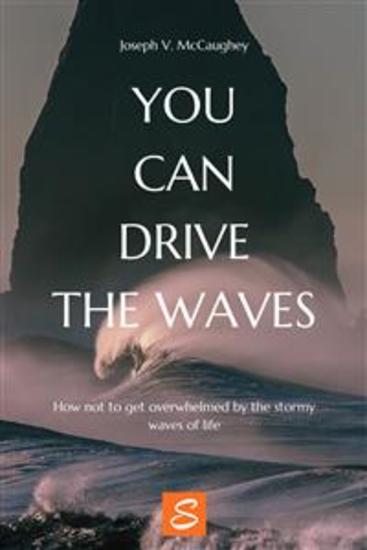
You can drive the waves - How not to get overwhelmed by the stormy waves of life - cover

You can drive the waves - How not to get overwhelmed by the stormy waves of life

Joseph V. McCaughey

Maison d'édition: Solart Books

  • 0
  • 0
  • 0

Synopsis

We live in the immense ocean of life. Our problems are like stormy waves capable of drowning us but there are "self-help" remedies to not get overwhelmed.Understanding your emotions, knowing how to manage them, developing greater self-awareness and improving leadership are just some of the things that will make you good "captains" to be able to steer the sea.
Disponible depuis: 04/09/2023.

D'autres livres qui pourraient vous intéresser

  • End of the Civil War The: The History of the Battles and Events that Destroyed the Confederacy and Finished the War Between the States - cover

    End of the Civil War The: The...

    Editors Charles River

    • 0
    • 0
    • 0
    Americans have long been fascinated by the Civil War, marveling at the size of the battles, the leadership of the generals, and the courage of the soldiers. Since the war's start over 150 years ago, the battles have been subjected to endless debate among historians and the generals themselves. The Civil War was the deadliest conflict in American history, and had the two sides realized it would take 4 years and inflict over a million casualties, it might not have been fought. Since it did, however, historians and history buffs alike have been studying and analyzing the biggest battles ever since. 
    By the close of 1864, Abraham Lincoln had been reelected, the Union army had taken Nashville from General Hood, and Sherman had concluded his total war, “slash-and-burn” march of destruction to Savannah, Georgia, offering it as a Christmas present to Lincoln. Nevertheless, with everything seemingly falling to pieces, the South still held out hope of some sort of miracle, and Davis even attempted to send a peace delegation to meet with Lincoln in the early months of 1865. To most observers, the South was clearly reaching its end, but Davis had no intention of quitting the war. Even while he was fleeing, he attempted to order Confederate generals in the field to keep fighting. On April 9, 1865, Lee formally surrendered his weary army to Grant at Appomattox. Appomattox is frequently cited as the end of the Civil War, but there still remained several Confederate armies across the country, mostly under the command of General Joseph E. Johnston, the same commander who arrived with reinforcements by rail during the First Battle of Bull Run and gave the South hope with victory in the first major battle. 
    On April 26, 1865, Johnston defied Davis’s orders and surrendered all of his forces to General Sherman, and over the next month, the remaining Confederate forces would surrender or quit.
    Voir livre

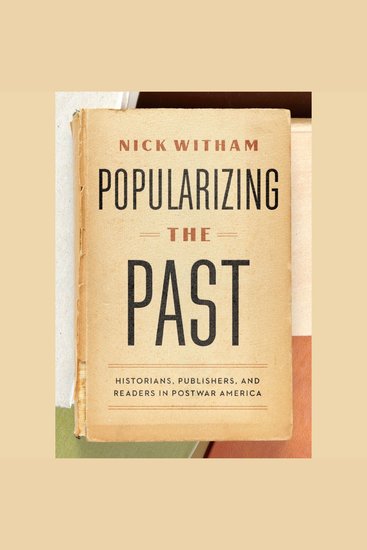
  • Popularizing the Past - Historians Publishers and Readers in Postwar America - cover

    Popularizing the Past -...

    Nick Witham

    • 0
    • 0
    • 0
    Popularizing the Past tells the stories of five postwar historians who changed the way ordinary Americans thought about their nation’s history. 
      
    What’s the matter with history? For decades, critics of the discipline have argued that the historical profession is dominated by scholars unable, or perhaps even unwilling, to write for the public. In Popularizing the Past, Nick Witham challenges this interpretation by telling the stories of five historians—Richard Hofstadter, Daniel Boorstin, John Hope Franklin, Howard Zinn, and Gerda Lerner—who, in the decades after World War II, published widely read books of national history. 
      
    Witham compellingly argues that we should understand historians’ efforts to engage with the reading public as a vital part of their postwar identity and mission. He shows how the lives and writings of these five authors were fundamentally shaped by their desire to write histories that captivated both scholars and the elusive general reader. He also reveals how these authors’ efforts could not have succeeded without a publishing industry and a reading public hungry to engage with the cutting-edge ideas then emerging from American universities. As Witham’s book makes clear, before we can properly understand the heated controversies about American history so prominent in today’s political culture, we must first understand the postwar effort to popularize the past.
    Voir livre
  • History of a Six Weeks' Tour - Through a Part of France Switzerland Germany and Holland: with Letters Descriptive of a Sail Round the Lake of Geneva and of the Glaciers of Chamouni - cover

    History of a Six Weeks' Tour -...

    Mary Wollstonecraft Shelley,...

    • 0
    • 0
    • 0
    'I never knew—I never imagined what mountains were before.' 
      
    History of a Six Weeks' Tour (1817) is a volume of travel-writing by Mary Wollstonecraft Shelley and Percy Bysshe Shelley, two of the best-known authors of the English Romantic period. Comprising prose narrative, correspondence, and poetry, it is a highly engaging account of their 'adventures and feelings' during two journeys from England to Switzerland. 
      
    The first part of History describes the titular 'tour' made by the not-yet-married Mary and Percy in July–September 1814, when mainland Europe was once again accessible to British travellers at the end of the Napoleonic wars. The long descriptive letters which make up the second part of History recall the so-called 'Frankenstein summer' of 1816, some of which the Shelleys spent with Byron on the shores of Lake Geneva. This part of History also provides significant biographical and historical context for Mary's novels Frankenstein (1818) and The Last Man (1826), key sections of which are set in the Alps, and for two of Percy's most canonical poems, 'Hymn to Intellectual Beauty' and 'Mont Blanc', the second of which was published for the first time in History. This edition includes an introduction, detailed notes, and appendices, placing the book in its historical and cultural context and showcasing the Shelleys' collaborative writing process.
    Voir livre
  • Gaslighting - How to Influence People with Gaslight Effect Persuasion Emotional Manipulation Dark Psychology Secrets to Analyze Human Behavior & Control Minds with Social Skills NLP Body Language - cover

    Gaslighting - How to Influence...

    Mike Cold

    • 0
    • 0
    • 0
    Are you eager to wield influence over others effortlessly? Do you seek protection from gaslighting, persuasion, and manipulation? If so, keep reading. 
    In today's world, understanding how to influence and defend against manipulation is crucial. This book unveils the secrets of mind control techniques employed by successful individuals, empowering you to achieve your goals with ease and minimal effort. 
    Explore the depths of psychology and discover practical strategies to gain influence in situations where you've previously faltered. Learn the dark arts of persuasion and manipulation, equipping yourself with the tools to navigate human behavior effectively. 
    Inside, you'll uncover:Insightful techniques to recognize and counter gaslightingMastery of Neuro-Linguistic Programming (NLP) for mind controlPrinciples of persuasion for seamless influenceHarnessing hypnosis to achieve desired outcomesUnderstanding the Dark Triad and its influenceTechniques to control emotions and behaviorWinning strategies for relationships, friendships, and attraction 
    This guide equips you with invaluable knowledge to defend against manipulation and enhance your communication skills. Whether you're new to manipulation or refining your expertise, this book is your roadmap to mastery. 
    By the end, you'll possess the prowess to influence others and safeguard yourself. Take control of your destiny—unlock the secrets to success today!Ready to take control? Purchase your copy today and unlock the power of influence!
    Voir livre
  • Aotearoa New Zealand - The Convergence and Histories - cover

    Aotearoa New Zealand - The...

    Lillian Brooks

    • 0
    • 0
    • 0
    Aotearoa New Zealand, located in the southwestern Pacific Ocean, is a country with a rich and diverse history that stretches back over a thousand years. Its historical and cultural journey has been shaped by the convergence of Māori and European influences, which has made Aotearoa one of the most unique nations in the world. The story of Aotearoa is not just one of migration and colonization but also of resilience, adaptation, and the constant negotiation of identity, land, and culture. 
    The Māori people, the indigenous inhabitants of New Zealand, arrived from eastern Polynesia in several waves of migration around the 13th century. Over the centuries, they developed a sophisticated culture, which included a rich oral tradition, strong tribal structures, and deep spiritual and cultural ties to the land. The Māori worldview was shaped by the concept of whenua (land), whakapapa (genealogy), and wairua (spirit), and their connection to the environment played a fundamental role in shaping their social and cultural practices. 
    The arrival of Europeans, led by explorers such as Abel Tasman in 1642 and Captain James Cook in 1769, marked a turning point in New Zealand’s history. Initial encounters between Māori and Europeans were characterized by curiosity, exchange, and occasional conflict. However, as European settlement expanded throughout the 19th century, the effects on Māori society became profound. The introduction of new technologies, ideas, and diseases, coupled with land confiscation and colonization, reshaped the cultural landscape of the country. This period led to the displacement of Māori from their ancestral lands and the beginning of a long history of legal and political struggles to protect their rights and sovereignty.
    Voir livre
  • Maxims Contemplations & Perspectives on Perfectionism - cover

    Maxims Contemplations &...

    Mario D. Leone

    • 0
    • 0
    • 0
    In my book The Beautiful Flaw, I have revealed perfectionism for you as a self-imposed barrier that prevents our true growth and full self-acceptance. When we are embracing our imperfection, we unlock the freedom to evolve and fully embrace who we are, flaws and all.
    Voir livre