Begleiten Sie uns auf eine literarische Weltreise!
Buch zum Bücherregal hinzufügen
Grey
Einen neuen Kommentar schreiben Default profile 50px
Grey
Jetzt das ganze Buch im Abo oder die ersten Seiten gratis lesen!
All characters reduced
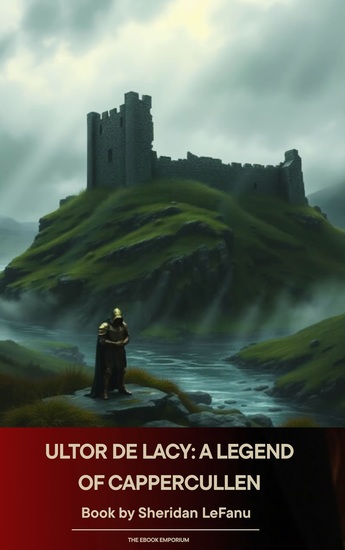
Ultor De Lacy: A Legend of Cappercullen - cover

Ultor De Lacy: A Legend of Cappercullen

Joseph Sheridan Le Fanu

Verlag: The Ebook Emporium

  • 0
  • 0
  • 0

Beschreibung

"The shadows of Cappercullen hold more than just memories; they hold the restless spirits of those we betrayed."

Returning to the rugged landscape of Munster, Le Fanu weaves a tale of the doomed De Lacy family. Ultor De Lacy, a man whose family was ruined by their loyalty to the lost Jacobite cause, lives a shadow of a life in the decaying Tower of Cappercullen. But the physical ruin of his estate is nothing compared to the spiritual rot within. When his daughters encounter a mysterious and beautiful stranger in the woods, they unknowingly reopen a door to a supernatural debt that has remained unpaid for generations. It is a story where political exile meets ghostly visitation, proving that for the De Lacys, the war never truly ended.

History Haunted by Myth: Le Fanu brilliantly utilizes the real-world tension of the 18th-century Jacobite rebellions to ground his ghost story. The "legend" isn't just a campfire tale; it is a manifestation of the trauma of a defeated aristocracy. The ghosts of Cappercullen are symbols of a bygone era that refuses to die or stay silent.

The "Stranger" in the Woods: A recurring theme in Le Fanu's work is the deceptive nature of the supernatural. The figure who haunts the periphery of the De Lacy estate is both alluring and terrifying, representing the "Otherworld" of Irish folklore. The story explores the vulnerability of innocence when faced with an ancient, calculating evil.

Atmospheric Mastery: From the "death-tick" in the walls to the chilling descriptions of the secret chamber hidden within the tower, Le Fanu builds a sense of mounting dread. Ultor De Lacy is a masterclass in the "liminal" ghost story—where the horror is found in the transition between the historical world we know and the spectral world we fear.

Step into the tower of shadows. Purchase "Ultor De Lacy: A Legend of Cappercullen" today.
Verfügbar seit: 13.01.2026.
Drucklänge: 47 Seiten.

Weitere Bücher, die Sie mögen werden

  • Apple Blossom in Brittany - From their pens to your ears genius in every story - cover

    Apple Blossom in Brittany - From...

    Ernest Dowson

    • 0
    • 0
    • 0
    The bookshelves of British literature are incredible collections that have gathered together centuries of very talented authors.  From these Isles their fame spread and whilst among their number many are now forgotten or neglected their talents endure.  Among them is Ernest Dowson.
    Zum Buch
  • Cup of Gold - cover

    Cup of Gold

    John Steinbeck

    • 0
    • 0
    • 0
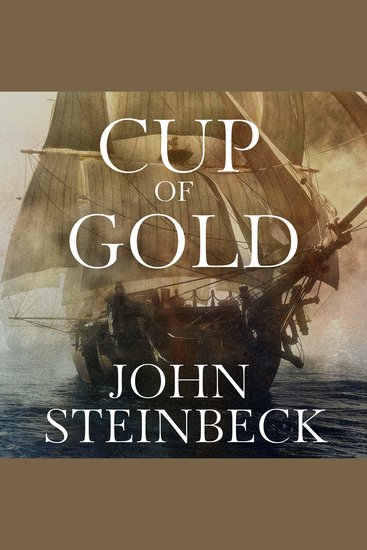
    The first novel from American literary great John Steinbeck (Grapes of Wrath) tells the fictionalized story of the illustrious 17th century pirate Captain Henry Morgan  
    Henry Morgan is a young boy growing up in a small town in Wales. One day, a sailor returns to regale Henry with tales of the West Indies, and the glory that awaits those adventuresome enough to go. Henry, dazzled, quickly finds a place aboard a ship heading to the islands, thus setting himself on the path to becoming the brutal and fearsome pirate Captain Morgan.  
    The portrait Steinbeck paints of Morgan (with some artistic license taken) is of a complex, lustful, and largely unhappy man, set in evocative locales that are laced with traces of magical realism. Though Morgan’s life was filled with blood and violence, Steinbeck portrays him as a thoughtful and intelligent commander of men, whose tragic flaw is an unquenchable lust for great accomplishments combined with a misunderstanding of what great accomplishments actually are.  
    Through his cunning he repeatedly attains the ever-grander victories he seeks—but he quickly discovers what so many before and after him have discovered: that achievement is not always as satisfying as the quest to achieve.  
    Publisher's Note: Originally published in 1929, Cup of Gold is a literary work that reflects the time in which it was published—both its good and its ill. The original text contains wording and terminology that represent outdated cultural beliefs regarding race and ethnicity. In the interest of preserving and documenting both the faults and highlights of literary history—an instrumental, crucial function of works entering the public domain—this text is unedited and uncensored in this audiobook recording. Please proceed with discretion.
    Zum Buch
  • The Judgement - A kafkaesque view of a father son relationship - cover

    The Judgement - A kafkaesque...

    Franz Kafka

    • 0
    • 0
    • 0
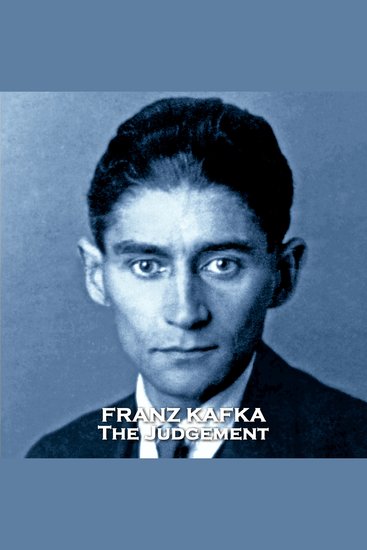
    Franz Kafka was born on 3rd July 1883 in Prague, then in Bohemia, the eldest of 6, into a middle-class Jewish family. 
     
    Life for the young Kafka and his passion for literature was often made an ordeal by his over-bearing and domineering entrepreneur of a father.   
     
    In 1889 Kafka was sent to the Deutsche Knabenschule, an elementary school in Prague. His father would only allow him to be educated in German-speaking schools and even went so far as to limit visits to the synagogue to four a year. 
     
    In 1901 he graduated from the classics-oriented Altstädter Gymnasium. Kafka did well there and across a large range of subjects.  He now enrolled at the Charles Ferdinand University, to study chemistry, but quickly switched to law for which he obtained his degree in June 1906 and then performed the mandatory year of unpaid service as clerk at the civil and criminal courts. 
     
    A job at an Italian insurance company left him little time to write and after a year he took another job with the Worker's Accident Insurance Institute for the Kingdom of Bohemia where he stayed until ill health led to his resignation in 1922. 
     
    Although he saw work as a means to pay the bills and to allow him time to write, he received several promotions and was noted as a good employee. 
     
    By 1917 Kafka was suffering from tuberculosis, which required frequent periods of convalescence. Interspersed with this, were several intense affairs before he settled in Berlin with Dora Diamant, a 25-year-old kindergarten teacher who herself having left the ghetto now influenced Kafka's interest in the book of Jewish law, the Talmud. 
     
    Kafka’s on-going health was littered with problems. Apart from TB there were several other ailments, including migraines, insomnia, boils, depression, all usually brought on by excessive stresses and strains. He attempted to counteract all of this by naturopathic treatments, a vegetarian diet and consuming large quantities of unpasteurized milk. 
     
    His tuberculosis still worsened. He returned to Prague, where he died on 3rd June 1924. He was 40. 
     
    His literary works are few in number but towering in influence.  His masterpieces include ‘The Trial’, ‘The Metamorphosis’ as well as a number of short stories which reveal facets of humankind that truthfully could only be born from Kafka’s brain and pen.
    Zum Buch
  • A Christmas Carol - cover

    A Christmas Carol

    Charles Dickens

    • 0
    • 0
    • 0
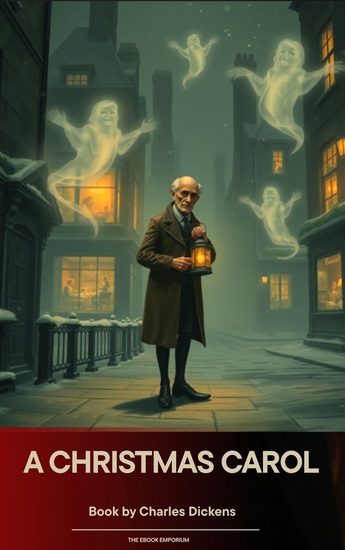
    "I will honour Christmas in my heart, and try to keep it all the year."
    
    Ebenezer Scrooge is a man of business—cold, solitary, and miserly. He views Christmas as a "humbug" and charity as a waste. But on one fateful Christmas Eve in the fog-shrouded streets of London, he is visited by the chained spirit of his deceased partner, Jacob Marley, who warns him of a terrible fate. To save his soul, Scrooge must endure a journey through time led by three spectral guides.
    
    A Journey of Transformation: From the nostalgic, bitter-sweet memories of his youth to the joyful but struggling household of his clerk, Bob Cratchit, Scrooge is forced to witness the reality of the world he has ignored. The sight of the frail but hopeful Tiny Tim and the grim shadow of a future unmourned pushes Scrooge to the brink of despair—and ultimately, to a breathtaking resurrection of his own humanity.
    
    The Book That "Saved" Christmas: Charles Dickens wrote A Christmas Carol during a time of social upheaval, intending it as a "sledgehammer" blow for the poor. In doing so, he helped create the modern celebration of Christmas, emphasizing family, feasting, and the "shut-up heart opened freely." This is not just a ghost story; it is a powerful reminder that it is never too late to change and that the greatest wealth is found in the welfare of our fellow man.
    
    Rediscover the magic of the season. Purchase "A Christmas Carol" today and keep the spirit of Christmas all year round.
    Zum Buch
  • Barry Lyndon - The Lost Manuscript - cover

    Barry Lyndon - The Lost Manuscript

    William Makepeace Thackeray

    • 0
    • 0
    • 0
    Barry Lyndon is a picaresque novel by William Makepeace Thackeray, first published as a serial in Fraser's Magazine in 1844, about a member of the Irish gentry trying to become a member of the English aristocracy. Thackeray, who based the novel on the life and exploits of the Anglo-Irish rake and fortune-hunter Andrew Robinson Stoney, later reissued it under the title The Memoirs of Barry Lyndon, Esq. The novel is narrated by Lyndon himself, who functions as a quintessentially unreliable narrator. The novel was adapted by Stanley Kubrick into his 1975 film Barry Lyndon.
    Zum Buch
  • Counterparts (Unabridged) - cover

    Counterparts (Unabridged)

    James Joyce

    • 0
    • 0
    • 0
    James Augustine Aloysius Joyce (2 February 1882 - 13 January 1941) was an Irish novelist, short story writer, poet and literary critic. He contributed to the modernist avant-garde movement and is regarded as one of the most influential and important writers of the 20th century.
    COUNTERPARTS: The bell rang furiously and, when Miss Parker went to the tube, a furious voice called out in a piercing North of Ireland accent: "Send Farrington here!" Miss Parker returned to her machine, saying to a man who was writing at a desk...
    Zum Buch