Begleiten Sie uns auf eine literarische Weltreise!
Buch zum Bücherregal hinzufügen
Grey
Einen neuen Kommentar schreiben Default profile 50px
Grey
Jetzt das ganze Buch im Abo oder die ersten Seiten gratis lesen!
All characters reduced
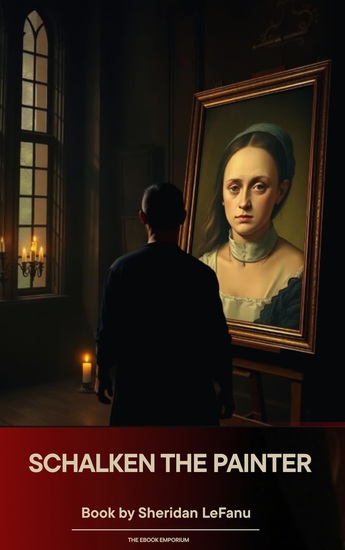
Schalken the Painter - cover

Schalken the Painter

Joseph Sheridan Le Fanu

Verlag: The Ebook Emporium

  • 0
  • 0
  • 0

Beschreibung

"He was not a man of this world, and the gold he paid with had a cold, ancient gleam."

In the workshops of 17th-century Leyden, the young and talented artist Godfried Schalken falls in love with Rose, the beautiful niece of his master, Gerard Douw. But their romance is shattered by the arrival of a mysterious suitor: Minheer Vanderhausen. Blue-skinned, breathless, and draped in magnificent but outdated finery, Vanderhausen offers a chest of gold so immense that Douw cannot refuse. Rose is bartered away to this living corpse, disappearing into a nightmare from which there is no return. Years later, Schalken is granted one final, terrifying glimpse of his lost love—and the horrific entity she now serves in the shadows.

The Horror of the Visual: Le Fanu, himself an admirer of art, uses the techniques of the Dutch masters to tell his story. He describes scenes as if they were paintings, utilizing chiaroscuro—the intense contrast between deep shadows and bright light—to hide the grotesque features of the supernatural antagonist. The result is a story that feels as textured and atmospheric as an oil painting come to life.

A Tale of Moral Decay: At its heart, the story is a critique of avarice. Gerard Douw's willingness to sell his niece for a chest of gold is the "true" horror that invites the supernatural in. Le Fanu explores the idea that human greed can be more monstrous than any phantom, leading to a tragedy that haunts the protagonist until his dying day.

The Legacy of the "Demon Lover": Schalken the Painter is a foundational text in the "demon lover" tradition of Gothic fiction. It avoids the typical "clanking chains" of 18th-century ghosts, opting instead for a quiet, physical, and deeply uncanny presence. The final image of the story—the "living" painting—remains one of the most famous and frightening endings in horror literature.

Don't look too closely at the shadows. Purchase this masterpiece of the macabre today.
Verfügbar seit: 13.01.2026.
Drucklänge: 56 Seiten.

Weitere Bücher, die Sie mögen werden

  • The Adventure of the Sussex Vampire - cover

    The Adventure of the Sussex Vampire

    Arthur Conan Doyle

    • 0
    • 0
    • 0
    The Adventure of the Sussex Vampire, written by British author Arthur Conan Doyle, is one of 12 Sherlock Holmes stories collected between 1921 and 1927 as The Case-Book of Sherlock Holmes. It was first published in the January 1924 issues of The Strand Magazine in London and Hearst's International Magazine in New York.Holmes receives an odd letter that makes reference to vampires. Mr. Robert Ferguson, who comes to 221B Baker Street the next morning, has become convinced that his Peruvian second wife has been sucking their baby son's blood. By his first wife, he has a 15-year-old son named Jack, who suffered an unfortunate accident as a child and now, although he can still walk, he does not have the full use of his legs. After the bloodsucking began, Jack has unaccountably been struck twice by his stepmother, although Mr. Ferguson cannot imagine why. Ever since being found out by her husband, she has locked herself in her room and refused to come out. Only her Peruvian maid, Dolores, is allowed in. She takes Mrs. Ferguson her meals.Even before Holmes and Watson set off for Mr. Ferguson's house in Sussex, Holmes has deduced what is going on, and it has nothing to do with vampires. Holmes's trip is made simply to observe and confirm what he has already deduced...Famous works of the author Arthur Conan Doyle: A Study in Scarlet, The Sign of the Four, The Adventures of Sherlock Holmes, The Memoirs of Sherlock Holmes, The Hound of the Baskervilles, The Return of Sherlock Holmes, The Valley of Fear, His Last Bow, The Case-Book of Sherlock Holmes, Stories of Sherlock Holmes, The Lost World.
    Zum Buch
  • Importance of Being Earnest The - Audiobook - cover

    Importance of Being Earnest The...

    Oscar Wilde, Classic Audiobooks,...

    • 0
    • 0
    • 0
    The Importance of Being Earnest is Oscar Wilde's most celebrated play — a sharp, witty comedy that satirizes Victorian society's obsession with propriety, status, and marriage. The plot follows two friends, Jack and Algernon, who invent fictional personas to escape social obligations and pursue romance. Chaos and hilarity ensue as their lies unravel and identities are mistaken.This sparkling comedy of manners showcases Wilde's trademark wit and irony, exposing the absurdities of upper-class conventions with elegance and charm. At once light-hearted and deeply clever, the play remains one of the most beloved works in English theatre.
    Zum Buch
  • The Moon Pool - cover

    The Moon Pool

    A. Merritt

    • 2
    • 1
    • 0
    Scientists unleash a subterranean horror in the South Pacific in this classic adventure by the author of Burn, Witch, Burn! and The Ship of Ishtar.On the island of Ponape, a party of researchers explores the ruins of an ancient civilization. There they discover an entrance to an underground world full of unusual scientific findings, including strange beings . . .The most intelligent among this advanced race created an offspring, an entity known as the Dweller. Over time, it turned toward evil. Now, it occasionally returns to the surface to prey upon men and women . . . to feed. When the group of explorers release the creature from its prison, they unknowingly launch a battle of good versus evil. And there can be only one victor . . .
    Zum Buch
  • Sense and Sensibility - cover

    Sense and Sensibility

    Jane Austen

    • 0
    • 0
    • 0
    Sense and Sensibility is a novel by Jane Austen, published in 1811. It was published anonymously; By A Lady appears on the title page where the author's name might have been. It tells the story of the Dashwood sisters, Elinor (age 19) and Marianne (age 16 1/2) as they come of age. They have an older half-brother, John, and a younger sister, Margaret, 13. The novel follows the three Dashwood sisters as they must move with their widowed mother from the estate on which they grew up, Norland Park. Because Norland is passed down to John, the product of Mr. Dashwood's first marriage, and his young son, the four Dashwood women need to look for a new home. They have the opportunity to rent a modest home, Barton Cottage, on the property of a distant relative, Sir John Middleton. There they experience love, romance, and heartbreak. The novel is likely set in southwest England, London, and Sussex between 1792 and 1797.
    Henry Dashwood, his second wife, and their three daughters live for many years with Henry's wealthy bachelor uncle at Norland Park, a large country estate in Sussex. That uncle decides, in late life, to will the use and income only of his property first to Henry, then to Henry's first son (by his first marriage) John Dashwood, so that the property should pass intact to John's three-year-old son Harry. The uncle dies, but Henry lives just a year after that and he is unable in such short time to save enough money for his wife Mrs Dashwood, and their daughters, Elinor, Marianne, and Margaret, who are left only a small income. On his deathbed, Mr Henry Dashwood extracts a promise from his son John to take care of his half-sisters. But before Henry is long in the grave, John's greedy wife, Fanny, persuades her husband to renege on the promise, appealing to his concerns about diminishing his own son Harry's inheritance, despite the fact that John is already independently wealthy thanks to both his inheritance from his mother, and his wife's dowry. Henry Dashwood's love for his second family is also used by Fanny to arouse her husband's jealousy, and convince him not to help his sisters financially.
    Zum Buch
  • A Christmas Carol - cover

    A Christmas Carol

    Charles Dickens

    • 0
    • 0
    • 0
    A Christmas Carol is a popular Christmas story by Charles Dickens. Scrooge is a greedy old man, who only cares about himself. One night he is greeted by a couple of ghosts who teach him a lesson. The moral of the story is: be kind, appreciate your family and friends and help those in need. Recommended for age 7+.
    Zum Buch
  • A Cullenden of Virginia - From their pens to your ears genius in every story - cover

    A Cullenden of Virginia - From...

    Thomas Wolf

    • 0
    • 0
    • 0
    Thomas Clayton Wolfe was born at the family home, 92 Woodfin Street, in Asheville, North Carolina on October 3rd, 1900.  
    Aged 15, Wolfe began his studies at the University of North Carolina at Chapel Hill (UNC) where he enrolled in a playwriting course. Wolfe graduated in 1920 and enrolled at the Graduate School for Arts and Sciences at Harvard. Here he studied playwriting under the tutelage of George Pierce Baker. In 1922 he received his master's degree from Harvard.  
    Wolfe now began the transition from studying to commercial playwright. He went to New York in November, 1923 trying to sell his plays to Broadway.  The Theatre Guild came close to producing Welcome to Our City but in the end declined.  Wolfe now believed his style of writing was more suited to fiction.  Grasping the opportunity this afforded him he sailed to England in October 1924 to write and from there on to France, Italy and Switzerland. 
    In 1926 Wolfe began writing a novel, O Lost. This would eventually become Look Homeward, Angel. It was based on his years in Asheville. The original manuscript of O Lost was over 1100 pages. Maxwell Perkins, one of the great book editors of the age, worked at his publishers, Scribner’s and he began to focus the book, cutting and re-shaping it to center it on the character of Eugene.   
    The novel was published in 1929. It was a success.   
    Wolfe now committed the next 4 years to writing a multi-volume epic entitled The October Fair.  At Scribner’s Perkins once more decided to edit it down to a single volume; Of Time and the River.  It was even more successful than his first. It was hailed as the literary event of 1935 and cemented his reputation as one of America’s foremost novelists.  
    In 1938, after submitting his new opus, which ran to an incredible one million words, to his new editor, Edward Aswell, Wolfe left to tour the West, a part of the country he had never before visited. Whilst travelling Wolfe became ill with pneumonia and spent three weeks in a Seattle hospital. Complications arose. The prognosis was serious.  He was diagnosed with miliary tuberculosis of the brain. 
    On September 6th, he was sent to Baltimore's Johns Hopkins Hospital for treatment. The ensuing operation revealed that the disease had overrun the entire right side of his brain.  
    Thomas Clayton Wolfe never regained consciousness and died shortly before his 38th birthday on September 15th, 1938.
    Zum Buch