Begleiten Sie uns auf eine literarische Weltreise!
Buch zum Bücherregal hinzufügen
Grey
Einen neuen Kommentar schreiben Default profile 50px
Grey
Jetzt das ganze Buch im Abo oder die ersten Seiten gratis lesen!
All characters reduced
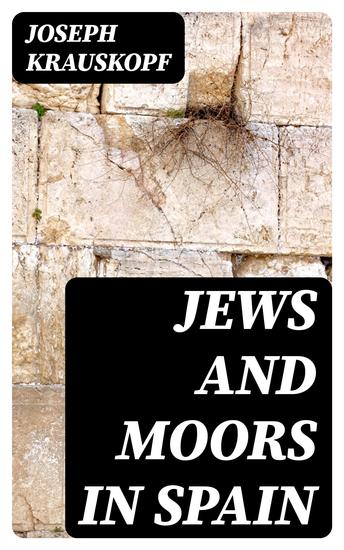
Jews and Moors in Spain - cover

Jews and Moors in Spain

Joseph Krauskopf

Verlag: DigiCat

  • 0
  • 0
  • 0

Beschreibung

In "Jews and Moors in Spain," Joseph Krauskopf offers an incisive exploration of the intricate tapestry of Jewish and Moorish cultures in medieval Spain. Written in a scholarly yet accessible style, Krauskopf meticulously examines historical intersections, cultural exchanges, and the shared narratives of these two communities during a tumultuous period marked by religious strife and social dynamism. This work not only delineates the historical facts but also delves into the enduring legacies of coexistence and conflict, situating its discourse within broader themes of tolerance and societal transformation in the Iberian Peninsula. Joseph Krauskopf, an influential Jewish theologian and educator, was deeply immersed in issues of cultural identity and interfaith dialogue, which undoubtedly shaped his perspective in this book. His academic pursuits and commitment to social justice reflect his desire to bridge gaps between disparate communities, making him uniquely positioned to dissect the complex relationships between Jews and Moors. Krauskopf's robust scholarship is informed by a rich historical context, reflecting the confluence of cultures that defined medieval Spain. This book is highly recommended for readers interested in Jewish studies, Islamic history, and the intricate narratives of intercultural dialogue. Krauskopf's engaging prose and thorough research provide valuable insights into the shared heritage of these communities, inviting readers to reflect on the implications of historical coexistence in contemporary discussions of diversity and tolerance.
Verfügbar seit: 28.05.2022.
Drucklänge: 165 Seiten.
Weitere Bücher, die Sie mögen werden

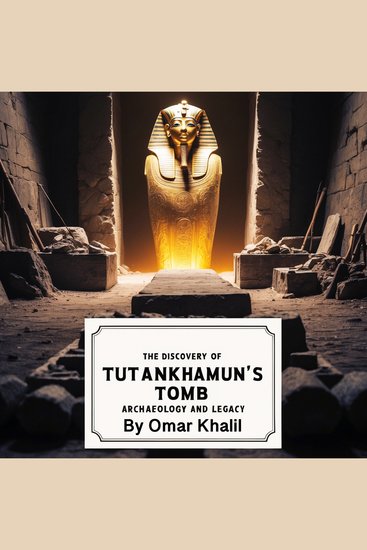
  • The Discovery of Tutankhamun's Tomb - Archaeology and Legacy - cover

    The Discovery of Tutankhamun's...

    Omar Khalil

    • 0
    • 0
    • 0
    The search for Tutankhamun’s tomb was one of the most ambitious archaeological pursuits of the early 20th century. For years, Egyptologists and explorers had scoured the Valley of the Kings, believing that the burial site of the young pharaoh remained hidden beneath the desert sands. Despite previous excavations yielding little success, one man remained convinced that the tomb had yet to be discovered. 
    Howard Carter, a British archaeologist, had spent decades working in Egypt, developing an unmatched expertise in excavation. His belief in the existence of Tutankhamun’s tomb was fueled by fragments of artifacts bearing the young pharaoh’s name, suggesting that his final resting place was still untouched. However, funding such an extensive search required a patron, and it was Lord Carnarvon, a wealthy British aristocrat, who provided the financial backing. In 1917, Carter’s systematic excavation of the Valley of the Kings began, but after several years of fruitless digging, Carnarvon grew impatient. 
    By 1922, with resources nearly depleted, Carter convinced Carnarvon to allow him one final season of excavation. It was in November of that year that Carter’s persistence paid off. While investigating an area near the tomb of Ramses VI, workers uncovered a set of steps leading down into the earth. Clearing away the debris, Carter discovered a sealed doorway marked with the insignia of Tutankhamun. Excitement and caution filled the air as he realized that the tomb had remained undisturbed for centuries.
    Zum Buch
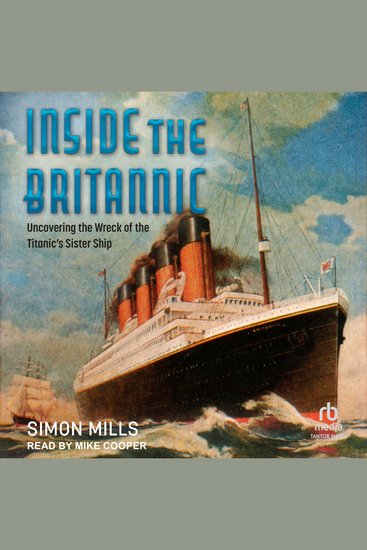
  • Inside the Britannic - Uncovering the Wreck of the Titanic's Sister Ship - cover

    Inside the Britannic -...

    Simon Mills

    • 0
    • 0
    • 0
    The Olympic Class ships were intended to be the greatest liners to ever sail the oceans, but the Britannic sank only four years after her sister ship the Titanic. While the wreck of the Titanic is two miles below the surface and rapidly deteriorating, the Britannic is much more accessible (only 400 ft down) and remains largely intact. One of the largest passenger ships ever to have sunk, her wreck presents a unique opportunity to explore the interior of the Olympic Class liners, and examine areas which on the Titanic simply no longer exist. 


    Simon Mills bought the wreck of the Britannic in 1996 and has spent more time exploring it than anyone else. Inside the Britannic is the sum of decades of work covering every inch of the shipwreck as he searches for answers to century-old questions, and discovers new mysteries to solve. Simon takes a forensic approach but this book is more than just the autopsy report of a ship. 


    The Britannic may have been lost over a century ago, but Simon Mills's fascinating new book gives everyone unparalleled access to rediscover her.
    Zum Buch
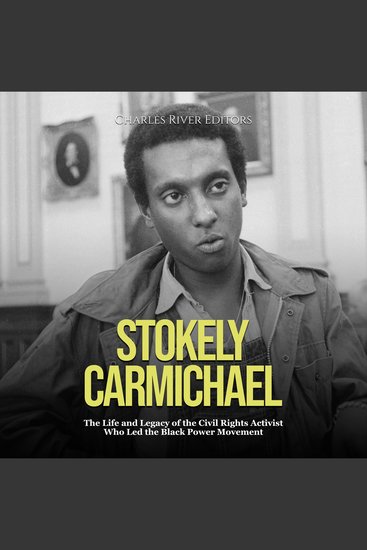
  • Stokely Carmichael: The Life and Legacy of the Civil Rights Activist Who Led the Black Power Movement - cover

    Stokely Carmichael: The Life and...

    Editors Charles River

    • 0
    • 0
    • 0
    “Our grandfathers had to run, run, run. My generation's out of breath. We ain't running no more.” – Stokely Carmichael 
    In the late 1960s, Stokely Carmichael would become one of the most influential and controversial figures in America, founding and leading new organizations while being meticulously shadowed by the country’s national security apparatus, particularly J. Edgar Hoover’s FBI. The attention would ultimately compel him to move to Africa, where he changed his name to Kwame Ture and became one of the world’s most famous Pan-African leaders until his death in Guinea in 1998.  
    Since then, he has remained a subject of both praise and criticism, from contemporaries and historians alike. SNCC Chairman Phil Hutchings, despite being the one who pushed Carmichael out of the organization, aptly summed up the dichotomy: "Even though we kidded and called him 'Starmichael', he could sublimate his ego to get done what was needed to be done....He would say what he thought, and you could disagree with it but you wouldn't cease being a human being and someone with whom he wanted to be in relationship." 
    Zum Buch
  • Portraits of Childfree Wealth - 26 stories about how being Childfree impacts your life wealth and finances - cover

    Portraits of Childfree Wealth -...

    PhD Jay Zigmont

    • 0
    • 0
    • 0
    Have you ever wondered what people without children do with all their free time and money? Do you assume that they must have a lot of both? The truth is more complex than that! Childfree people come from as many different backgrounds and life circumstances as people with children do. Some are partnered, and some are not. Some are well-educated, some aren't. Some are independently wealthy, and some are just scraping by. Dr. Zigmont's "Portraits of Childfree Wealth" is a collection of 26 vignettes based on interviews with Childfree people. He adds his own significant insights, as both a fellow Childfree professional and a CERTIFIED FINANCIAL PLANNER™. This book is an eye-opening look at the lives of people in the United States who deliberately chose not to become parents, and if you're in the same boat, you'll find a lot to relate to here. If you have children, you'll learn how the other half lives. And if you're a finance professional, you'll see how money still plays a role for people who don't have to worry about leaving assets to their children.  
    In Portraits of Childfree Wealth, Dr. Jay Zigmont, CFP®, interviews 26 individuals and couples to understand their lives. Each portrait provides a different perspective on Childfree Wealth from a diverse population across the US. There are stories from people who are barely making ends meet and others who have achieved FIRE (Financial Independence, Retire Early) or FILE (Financial Independence, Live Early). Being Childfree does not automatically make people rich, as we still suffer from income disparities. The difference is that if a Childfree person is barely making ends meet now, they would have drowned if they had a child.
    Zum Buch
  • Accepted! - Secrets to Gaining Admission to the World's Top Universities - cover

    Accepted! - Secrets to Gaining...

    Jamie Beaton

    • 0
    • 0
    • 0
    Told from the fresh and personal perspective of twenty-six-year-old Crimson Education CEO and Harvard, Stanford, and Oxford graduate Jamie Beaton, Accepted! is an honest and practical guide on beating the odds and getting into Ivy League and other elite schools—the smart way. 


    Beaton takes you behind the doors of the world's top college admissions offices, revealing the highly strategic selection processes applied by institutions whose reputations depend on the number of students they admit, or more pointedly, the tens of thousands that they don't. 


    In Accepted!, Beaton disrupts cliched admissions advice with savvy strategies like: 


    ● Moneyballing the university rankings and increasing your chances of admission 


    ● Class spamming your way to academic supremacy and acceptance 


    ● Playing the early application dating game and understanding how institutions are using it to their advantage 


    Packed with real-life examples from the thousands of students Beaton has helped land a spot at esteemed global universities, Accepted! is a culmination of secrets, insights, and application strategies guaranteed to maximize your chances of "getting in" to the school of your choice.
    Zum Buch
  • China's Church Divided - Bishop Louis Jin and the Post-Mao Catholic Revival - cover

    China's Church Divided - Bishop...

    Paul P. Mariani

    • 0
    • 0
    • 0
    During the Cultural Revolution, the Chinese state sought to eradicate religious life throughout the country. But by 1978, two years after the death of Mao Zedong, the Communist Party under Deng Xiaoping cautiously embraced the revival of religion. At the same time, the newly elected Pope John Paul II made a point of renewing outreach to China. Paul P. Mariani tracks the fate of Chinese Catholicism in the wake of these transformative leadership changes, focusing on the influential Catholic community in Shanghai. 


    Earlier policies of the 1950s had fractured the Catholic community into a state-approved "patriotic" church that answered to the government and an underground church loyal to Rome. Even after the Cultural Revolution, Mariani shows, this divide remained firmly intact. The resulting tensions were on vivid display in Shanghai, owing to the leadership of the Jesuit priest Louis Jin Luxian. Bishop Jin used his position to revitalize the local Catholic community, but his cooperation with the party put him ever at odds with underground church leaders. 


    Sensitive to the ideals, compromises, and disappointments of Catholics on both sides of the rift, China's Church Divided reveals how the community navigated the irreconcilable differences between a worldwide Church centered in Rome and a regime wary of foreign spiritual authority.
    Zum Buch