Begleiten Sie uns auf eine literarische Weltreise!
Buch zum Bücherregal hinzufügen
Grey
Einen neuen Kommentar schreiben Default profile 50px
Grey
Jetzt das ganze Buch im Abo oder die ersten Seiten gratis lesen!
All characters reduced
The Vanishing Race: The Last Great Indian Council - Enriched edition - cover

The Vanishing Race: The Last Great Indian Council - Enriched edition

Joseph K. Dixon

Verlag: DigiCat

  • 0
  • 0
  • 0

Beschreibung

In "The Vanishing Race: The Last Great Indian Council," Joseph K. Dixon presents a poignant exploration of Native American life and culture during a tumultuous period in U.S. history. Through vivid descriptions and immersive narrative, Dixon documents the last great assembly of Indian tribes, encapsulating their traditions, struggles, and the encroaching influence of Western civilization. His ethnographic approach and eloquent prose serve not only to chronicle this monumental event but also to illuminate the complexities of identity and resilience among indigenous peoples. This work occupies a unique space in early 20th-century literature, reflecting contemporary concerns about cultural preservation amid rapid change. Joseph K. Dixon, a prominent figure in the early conservation movement and an advocate for Native American rights, was deeply influenced by his own experiences and interactions with Native communities. His background as a photographer and journalist allowed him to gain a nuanced perspective on the lives of these often-misunderstood individuals. Through this book, Dixon seeks to serve as a bridge, aiming to foster understanding and respect toward Native cultures while capturing their moment of historical significance before they faced further decline. "The Vanishing Race" is a must-read for anyone interested in Native American history, culture, and the dynamics of cultural endurance. Dixon's meticulous research and passionate narrative compel readers to reflect on the broader implications of colonization and the importance of preserving cultural legacies. This book not only stands as a historical document but also as a powerful call to honor and recognize the rich heritage of indigenous peoples.

In this enriched edition, we have carefully created added value for your reading experience:
- Hand‐picked Memorable Quotes shine a spotlight on moments of literary brilliance.
- Interactive footnotes clarify unusual references, historical allusions, and archaic phrases for an effortless, more informed read.
Verfügbar seit: 16.09.2022.
Drucklänge: 8168 Seiten.
Weitere Bücher, die Sie mögen werden

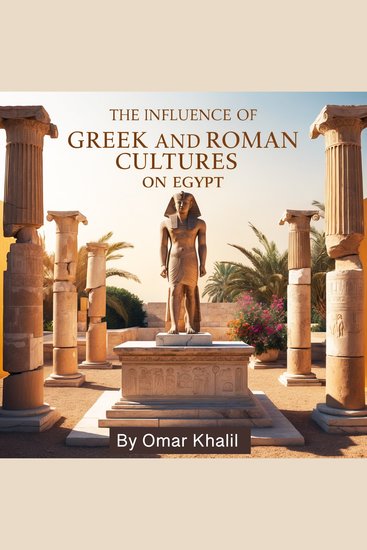
  • The Influence of Greek and Roman Cultures on Egypt - cover

    The Influence of Greek and Roman...

    Omar Khalil

    • 0
    • 0
    • 0
    The interaction between Greek, Roman, and Egyptian civilizations represents one of the most dynamic periods of cultural blending in ancient history. As neighboring powers came into contact through trade, diplomacy, and conquest, their customs, ideas, and beliefs began to intertwine, giving rise to a unique fusion that would leave a lasting imprint on Egyptian society. This chapter explores how these cultural exchanges began and how they shaped Egypt during the Hellenistic and Roman periods. 
    The initial encounter between Egypt and the Greeks occurred long before Alexander the Great’s arrival, through trade across the Mediterranean. However, it was Alexander’s conquest of Egypt in 332 BCE that marked a significant turning point. His establishment of the city of Alexandria set the stage for a new era, where Greek customs and governance took root alongside ancient Egyptian traditions. The subsequent Ptolemaic dynasty, descended from one of Alexander’s generals, became a bridge between Greek and Egyptian worlds, adopting pharaonic symbols while introducing Hellenistic art, language, and administrative systems. 
    Cultural transmission was not solely the result of conquest—it also flourished through everyday interactions. Greek settlers in Egypt brought with them their language, religion, and lifestyle, but they also adapted to local customs, often integrating Egyptian deities and rituals into their own belief systems. Temples began to reflect a blend of architectural styles, and literature began to emerge in both Greek and Demotic scripts, reflecting a hybrid intellectual life.
    Zum Buch
  • Socrates Meets Kierkegaard - The Father of Philosophy Cross-Examines the Father of Christian Existentialism - cover

    Socrates Meets Kierkegaard - The...

    Peter Kreeft

    • 0
    • 0
    • 0
    In the Socrates Meets series, Peter Kreeft revives the classic method of bringing philosophy to life through dialogue. In eight innovative volumes, he uncovers the principles, assumptions, and sometimes dangerous conclusions of some of history’s most influential minds.  Each dialogue imagines a purgatory where we can listen in on conversations between Socrates and the great thinkers who, centuries later, picked up the philosopher’s torch. Each conversation investigates one of the philosopher’s key works, a short, readable classic that raises central questions both for philosophy and for life. In this volume, Socrates cross-examines Søren Kierkegaard, the father of Christian existentialism and author of Philosophical Fragments, exploring imagination, truth, faith, love, and Jesus Christ.
    Zum Buch
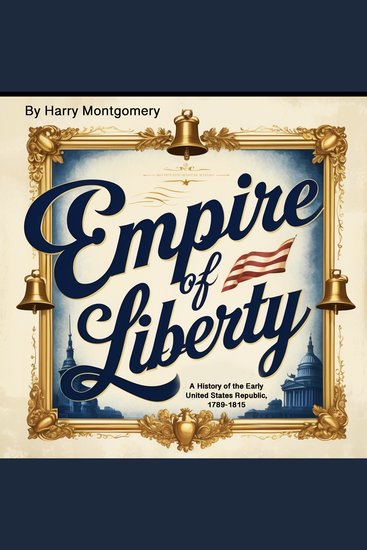
  • Empire of Liberty - A History of the Early United States Republic 1789–1815 - cover

    Empire of Liberty - A History of...

    Harry Montgomery

    • 0
    • 0
    • 0
    In 1789, the United States stood at a turning point. After years of conflict during the American Revolution and an uncertain postwar period under the Articles of Confederation, the country was in need of stronger national leadership. The new Constitution, ratified in 1788, was designed to create a more effective federal system while still preserving the ideals of liberty and republicanism. This document was a compromise between those who wanted a powerful central government and those who feared tyranny. It created three branches of government—executive, legislative, and judicial—each with checks and balances to prevent abuse of power. The Bill of Rights, added shortly after ratification, helped ease concerns by protecting individual freedoms such as speech, religion, and the right to a fair trial. 
    With the Constitution in place, attention turned to the task of putting it into practice. George Washington was unanimously elected as the first president, taking office in April 1789. His presence offered reassurance to many citizens who trusted his leadership and commitment to republican values. Washington worked to establish the authority of the executive branch without appearing monarchical. He formed the first presidential cabinet, appointing Thomas Jefferson as Secretary of State, Alexander Hamilton as Secretary of the Treasury, and Henry Knox as Secretary of War. This team would help shape the future direction of the republic. 
    The first Congress, meanwhile, worked to set up the basic structures of the new government. They created the federal court system through the Judiciary Act of 1789 and established executive departments. They also passed revenue legislation to fund the government’s activities. One of the early and pressing tasks was addressing the national debt from the Revolution. Alexander Hamilton proposed a financial plan that included federal assumption of state debts, the creation of a national bank, and new taxes.
    Zum Buch
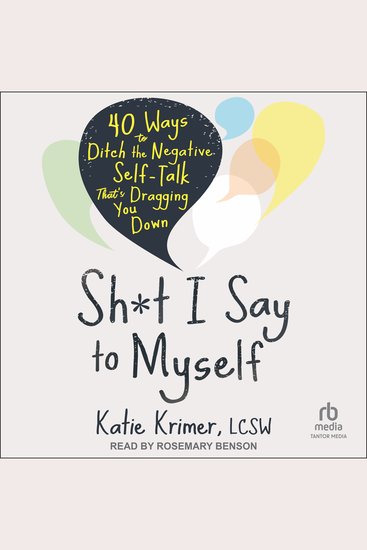
  • Sh*t I Say to Myself - 40 Ways to Ditch the Negative Self-Talk That's Dragging You Down - cover

    Sh*t I Say to Myself - 40 Ways...

    MA Katie Krimer

    • 0
    • 0
    • 0
    It's time to break up with your toxic mind. 


    Have you ever had thoughts that drag you down? Thoughts that make you feel hopeless and stuck? You're far from alone. Many people struggle with negative thoughts about themselves—and the world. But if your unrepentant ruminations are getting in the way of living your life, it's time to tell your toxic mind to cut the crap. It's time to stand up to your inner critic. And it's time to show negative thoughts the door—once and for all. 


    Written by a psychotherapist and grounded in proven-effective mindfulness and cognitive behavioral therapy (CBT), the irreverent, no-nonsense approach in this snarky—yet hopeful—guide will help you "ghost" your negative thoughts, put an end to toxic self-talk, and start living like a badass, with all the positivity and confidence needed to reach your goals. 


    Over time, negative self-talk can lead to more than just a pessimistic outlook on life. It can destroy your confidence; damage your relationships; and lead to anxiety, depression, and a host of other mental health conditions. It's time to say, enough! This little book will give you the tools—and the courage—you need to tell your toxic mind to f*ck off for good.
    Zum Buch
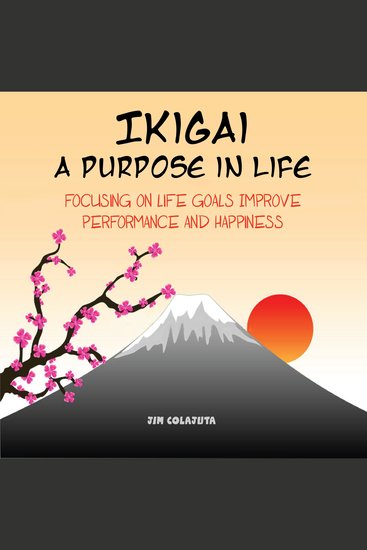
  • Ikigai - cover

    Ikigai

    Jim Colajuta

    • 0
    • 0
    • 0
    The day you decide that your life is your own is the best day of your life. There will be no apologies or excuses. There was no one to lean on, rely on, or point the finger at. The gift is yours, it's an incredible journey, and you're solely responsible for its quality. This is the first day of your life. Having a purpose in life is one of the most fundamental human needs. Ikigai, a Japanese concept, means "a reason for being." It refers to living a fulfilling life. Many different activities can provide people with a sense of purpose in life. These activities can range from volunteering to providing social support to the elderly and even caring for pets, all linked to increased happiness, better health outcomes, and longer lifespan.Everyone is equipped with an ikigai. Your ikigai is the reason you get up in the morning, the reason you want to live fully and cheerfully. Your ikigai isn't something your makeup; it's something you're born with. The Japanese believe that discovering one's ikigai necessitates a long, contemplative search that can lead to life satisfaction and meaning. All you have to do is dig far enough to locate it. Your ikigai lies at the crossroads of four circles: what you enjoy, what the world requires, what you can be compensated for, and what you're skilled at.
    Zum Buch
  • Memes For Mummyji - Making Sense of Post-Smartphone India - cover

    Memes For Mummyji - Making Sense...

    Santosh Desai

    • 0
    • 0
    • 0
    A portrait of India in mid-sentence - caught between tradition and transformation, noise and nuance. 
     
    From selfies and what they mean to the travails of modern love and the new vocabulary of politics, Santosh Desai returns to chronicle the invisible revolutions of Indian life with his signature wit and insight. In Memes for Mummyji, he explores how the mobile phone - now as common as the pressure cooker - has quietly reshaped everything: how we shop, flirt, pray, protest, and parent.  
    This is not a book about technology. It's about us. Our habits, our contradictions, our new-found freedoms - and the deep cultural software that still runs underneath. Warm, keenly perceptive and deeply human, this book, with essays drawn from over a decade of observation, is a love letter to the everyday theatre of Indian life in the digital age.
    Zum Buch