Begleiten Sie uns auf eine literarische Weltreise!
Buch zum Bücherregal hinzufügen
Grey
Einen neuen Kommentar schreiben Default profile 50px
Grey
Jetzt das ganze Buch im Abo oder die ersten Seiten gratis lesen!
All characters reduced
Chinese Buddhism (Annotated) - cover

Chinese Buddhism (Annotated)

Joseph Edkins

Verlag: ePembaBooks

  • 0
  • 0
  • 0

Beschreibung

This edition includes the following editor's analysis: Buddhism, religion and/or philosophy?


First published in 1879, “Chinese Buddhism” is a comprehensive survey of Chinese Buddhism by British Protestant missionary Joseph Edkins. “Chinese Buddhism” is a valuable reference work for anyone studying Chinese Buddhism, as well as a snapshot of China in the late 19th century.

Edkins gives the historical background of the introduction of Buddhism into China, and its subsequent evolution, including biographies of the Buddhist Patriarchs. There are extensive descriptions of Chinese Buddhist geography and cosmology, the calendar of festivals, temple architecture, and the vast array of entities which are represented in sacred spaces.
Edkins also enumerates dozens of Chinese Buddhist and provides translations of some excerpts. Edkins was a skilled linguist and explains how Sanskrit terms were transferred into Chinese. He also discusses Confucian, Taoist and other Chinese belief systems.

Joseph Edkins was a Protestant missionary, and his primary concern at times appears to be how to convert Chinese Buddhists.
Verfügbar seit: 14.02.2022.
Weitere Bücher, die Sie mögen werden

  • The Lost Art of Dying - Reviving Forgotten Wisdom - cover

    The Lost Art of Dying - Reviving...

    Anonym

    • 0
    • 0
    • 0
    A Columbia University physician inspires us to rethink death and offers insights on how we can learn to embrace the art of dying well in this wise, clear-eyed book that is as compelling and soulful as Being Mortal, When Breath Becomes Air, and Smoke Gets in Your Eyes. 
     
    As a specialist in both medical ethics and the treatment of older patients, Dr. Lydia Dugdale knows a great deal about the end of life. Far too many of us die poorly, she argues. Our culture has overly medicalized death: dying is often institutional and sterile, prolonged by unnecessary resuscitations and other intrusive interventions. We are not going gently into that good night—our reliance on modern medicine can actually prolong suffering and strip us of our dignity. Yet our lives do not have to end this way. 
    Centuries ago, in the wake of the Black Plague, a text was published offering advice to help the living prepare for a good death. Written during the late Middle Ages, Ars moriendi—The Art of Dying—made clear that to die well, one first had to live well. When Dugdale discovered this Medieval book, it was a revelation. Inspired by its holistic approach to the final stage we must all one day face, she draws from this forgotten work, combining its wisdom with the knowledge she has gleaned from her long medical career. The Lost Art of Dying is filled with much-needed insight and thoughtful guidance that will change our perceptions. Dr. Dugdale offers a hopeful perspective on death and dying as she shows us how to adapt the wisdom from the past to our lives today.  
    Part of living well means preparing for the end, Dr. Dugdale reminds us. By recovering our sense of finitude, confronting our fears, accepting how our bodies age, developing meaningful rituals, and involving our communities in end-of-life care, we can discover what it means to both live and die well.  
    The Lost Art of Dying is a vital, affecting book that reconsiders death, death culture, and how we can transform how we live each day, including our last. 
    Supplemental enhancement PDF accompanies the audiobook.
    Zum Buch
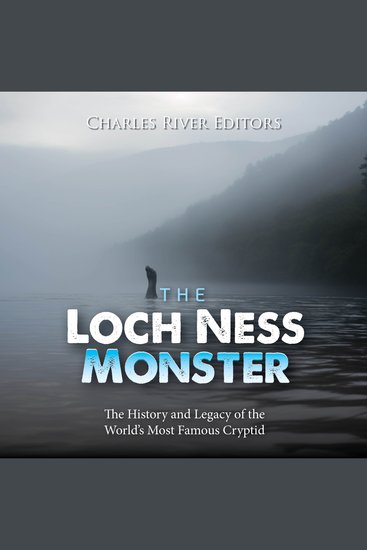
  • Loch Ness Monster The: The History and Legacy of the World’s Most Famous Cryptid - cover

    Loch Ness Monster The: The...

    Editors Charles River

    • 0
    • 0
    • 0
    Although cryptozoology is often scoffed at and widely considered a pseudoscience, one of the reasons it made men like Barnum rich and continues to fascinate people today is the fact that people realize they’ve only scratched the surface when it comes to identifying all the different forms of life on Earth. As Martin DelRio pointed out in The Loch Ness Monster, “Animals previously unknown to science have been found more than once in the past hundred years. For instance, there's the megamouth shark (megachasma pelagios), a fifteen-foot-long creature weighing nearly a ton. The first specimen was discovered on November 15, 1976, when it was found entangled in the drag anchor of a U.S. Navy ship. The new creature wasn't described scientifically until 1983…The megamouth remains the only species in its genus, and the only genus in its order.”  
    	While cryptids like Bigfoot and the Yeti have become popular in recent decades, none of them can touch the notoriety of the Loch Ness Monster, a large, unknown creature allegedly living in a loch in the Highlands of Scotland. Was it a relic dinosaur or perhaps an entirely new species? New photographs and new eyewitness sightings fueled a growing debate and transformed the Loch Ness Monster, also known as Nessie, into an instantly recognizable staple of pop culture, to the extent that hundreds of thousands of visitors came to Loch Ness every year in hopes of catching a glimpse of the loch’s famous inhabitant.  
    	The Loch Ness Monster remains an international brand and the best-known cryptid in the world, but after almost 100 years of fame and media attention, what do people really know about this cryptid, and is there any proof that there really is something large and unknown living in a remote Scottish loch? 
    Zum Buch
  • Black Folk - The Roots of the Black Working Class - cover

    Black Folk - The Roots of the...

    Blair L.M. Kelley

    • 0
    • 0
    • 0
    There have been countless books, articles, and televised reports in recent years about the almost mythic "white working class," a tide of commentary that has obscured the labor, and even the very existence, of entire groups of working people, including everyday Black workers. In this brilliant corrective, Black Folk, acclaimed historian Blair LM Kelley restores the Black working class to the center of the American story. 


    Spanning two hundred years—from one of Kelley's earliest known ancestors, an enslaved blacksmith, to the essential workers of the Covid-19 pandemic—Black Folk highlights the lives of the laundresses, Pullman porters, domestic maids, and postal workers who established the Black working class as a force in the late nineteenth and early twentieth centuries. Taking jobs white people didn't want and confined to segregated neighborhoods, Black workers found community in intimate spaces, from stoops on city streets to the backyards of washerwomen, where multiple generations labored from dawn to dusk, talking and laughing in a space free of white supervision. As millions of Black people left the violence of the American South for the promise of a better life in the North and West, these networks of resistance and joy sustained early arrivals and newcomers alike and laid the groundwork for organizing for better jobs, better pay, and equal rights.
    Zum Buch
  • Herbert Simms - An Architect for the People - cover

    Herbert Simms - An Architect for...

    Lindie Naughton

    • 0
    • 0
    • 0
    Dublin's teeming slums, long regarded as the worst in Europe, were teetering on the brink of structural and sanitary public catastrophe during the early twentieth century. To tackle the crisis, Herbert Simms was appointed the city's first housing architect. During a sixteen-year period, from 1932 until 1948, Simms and his team planned, commissioned and built an astounding 17,000 homes –some as inner-city flat complexes, others as family houses in newly-created suburbs such as Crumlin and Cabra.
    Like the city's acclaimed Georgian squares, the Simms-designed Corporation flats in particular have stood the test of time, injecting a touch of art deco and modernist glamour to neglected neighbourhoods. This comprehensive guide to the Simms buildings also highlights the many struggles with politicians and bureaucrats Simms and his staff experienced as they did their best to build well-designed, affordable housing for the people of Dublin.
    Zum Buch
  • Mind and Birth Control: The Surprising Effect on You - "Elevate your understanding of mind and birth control with captivating audio lessons tailored for your success!" - cover

    Mind and Birth Control: The...

    Alaric Fenwick

    • 0
    • 0
    • 0
    Mind and Birth Control: The Surprising Effect on You 
    ⭐⭐ A Simplified Guide with In-Depth Explanations ⭐⭐ 
    Are you eager to advance your career and enhance your knowledge about how birth control impacts your mind and life? 
    Do you want an all-encompassing resource that covers everything you need to know about this subject? 
    Look no further! 
    This guide is your ultimate resource for deepening your understanding, applying relevant insights, and engaging in practical exercises. With this, you're well-equipped for success. 
    Updated for the latest research and findings on the effects of birth control on mental processes. 
    Key features of this enriching guide include: 
    - In-depth insights into how the pill shapes your mind and life 
    - Comprehensive explanations of the psychological and emotional aspects related to birth control 
    - Effective strategies for understanding and navigating the implications of birth control on mental health 
    Our guide stands out through its thorough exploration of topics critical to your understanding. Concepts are not only covered but examined in detail. 
    Structured with clarity and using straightforward language, our guide ensures smooth transitions between different subjects. Bid farewell to heavy jargon and embrace well-defined, precise, and technically accurate information. 
    So, why hesitate? Click the BUY NOW button, secure your guide, and embark on your journey to understanding the surprising effects of mind and birth control!  
    Unlock the knowledge you need today!
    Zum Buch
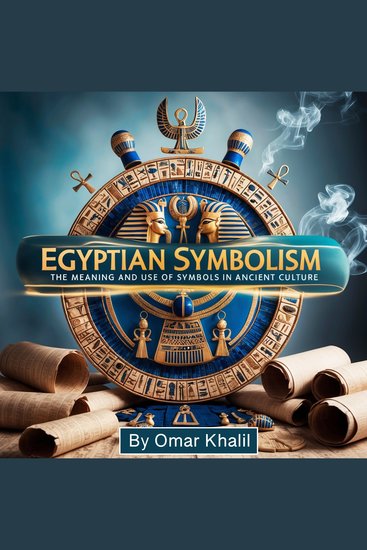
  • Egyptian Symbolism - The Meaning and Use of Symbols in Ancient Culture - cover

    Egyptian Symbolism - The Meaning...

    Omar Khalil

    • 0
    • 0
    • 0
    Egyptian symbolism is one of the most captivating aspects of ancient Egyptian culture, reflecting their deeply spiritual worldview and providing insight into their daily lives, religious practices, and understanding of the universe. From the majestic pyramids to the intricate hieroglyphs on temple walls, symbolism played a crucial role in conveying meanings that went beyond the literal. It was a tool to communicate with the gods, mark divine power, and ensure continuity in both life and the afterlife. 
    At the heart of Egyptian symbolism was the belief that the world was filled with hidden meanings and spiritual forces, each symbol carrying its own power. This belief was manifested in art, architecture, rituals, and even the everyday objects used by the ancient Egyptians. Symbols were not just representations; they were believed to hold an active force that could influence the material world and the spiritual realm. For example, the Ankh, a symbol resembling a cross with a loop at the top, represented life and was often used in funerary texts to ensure immortality for the deceased. 
    In Egyptian society, symbols were central to religious practices. The gods and goddesses, each represented by specific symbols and animal forms, embodied different aspects of life, death, and the cosmos. The sun god Ra, for instance, was depicted as a falcon, symbolizing both the sun’s power and the bird's dominance in the sky. The scarab beetle, a symbol of rebirth and protection, was commonly used in amulets and artifacts, signifying the cyclical nature of life and the hope for resurrection.
    Zum Buch