Begleiten Sie uns auf eine literarische Weltreise!
Buch zum Bücherregal hinzufügen
Grey
Einen neuen Kommentar schreiben Default profile 50px
Grey
Jetzt das ganze Buch im Abo oder die ersten Seiten gratis lesen!
All characters reduced
The Shadow Line: A Confession - cover

The Shadow Line: A Confession

Joseph Conrad

Verlag: DigiCat

  • 0
  • 0
  • 0

Beschreibung

Joseph Conrad's "The Shadow Line: A Confession" masterfully chronicles the psychological and moral evolution of a young sea captain navigating the tumultuous waters between youth and maturity. Written in Conrad's signature style, which artfully combines rich symbolism and profound introspection, this novella delves into existential themes, exploring the complexities of leadership and the haunting specter of responsibility. Set against the backdrop of a mysterious and perilous voyage, the narrative intertwines the captain's inner turmoil with vivid depictions of life aboard a ship, creating a tense yet contemplative atmosphere. Conrad's profound experiences as a mariner deeply informed his literary output, and this work stands as a testament to his keen understanding of the maritime world. Originally published in 1916, during a time of great personal and global upheaval, Conrad's reflections on duty, the human condition, and the struggle against fate echo the broader disillusionment of the post-World War I era. His renowned ability to articulate the psyche of man grappling with external and internal crises resonates throughout this poignant narrative. Readers seeking a profound exploration of the human spirit's resilience will find "The Shadow Line" a compelling journey worth undertaking. This novella invites contemplation, urging readers to reflect upon the shadows that shape one's identity, making it essential for anyone invested in grappling with the intricacies of moral and psychological dilemmas.
Verfügbar seit: 16.09.2022.
Drucklänge: 95 Seiten.

Weitere Bücher, die Sie mögen werden

  • The Count of Monte Cristo - cover

    The Count of Monte Cristo

    Alexandre Dumas

    • 0
    • 0
    • 0
    The Count of Monte Cristo (French: Le Comte de Monte-Cristo) is an adventure novel written by French author Alexandre Dumas (père) completed in 1844. It is one of the author's most popular works, along with The Three Musketeers. Like many of his novels, it was expanded from plot outlines suggested by his collaborating ghostwriter Auguste Maquet.The story takes place in France, Italy, and islands in the Mediterranean during the historical events of 1815–1839: the era of the Bourbon Restoration through the reign of Louis-Philippe of France. It begins on the day that Napoleon left his first island of exile, Elba, beginning the Hundred Days period when Napoleon returned to power. The historical setting is a fundamental element of the book, an adventure story centrally concerned with themes of hope, justice, vengeance, mercy, and forgiveness.Before he can marry his fiancée Mercédès, Edmond Dantès, a French nineteen-year-old first mate of the Pharaon, is falsely accused of treason, arrested, and imprisoned without trial in the Château d'If, a grim island fortress off Marseille. A fellow prisoner, Abbé Faria, correctly deduces that romantic rival Fernand Mondego, envious crewmate Danglars, and double-dealing magistrate De Villefort are responsible. Over the course of their long imprisonment, Faria educates Dantès and tells him of a cache of treasure he found. After Faria dies, Dantès escapes and finds the treasure. As the powerful and mysterious Count of Monte Cristo, he enters the fashionable Parisian world of the 1830s to avenge himself.
    Zum Buch
  • Noncorporeal II - cover

    Noncorporeal II

    A.R.R. Ash, Aimee Kluck, Andrea...

    • 0
    • 0
    • 0
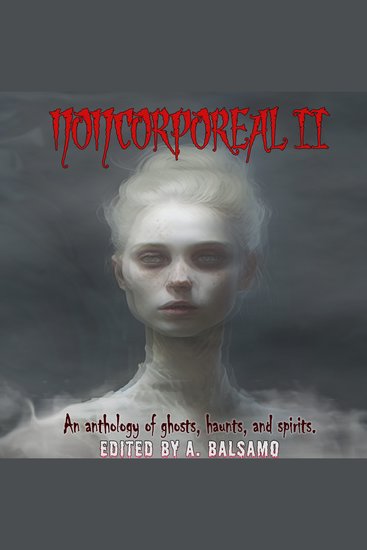
    Short spooky stories bearing one common theme; an immaterial presence that drives the tale. Ghost stories. Talented authors, many horror writers, join to bring you a spine-tingling collection.
    Zum Buch
  • Lazarus - From their pens to your ears genius in every story - cover

    Lazarus - From their pens to...

    Leonid Andreyev

    • 0
    • 0
    • 0
    Leonid Nikolaievich Andreyev was born on 21st August in Oryol, Russia to a middle-class family of Polish, Ukranian and Finnish ancestry. 
    He studied law in Moscow before working as a police-court reporter for a daily newspaper.  His literary efforts at this time were confined to poetry and those he did try to get published were all rejected.  
    In 1898 his first short story ‘Bargamot and Garaska’, published in the ‘Kurier’ newspaper caught the attention and friendship of Maxim Gorky.  Andreyev now discarded any other career path apart from that of author. 
    His first collection of short stories appeared in 1901 and sold over a quarter of a million copies.  He was a sensation. Using his interest in psychology and psychiatry gave him an almost unrivalled ability to delve into the human psyche and create astonishing characters. 
    During the first Russian revolution Andreyev was a staunch defender of democratic ideals and many of his stories reflected the heated mood of the times. With the 1905 Revolution’s failure his work became pessimistic and despairing. By the beginning of the following decade he began losing his audience to new literary movements such as the Futurists. 
    He published little after 1914 except political writings, instead working as the literary editor of the ‘Russian Will’ newspaper.  When the Bolsheviks took power he sensed catastrophe was coming and moved to Finland where he spent his last years in poverty distraught at the outcome of the Revolution. 
    Leonid Andreyev died of heart failure on 12th September 1919 at the age of 48 in Mustamäki, Finland. 
    His classic story ‘Lazarus’ brilliantly tells the story of Christ’s disciple, forced to wander the earth for all time is both chilling and heart-breaking in its Russian setting.
    Zum Buch
  • The Sin of Monsieur Pettipon - cover

    The Sin of Monsieur Pettipon

    Richard Edward Connell

    • 0
    • 0
    • 0
    "The Sin of Monsieur Pettipon" by Richard Edward Connell is a humorous short story set in post-World War I France. Monsieur Pettipon, a modest and diligent clerk in a small French town, becomes the focus of the tale when he unintentionally misplaces an important government document. Fearing disgrace, he embarks on a journey of deception and lies to cover up his mistake. His innocent nature contrasts with the escalating absurdity of his actions, leading to a series of comical misunderstandings. The story highlights the pitfalls of dishonesty and the humorous consequences of even the smallest transgressions.
    Zum Buch
  • 3 Stories - Absurd - A trio of classic tales perfect for a commute walk or quiet night in - cover

    3 Stories - Absurd - A trio of...

    Nikolai Gogol, Fyodor...

    • 0
    • 0
    • 0
    There is something about the number 3.    
     
    The Ancient Greeks believed 3 was the perfect number, and in China 3 has always been a lucky number, and they know a thing or two.   
     
    Most religions also have 3 this and 3 that and, of course, in these more modern times, three’s a crowd may be too many, except when it’s a ménage à trois.  It seems good things usually come in threes. 
     
    Whatever history and culture says WE think 3, a hat-trick of stories, is a great number to explore themes and literary avenues that classic authors were so adept at creating. 
     
    From their pens to your your ears. 
     
    01 - 3 Stories - Absurd 
    02 - The Nose by Nikolai Gogol 
    03 - The Astounding Adventure of Wheeler J Calamity, Related by Himslef by W S Gilbert 
    04 - The Crocodile. An Extraordinary Incident - Part 2 by Fyodor Dostoyevsky
    Zum Buch
  • Points in Time - cover

    Points in Time

    Paul Bowles

    • 0
    • 0
    • 0
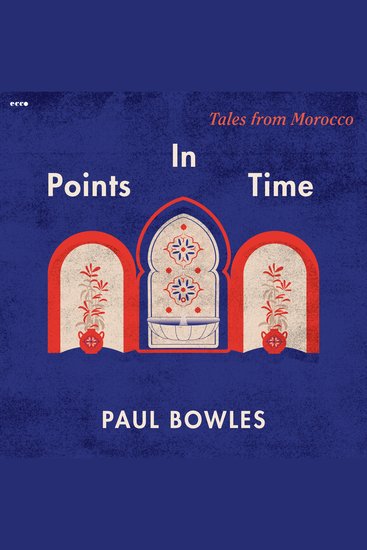
    In this intense and brilliant book, Bowles focuses on Morocco, condensing experience, emotion, and the whole history of a people into a series of short, insightful vignettes. He distills for us the very essence of Moroccan culture. With extraordinary immediacy, he takes the reader on a journey through the Moroccan centuries, pausing at points along the way to create resonant images of the country, it's landscapes, and the beliefs and characteristics of its inhabitants. 
    Supplemental enhancement PDF accompanies the audiobook.
    Zum Buch