Begleiten Sie uns auf eine literarische Weltreise!
Buch zum Bücherregal hinzufügen
Grey
Einen neuen Kommentar schreiben Default profile 50px
Grey
Jetzt das ganze Buch im Abo oder die ersten Seiten gratis lesen!
All characters reduced
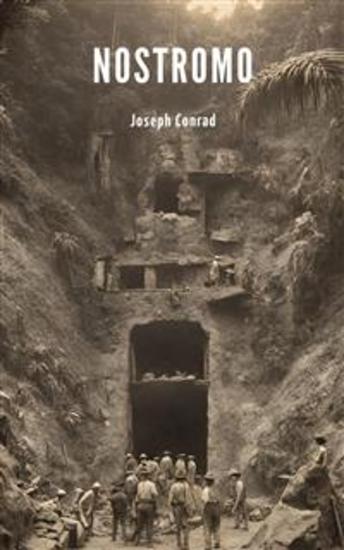
Nostromo (Annotated) - cover

Nostromo (Annotated)

Joseph Conrad

Verlag: Jason Nollan

  • 0
  • 0
  • 0

Beschreibung

"Nostromo," the literary tour de force penned by Joseph Conrad, unfolds with an epic sweep, inviting readers into a mesmerizing tapestry of political machinations, moral complexities, and the irresistible allure of a silver-laden landscape. Set against the backdrop of the fictional South American nation of Costaguana, this masterpiece is an immersive exploration of the human psyche in the face of power, ambition, and the ever-shifting currents of fate.
At the narrative helm is Nostromo, the enigmatic Italian expatriate whose presence looms large over the story. Like a complex symphony, Conrad orchestrates a cacophony of characters whose lives intersect and collide, revealing the intricate dance between personal desire and the relentless march of historical forces. The characters, vividly painted with Conrad's masterful strokes, become embodiments of universal human struggles, each wrestling with their own moral dilemmas in the shadow of the towering silver mine that casts both literal and metaphorical reflections on their destinies.
Conrad's prose is a rich mosaic, a linguistic ballet that transports readers to the lush landscapes and bustling port cities of Costaguana. Through his meticulous craftsmanship, the narrative becomes a sensory experience, with every page resonating with the palpable heat, the scents of exotic flora, and the echo of footsteps on cobblestone streets. The silver mine itself becomes a character in this opulent drama, its veins pulsating with wealth and mirroring the multifaceted aspirations and tribulations of those who seek to possess it.

As the political winds of Costaguana swirl, Conrad unfurls a narrative tapestry that captures the zeitgeist of an era marked by tumultuous change. The novel, published in 1904, remains a timeless commentary on the consequences of unchecked power, the complexities of identity, and the indomitable spirit of individuals caught in the maelstrom of historical forces.

The allure of "Nostromo" lies not only in its grand themes but also in its intimate exploration of the human condition. Conrad delves into the psychological depths of his characters, peeling back layers of their personalities to reveal the intricate interplay of motivations and fears. Nostromo himself emerges as a complex and charismatic figure, embodying the contradictions and passions that define humanity.
In the grand tradition of literary masterpieces, "Nostromo" beckons readers to embark on a profound journey—one that transcends the boundaries of time and space. It is a novel that invites contemplation, a narrative labyrinth that rewards those who navigate its twists and turns with a deeper understanding of the intricacies of life, power, and the perennial quest for meaning.

As readers traverse the pages of "Nostromo," they find themselves immersed in a world where the stakes are high, the emotions are visceral, and the allure is irresistible. Conrad's magnum opus is not just a novel; it is an odyssey into the human soul, a captivating exploration of the inexorable forces that shape our destinies, and a testament to the enduring power of storytelling.
Verfügbar seit: 06.01.2024.
Weitere Bücher, die Sie mögen werden

  • Companions of Jehu The (Unabridged) - cover

    Companions of Jehu The (Unabridged)

    Alexandre Dumas

    • 0
    • 0
    • 0
    Les Compagnons de Jehu (The Companions of Jehu) is set in the 1800s, during Napoleon's rise to power. The title refers to a secret organisation of young aristocrats-turned-highwaymen that continuously steals the money of the Directoire in order to finance the restoration of monarchy. It has all the typical Dumas ingredients, that is to say duels, political intrigues, noble heroes and a tragic love store that would make Shakespeare green with envy. Not to mention a hero with a murky past who you will love-to-hate. Be prepared to shed quantities of tears. You've been warned!
    Zum Buch
  • Worries of the Father of the Family or Odradek The (Unabridged) - cover

    Worries of the Father of the...

    Franz Kafka

    • 0
    • 0
    • 0
    The Odradek is an imaginary creature that appears in the short story The Concerns of a Family Man by Franz Kafka . The physical description of the Odradek shows it as a flat, star-shaped spool of thread, with the addition of a few other appendages.
    Later in the story, Kafka gives the Odradek more human characteristics, being able to stand on two legs and speak. The narrator even gets to have a few conversations with the Odradek, during which the creature's nomadic and possibly immortal nature is emphasized.
    Zum Buch
  • Memory (Unabridged) - cover

    Memory (Unabridged)

    H. P. Lovecraft

    • 0
    • 0
    • 0
    This story takes place in the ancient valley of Nis, in vegetation-covered stone ruins described by Lovecraft in great detail. These crumbling blocks of monolithic stone now serve only for grey toads and snakes to nest under. Interspersed in the ruins are large trees that are home to little apes. Through the bottom of this valley runs the great, slimy red river called Than. "Memory" involves only two characters: "the Genie that haunts the moonbeams" and "the Daemon of the Valley". The Genie inquires of the Daemon who it was that long ago placed the stones that were now the desolate ruin near the river Than. The Daemon replies that he remembers the name of the creatures "clearly," but only because their name rhymed with that of the river: they were called Man. He also remembers "dimly" that they appeared like the small apes that now leap through the ruins. The Genie flies back to his moonbeams, and the Daemon turns to regard an ape in silent contemplation.
    Zum Buch
  • Middlemarch (Book 7: Two Temptations) - cover

    Middlemarch (Book 7: Two...

    George Eliot

    • 0
    • 0
    • 0
    Middlemarch (Book 7: Two Temptations), A Study of Provincial Life is a novel by English author George Eliot, the pen name of Mary Ann Evans. It appeared in eight installments (volumes) in 1871 and 1872. Set in Middlemarch, a fictional English Midlands town, from 1829 to 1832, it follows distinct, intersecting stories with many characters. Issues include the status of women, the nature of marriage, idealism, self-interest, religion, hypocrisy, political reform, and education. Leavened with comic elements, Middlemarch approaches significant historical events in a realist mode: the Reform Act 1832, early railways, and the accession of King William IV. It looks at medicine of the time and reactionary views in a settled community facing unwelcome change. Eliot began writing the two pieces that formed the novel in 1869–1870 and completed it in 1871. Initial reviews were mixed, but it is now seen widely as her best work and one of the great English novels.
    Zum Buch
  • The Antiquary - cover

    The Antiquary

    Andrew Lang

    • 0
    • 0
    • 0
    The third novel in the Waverley series, and Scott's personal favorite, The Antiquary centers on a young man called Lovel who meets Jonathan Oldbuck, a loquacious old antiquary, on a trip to Scotland. There Lovel falls in love with the daughter of Sir Arthur Wardour, a local landowner. However, with no wealth or title to offer, Lovel's feelings go unrequited until an extraordinary act of courage.
    Zum Buch
  • Floor Games (Unabridged) - cover

    Floor Games (Unabridged)

    H. G. Wells

    • 0
    • 0
    • 0
    Floor Games is a book published in 1911 by H. G. Wells. This light-hearted volume argues in a humorously dictatorial tone that "The jolliest indoor games for boys and girls demand a floor." Illustrated with photographs and drawings, it briefly describes a number of games that can be played on "well lit and airy" floors with "four main groups" of toys: soldiers about two inches high (Wells regrets the "curse of militarism" that makes civilians hard to find), largish wooden bricks, boards and planks, and electric railway rolling stock and rails. Various remarks show that the book is based on Wells's experience of playing such games with his two sons, George Philip "Gip" Wells (1901-1985) and Frank Richard Wells (1903-1982), identified here only by their initials at their family home, 17 Church Row, in the north west London district of Hampstead. Although Floor Games is often characterized as a "companion book" to Wells's Little Wars (1913), the earlier book was conceived of as a self-standing volume so that the author might later write a book devoted purely to war games. Floor Games describes mostly specific games for young children, whereas Little Wars describes war games for older children and adults.
    Zum Buch