What happens when a journey into the geographic unknown becomes a voyage into the darkest depths of the human soul?
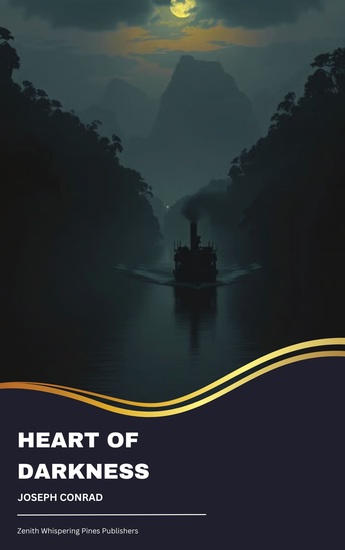
Join Marlow, a riverboat captain, as he navigates the dense, oppressive heart of the African Congo on a mission to find the enigmatic and powerful Mr. Kurtz—a brilliant ivory agent who has devolved into a terrifying, god-like figure among the native people. Joseph Conrad's chilling novella is a searing critique of colonial greed, disguised as a suspenseful psychological thriller. Feel the mounting tension and unease as Marlow uncovers the horrors of exploitation and confronts the moral decay that consumes both the 'savage' and the 'civilized' man. This is a masterful, haunting exploration of madness, imperialism, and the thin line between moral righteousness and primal barbarism.
Considered a seminal work of 20th-century literature and the inspiration for countless stories of moral decay (including Apocalypse Now), Heart of Darkness is an essential read for anyone seeking powerful, complex, and enduring fiction.
Dare to look into the abyss? Click "Download" and begin your journey up the river today.
This Side of Paradise is a 1920 debut novel by American writer F. Scott Fitzgerald. It examines the lives and morality of carefree American youth at the dawn of the Jazz Age. Its protagonist, Amory Blaine, is a handsome middle-class student at Princeton University who dabbles in literature and engages in a series of unfulfilling romances with young women. The novel explores themes of love warped by greed and social ambition. Fitzgerald, who took inspiration for the title from a line in Rupert Brooke's poem Tiare Tahiti, spent years revising the novel before Charles Scribner's Sons accepted it for publication.
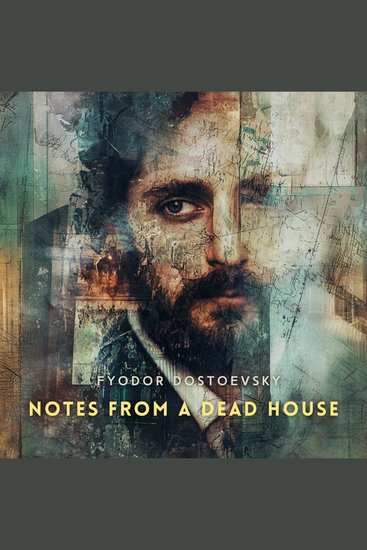
Dostoevsky draws on his own imprisonment to depict life in a Siberian labor camp. Through vivid detail and poignant reflection, he explores the harsh realities of incarceration—the brutality, monotony, and small moments of humanity among prisoners. Dostoevsky delves into the psychological and spiritual resilience of individuals stripped of freedom, highlighting their diverse backgrounds and shared suffering. The work transcends memoir, offering a profound meditation on justice, redemption, and the enduring strength of the human spirit. With compassion and insight, Dostoevsky reveals the capacity for dignity and hope even in the darkest circumstances.
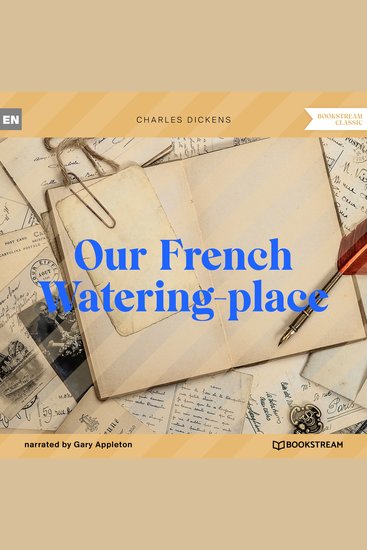
Our English Watering-Place and Our French Watering-Place are short stories by Charles Dickens. Charles John Huffam Dickens (7 February 1812 - 9 June 1870) was an English writer and social critic. He created some of the world's most memorable fictional characters and is generally regarded as the greatest novelist of the Victorian period. During his life, his works enjoyed unprecedented fame, and by the twentieth century his literary genius was broadly acknowledged by critics and scholars. His novels and short stories continue to be widely popular.
What if the greatest horror was not evil—but the vast unknown?
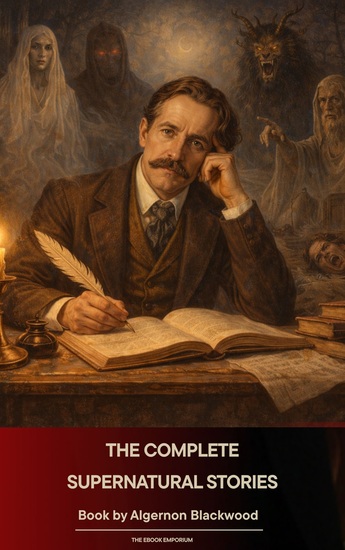
The Complete Supernatural Stories of Algernon Blackwood gathers the full body of supernatural fiction from one of the masters of atmospheric horror. Renowned for his subtle terror and cosmic imagination, Blackwood wrote stories where nature itself becomes mysterious, consciousness expands beyond reason, and unseen forces quietly overwhelm the human mind.
Unlike shock-driven horror, Blackwood's tales rely on mood, suggestion, and spiritual unease. Forests whisper, ancient presences awaken, and ordinary people confront realities far larger than themselves. His work deeply influenced modern horror writers, including H. P. Lovecraft.
This definitive collection brings together Blackwood's most celebrated supernatural tales, offering readers a haunting journey into the occult, the mystical, and the unknowable.
Inside this eBook, you'll explore:
All supernatural and weird fiction stories by Algernon Blackwood
Iconic works such as "The Willows" and "The Wendigo"
Psychological, cosmic, and nature-based horror
A cornerstone collection of classic supernatural literature
Praised by generations of writers and readers, Algernon Blackwood's stories remain among the most powerful explorations of fear ever written.
Enter the silence where something waits. Buy now and experience the complete supernatural stories of Algernon Blackwood.
"The Voyage Out" is the debut novel written by Virginia Woolf, a prominent English modernist writer. Published in 1915, the novel follows the journey of Rachel Vinrace, a young woman who embarks on a voyage to South America with her aunt and uncle. The novel explores themes of self-discovery, social conventions, and the constraints placed upon women in early 20th-century society.
As Rachel sets sail on her voyage, she encounters a diverse group of passengers, each representing different social classes, backgrounds, and personalities. Through her interactions with them, Rachel undergoes a transformative journey of personal growth and awakening. Woolf skillfully captures Rachel's internal thoughts and emotions, delving into her inner world as she navigates her way through the complexities of life and relationships.
"The Voyage Out" also provides a critical examination of societal norms and gender roles during the Edwardian era. Woolf challenges the traditional expectations placed upon women and explores the limitations and frustrations they face. Rachel's journey serves as a metaphor for breaking free from societal constraints and seeking personal fulfillment and independence.
Virginia Woolf's writing style in "The Voyage Out" is characterized by its lyrical prose, stream-of-consciousness narrative technique, and keen observations of human psychology. Through vivid descriptions and introspective passages, Woolf explores themes of identity, love, and the search for meaning in a rapidly changing world
.
"The Voyage Out" is a significant novel in Woolf's body of work and serves as a precursor to her later, more experimental novels. It provides an early glimpse into Woolf's mastery of character development, psychological insight, and her unique literary style that would go on to shape the landscape of modernist literature.
George Robert Gissing was born on November 22nd, 1857 in Wakefield, Yorkshire.
He was educated at Back Lane School in Wakefield. Gissing loved school. He was enthusiastic with a thirst for learning and always diligent. By the age of ten he was reading Dickens, a lifelong hero.
In 1872 Gissing won a scholarship to Owens College. Whilst there Gissing worked hard but remained solitary. Unfortunately, he had run short of funds and stole from his fellow students. He was arrested, prosecuted, found guilty, expelled and sentenced to a month's hard labour in 1876.
On release he decided to start over. In September 1876 he travelled to the United States. Here he wrote short stories for the Chicago Tribune and other newspapers. On his return home he was ready for novels.
Gissing self-published his first novel but it failed to sell. His second was acquired but never published. His writing career was static. Something had to change. And it did.
By 1884 The Unclassed was published. Now everything he wrote was published. Both Isabel Clarendon and Demos appeared in 1886. He mined the lives of the working class as diligently as any capitalist.
In 1889 Gissing used the proceeds from the sale of The Nether World to go to Italy. This trip formed the basis for his 1890 work The Emancipated.
Gissing's works began to command higher payments. New Grub Street (1891) brought a fee of £250.
Short stories followed and in 1895, three novellas were published; Eve's Ransom, The Paying Guest and Sleeping Fires. Gissing was careful to keep up with the changing attitudes of his audience.
Unfortunately, he was also diagnosed as suffering from emphysema. The last years of his life were spent as a semi-invalid in France but he continued to write. 1899; The Crown of Life. Our Friend the Charlatan appeared in 1901, followed two years later by The Private Papers of Henry Ryecroft.
George Robert Gissing died aged 46 on December 28th, 1903 after catching a chill on a winter walk.
Ihr Account wird momentan auf einem anderen Gerät benutzt.
Es ist bereits eine Sitzung auf einem anderen Gerät geöffnet.
Abmelden
Erneut verbinden
Ihr Account wird momentan auf einem anderen Gerät benutzt.
Um darauf zugreifen zu können, müssen die Berechtigungen und obligatorischen Richtlinien (markiert mit *) überprüft und akzeptiert werden.
Wenn Sie Hilfe oder weitere Informationen benötigen, schreiben Sie an support@24symbols.com
Akzeptieren
Ihr Account wird momentan auf einem anderen Gerät benutzt.
OK
Bestätigungs-E-Mail noch einmal schicken
Ihr Account wird momentan auf einem anderen Gerät benutzt.
Wir haben versucht, Ihr Abo abzubuchen, aber es ist uns nicht gelungen. Das teilt uns Ihre Bank/Karte mit:
Wenn Sie weiterlesen möchten, müssen Sie sich möglicherweise an Ihre Bank wenden oder Ihre Zahlungsinformationen hier ändern:
Ich möchte meine Karte aktualisieren!
Haben Sie Fragen? Schreiben Sie uns an support@24symbols.com und wir werden Ihnen weiterhelfen.
Cookies helfen uns bei der Bereitstellung unserer Dienste. Durch die Nutzung unserer Dienste erklären Sie sich damit einverstanden, dass wir Cookies setzen.Mehr erfahren