Rejoignez-nous pour un voyage dans le monde des livres!
Ajouter ce livre à l'électronique
Grey
Ecrivez un nouveau commentaire Default profile 50px
Grey
Abonnez-vous pour lire le livre complet ou lisez les premières pages gratuitement!
All characters reduced
An Outcast of the Islands - cover

An Outcast of the Islands

Joseph Conrad

Maison d'édition: The Ebook Emporium

  • 0
  • 0
  • 0

Synopsis

"He lived in the world of his own creation, and it was a world of shadows."

Peter Willems is a man who believes he is destined for greatness, but his own vanity and dishonesty lead to his spectacular downfall. After embezzling funds in Makassar, he is given a second chance by the legendary Captain Lingard, who hides him in a secret trading post up a remote river in Borneo. But instead of redemption, Willems finds a new form of destruction. He becomes obsessively enamored with Aïssa, the daughter of a local blind chief, and in his desperation to possess her, he betrays Lingard's secret navigation routes to Arab traders. This act of treason triggers a violent clash of cultures and leads Willems into a spiritual and physical exile from which there is no escape.

The Anatomy of a Moral Collapse: Conrad excels at stripping away the delusions of his protagonists. Willems is not a classic villain, but a weak man whose pride makes him vulnerable. The novel brilliantly captures his slow descent into madness as he realizes that he has become an "outcast" not just from society, but from his own identity.

Tropical Gothic and Imperial Critique: The lush, stifling atmosphere of the Indonesian jungle acts as a character in itself. Conrad's prose is dense and atmospheric, portraying the wilderness as a mirror that reflects the internal chaos of the European colonizers. He challenges the "civilizing" myths of imperialism by showing the greed and fragility of those who seek to exploit the islands.

The Fatal Romance: The relationship between Willems and Aïssa is one of the most intense and destructive in colonial literature. It is a bond built on mutual exoticism and misunderstanding, leading to a tragic finale that underscores the impossibility of truly "knowing" another person across a cultural and moral divide.

Descend into the heart of the archipelago. Purchase "An Outcast of the Islands" today.
Disponible depuis: 13/01/2026.
Longueur d'impression: 357 pages.

D'autres livres qui pourraient vous intéresser

  • Anathema - From their pens to your ears genius in every story - cover

    Anathema - From their pens to...

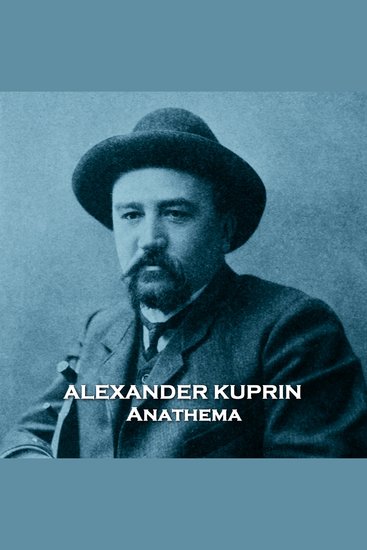
    Alexander Kuprin

    • 0
    • 0
    • 0
    Alexander Kuprin was born in Narovchat, Penza in Russia on 7th September 1870. 
    At 3 his Father died and he and mother moved to Moscow. By 10 he was enrolled at the Second Moscow Military High School and there his interest in literature began. The Alexander Military Academy followed and two years later he was a sub-lieutenant and posted to an Infantry Regiment for a further four years. 
    Despite his duties he was a now a keen writer and published his first short story at this time. His military duties also garnered him experiences for his breakthrough work ‘The Duel’.  Leaving the military he left for Kiev to work for local newspapers.  He continued to publish both stories and novels and by 1901 he was in St Petersburg becoming part of a group that included Chekhov, Ivan Bunin, Maxim Gorky and Leonid Andreyev.  
    In the years that followed further controversial works and acclaim followed.  His comments on the regime meant he was also put under secret police surveillance.   
    As World War I erupted, Kuprin opened a military hospital but was then given command of an infantry company in Finland. He was soon discharged on grounds of ill health.  
    The October Revolution saw him praise Lenin, but he warned that the Bolsheviks threatened Russian culture and might cause further widespread suffering to the peasants.  As Civil War raged he took his family to Helsinki and then on to Paris. 
    Exile saw his talents decline further and his succumbing to alcoholism. He became lonely and withdrawn. The family's poverty increased his malaise.   
    In May 1937, the Kuprin’s returned to Moscow.  He now saw his work published but wrote almost nothing new.  In 1938 his health rapidly deteriorated.  Already suffering from a kidney problems and sclerosis, he had now developed cancer of the oesophagus.  
    Alexander Kuprin died on 25th August 1938.
    Voir livre
  • Red and the Black The - Audiobook - cover

    Red and the Black The - Audiobook

    Stendhal, Classic Audiobooks,...

    • 0
    • 0
    • 0
    The Red and the Black is a psychological and political novel by Stendhal that follows the ambitious rise and tragic fall of Julien Sorel, a poor young man determined to climb the ranks of French society during the Restoration era. Torn between his intellectual aspirations, romantic passions, and the social forces of church and state, Julien attempts to forge his own path through charm, manipulation, and raw determination.Stendhal paints a sharp and ironic portrait of 19th-century France, exposing the hypocrisy of its institutions and the moral contradictions of its elite. The novel blends realism with a deep psychological insight into its protagonist, making The Red and the Black not just a story of one man's ambition, but also a powerful critique of class, power, and illusion.
    Voir livre
  • Loss of the Royal George The (Unabridged) - cover

    Loss of the Royal George The...

    W.H.G. Kingston

    • 0
    • 0
    • 0
    William Henry Giles Kingston writer of tales for boys, William Henry Giles Kingston was born in London, but spent much of his youth in Oporto, where his father was a merchant.
    His first book, The Circassian Chief, appeared in 1844. His first book for boys, Peter the Whaler, was published in 1851, and had such success that he retired from business and devoted himself entirely to the production of this kind of literature, in which his popularity was deservedly great; and during 30 years he wrote upwards of 130 tales.
    THE LOSS OF THE ROYAL GEORGE: I am not likely to forget that next morning, the 28th of August, (17). It was a fine summer's morning, and there was just a little sea on, with a strongish breeze blowing from the eastward, but not enough to prevent boats coming off from Portsmouth. I counted forty sail-of-the-line, a dozen frigates and smaller ships of war, and well-nigh three hundred merchant vessels, riding, as of course we were, to the flood with our heads towards Cowes.
    Voir livre
  • Horror at Sea - 15 Nautical Nightmares - cover

    Horror at Sea - 15 Nautical...

    William Hope Hodgson, H.P....

    • 0
    • 0
    • 0
    HorrorBabble's complete "Horror at Sea" collection. 15 nautical nightmares: from the discovery and subsequent investigation of a mysterious vessel in The Derelict; to the terrifying ordeal of a lighthouse keeper stationed at the remote, Three Skeleton Key. 
    "There’ll be restless nights for thee, upon these seven seas…" 
    Contents: 
    The Derelict by W. H. Hodgson (Red Magazine, Dec 1912) 
    The Ocean Ogre by D. Carroll (Weird Tales, July 1937) -- A stranded ship. 
    Ghouls of the Sea by J. B. S. Fullilove (WT, March 1934) -- Death aboard the "Kay Marie". 
    The Voice in the Night by W. H. Hodgson (Blue Book Magazine, Nov 1907) -- A schooner, approached in the night. 
    The Black, Dead Thing by F. B. Long (WT, Oct 1933) -- A dreadful thing came aboard the ship. 
    The Temple by H. P. Lovecraft (WT, Sep 1925) -- A submarine on a strange descent. 
    The Lure of Atlantis by J. M. Nichols, Jr. (WT, April 1925) -- An expedition into a lost city. 
    The Uncharted Isle by C. A. Smith (WT, Nov 1930) -- A sailor lost at sea. 
    The Night Ocean by H. P. Lovecraft (Californian, Winter 1936) -- An artist, unsettled by the ocean. 
    Fire in the Galley Stove by W. Outerson (Atlantic, May 1937) -- An attack on the "Unicorn". 
    The Black Kiss by R. Bloch (WT, June 1937) -- The thing that swam in black waters. 
    Lost by A. M. Schnirring (WT, July 1943) -- A tale of the marshes. 
    The Thing in the Weeds by W. H. Hodgson (Story-teller, Jan 1913) -- A Sargasso Sea story. 
    The Brain-Eaters by F. B. Long (WT, June 1932) -- A horror from four-dimensional space. 
    Three Skeleton Key by G. G. Toudouze (Esquire, Jan 1937)
    Voir livre
  • Great Expectations - cover

    Great Expectations

    Charles Dickens

    • 0
    • 0
    • 0
    Great Expectations is the thirteenth novel by Charles Dickens and his penultimate completed novel. It depicts the education of an orphan nicknamed Pip (the book is a bildungsroman; a coming-of-age story). It is Dickens' second novel, after David Copperfield, to be fully narrated in the first person. The novel was first published as a serial in Dickens's weekly periodical All the Year Round, from 1 December 1860 to August 1861. In October 1861, Chapman and Hall published the novel in three volumes.The novel is set in Kent and London in the early to mid-19th century and contains some of Dickens's most celebrated scenes, starting in a graveyard, where the young Pip is accosted by the escaped convict Abel Magwitch. Great Expectations is full of extreme imagery – poverty, prison ships and chains, and fights to the death – and has a colourful cast of characters who have entered popular culture. These include the eccentric Miss Havisham, the beautiful but cold Estella, and Joe, the unsophisticated and kind blacksmith.Dickens's themes include wealth and poverty, love and rejection, and the eventual triumph of good over evil. Great Expectations, popular with readers and literary critics, has been translated into many languages and adapted numerous times into various media.
    Voir livre
  • Tales from Edgar Allan Poe - Volume 3 - cover

    Tales from Edgar Allan Poe -...

    Edgar Allan Poe

    • 0
    • 0
    • 0
    Edgar Allan Poe was an American writer, poet, editor and literary critic, considered part of the American Romantic Movement.  
    Best known for his tales of mystery and the macabre, Poe was one of the earliest American practitioners of the short story and is considered the inventor of the detective-fiction genre.  He is further credited with contributing to the emerging genre of science fiction. Here is a third collection of some of his best stories:  "The Oblong Box", "M.S. Found In A Bottle", and "Loss of Breath".
    Don't miss the other volumes in the Tales from Edgar Allan Poe collection.
    Public Domain (P)2012 Listen & Live Audio, Inc.
    Voir livre