Almayer's Folly
Joseph Conrad
Verlag: Bu Classics Books
Beschreibung
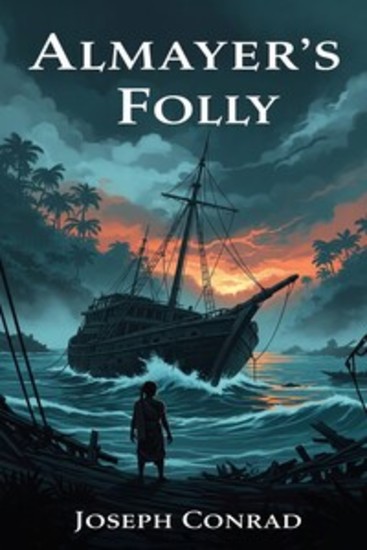
Witness the tragic downfall of a man blinded by dreams of gold and status, whose desperate ambitions in the Malay archipelago lead to his ultimate isolation.
Verlag: Bu Classics Books
Witness the tragic downfall of a man blinded by dreams of gold and status, whose desperate ambitions in the Malay archipelago lead to his ultimate isolation.
The Sign of the Four is the second book in Sir Arthur Conan Doyle's legendary series about Sherlock Holmes, following A Study in Scarlet. This gripping novel delves into one of Holmes and Dr. Watson's most thrilling cases, featuring mysterious murders, a hidden treasure, and a pact sealed by betrayal. Set in Victorian England, the story unravels a dark and captivating tale involving a secret society, exotic intrigue, and a perilous chase through the streets of London.This book also introduces Watson's future wife, Mary Morstan, adding an emotional depth to the narrative. With its complex plot and dynamic storytelling, The Sign of the Four solidifies Sherlock Holmes's place as one of the most iconic detectives in literature.Zum Buch
My Confession is a brief autobiographical story of Leo Tolstoy's struggle with a mid-life existential crisis of melancholia. It describes his search for answers to the profound questions "What will come of my life?" and "What is the meaning of life?", without answers to which life, for him, had become "impossible." Tolstoy reflects on the arc of his philosophical life until then: his childhood abandonment of his Russian orthodox faith; his mastery of strength, will, power, and reason; and how, after he had achieved tremendous financial success and social status, life to him seemed meaningless. After despairing of his attempts to find answers in science, philosophy, eastern wisdom, and his fellow men of letters, he describes his turn to the wisdom of the common people and his attempts to reconcile their instinctive faith with the dictates of his reason. The main body of the text ends with the author reaching a compromise: faith, he realizes, is a necessity, but it must be constrained by reason. However, an epilogue that describes a dream he had some time after completing the body of the text suggests that he has undergone a radical personal and spiritual transformation. (Summary from Wikipedia)Zum Buch
Richard Bernard Heldmann was born on 12th October 1857, in St Johns Wood, North London. By his early 20’s Heldmann began publishing fiction for the myriad magazine publications that had sprung up and were eager for good well-written content. In October 1882, Heldmann was promoted to co-editor of Union Jack, a popular magazine, but his association with the publication ended suddenly in June 1883. It appears Heldman was prone to issuing forged cheques to finance his lifestyle. In April 1884 He was sentenced to 18 months hard labour. In order to be well away from the scandal and damage this had caused to his reputation Heldmann adopted a pseudonym on his release from jail. Shortly thereafter the name ‘Richard Marsh’ began to appear in the literary periodicals. The use of his mother’s maiden name as part of it seems both a release and a lifeline. A stroke of very good fortune arrived with his novel The Beetle published in 1897. This would turn out to be his greatest commercial success and added some much-needed gravitas to his literary reputation. Marsh was a prolific writer and wrote almost 80 volumes of fiction as well as many short stories, across many genres from horror and crime to romance and humour.Zum Buch
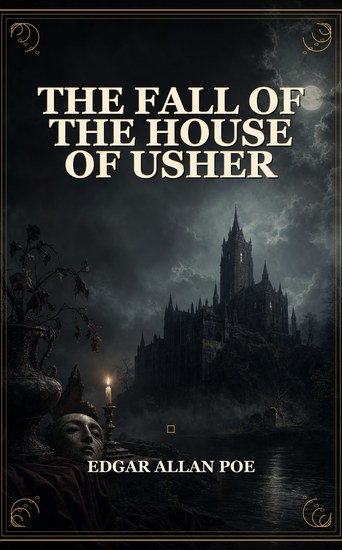
Though he is most often remembered as the architect of the modern tale of terror, Edgar Allan Poe's short fiction ranges far beyond the confines of the macabre. In these 13 selected stories, he deals not merely with fear, but with consciousness itself: its obsessions, its perversities, its fragile hold upon identity, memory, and reason. Ligeia – A meditation on beauty, intellect, and the terrifying possibility that the will may conquer death itself. Berenice – A stark study of monomania, in which intellectual obsession descends into horror. Eleonora – A gentle tale, exploring idealised love, memory, and the redemptive power of beauty. Morella – A dark philosophical romance concerning the persistence of the self beyond death. Three Sundays in a Week – A playful tale of ingenuity and deception. The Imp of the Perverse – Poe’s chilling exploration of the irrational impulse that drives us toward self-destruction. The Assignation – A tale of passion and fatalism, set against a decaying aristocratic world . The Facts in the Case of M. Valdemar – A disturbing experiment at the border of life and death, told with clinical precision. The Cask of Amontillado – A masterclass in cool revenge, where pride, cruelty, and calculation lead to perfect atrocity. Silence – A Fable – A haunting parable about the terror of absolute stillness. Shadow – A Parable – A solemn meditation on death and inevitability. The Man of the Crowd – An early exploration of urban alienation and the unsettling mystery of the unknowable individual. Some Words with a Mummy – A sharp satire skewering modern arrogance through an encounter with the ancient past.Zum Buch
MI6's man in Havana is Wormold, a former vacuum-cleaner salesman turned reluctant secret agent out of economic necessity. To keep his job, he files bogus reports based on Charles Lamb's Tales from Shakespeare and dreams up military installations from vacuum-cleaner designs. Then his stories start coming disturbingly true . . . First published in 1959 against the backdrop of the Cold War, Our Man in Havana remains one of Graham Greene's most widely enjoyed novels. It is an espionage thriller, a penetrating character study, and a political satire of government intelligence that still resonates today.Zum Buch
Jacques Heath Futrelle was born on the 9th April 1875 in Pike County, Georgia. His early career was as a journalist. Initially he worked for the Atlanta Journal where he began their sports section. This was followed by work for the New York Herald, the Boston Post and the Boston American. At the latter, in 1905, he published the serialized version of his short story ‘The Problem of Cell 13’ who’s main character was Professor Augustus S. F. X. Van Dusen, commonly known as ‘The Thinking Machine’, a detective, who used logic to solve crimes. In 1895 he married Lily May Peel with whom he had two children. In 1906 buoyed by the success of his short stories he left the paper to write novels. Such was his success that he had a house, ‘Stepping Stones’, designed and built with a harbor view at Scituate, Massachusetts, where the family would spend most of their time together. On April 15th, 1912 he was returning from Europe as a first-class passenger aboard the Titanic when it stuck an iceberg. He refused to board a lifeboat but insisted that Lily did. She acquiesced and remembered the last she saw of him he was smoking a cigarette on deck with John Jacob Astor IV. His body was never recovered.Zum Buch