Begleiten Sie uns auf eine literarische Weltreise!
Buch zum Bücherregal hinzufügen
Grey
Einen neuen Kommentar schreiben Default profile 50px
Grey
Jetzt das ganze Buch im Abo oder die ersten Seiten gratis lesen!
All characters reduced
Attitude Of Gratitude - Success In Gratitude - cover

Attitude Of Gratitude - Success In Gratitude

Joseph Bassey

Verlag: BookRix

  • 0
  • 0
  • 0

Beschreibung

Many greatly desired men and women in the world have one secret behind their success, which when discovered and applied by anyone, will aid the success of that person. Knowing very well that, success is your progression in motion, you need to discover this secret, secreted in this book and apply it in your life to get similar or better result. 
Do you know why most people are born poor and die poor? Discover the mistake they made and refuse to make such mistake by applying the unravelled knowledge in this book to your life.
Verfügbar seit: 21.12.2023.
Drucklänge: 45 Seiten.

Weitere Bücher, die Sie mögen werden

  • Anatolia and the Bronze Age: The History of the Earliest Kingdoms and Cities that Dominated the Region - cover

    Anatolia and the Bronze Age: The...

    Editors Charles River

    • 0
    • 0
    • 0
    While the Bronze Age is recognized as one of history’s most important phases, it’s been hard for historians to precisely date. The idea of the Bronze Age comes from a three-age system developed in the 19th century through which archaeologists and historians believe cultures evolve. These three ages are the Stone Age, the Bronze Age, and the Iron Age, and the concept of the system stems from the simultaneous development of museums in Europe during that time. In the Royal Museum of Nordic Antiquities in Denmark, Christian Jürgensen Thomsen, the director of the museum, began classifying objects of stone, bronze, or iron to better categorize and exhibit them. Each archaeological artifact was thus sorted according to their materials and further organized by shape and style. Through such methodology, working alongside archaeological reports, he was able to show how certain objects changed over time. 
    	During the Late Bronze Age, from about 1500-1200 BCE, the Near East was a time and place where great kingdoms and empires vied for land and influence, playing high stakes diplomatic games, trading, and occasionally going to war with each other in the process. The Egyptians, Hittites, Babylonians, Assyrians, and several smaller Canaanite kingdoms were all part of this system, which was one of the first true “global” systems in world history and also one of the most materially prosperous eras in antiquity. The major kingdoms are well-known to most people, but among them were powerful neighbors, many of whom have been mostly overlooked.  
    The transition from the Bronze to the Iron Age during the late 13th and early 12th centuries BCE arguably changed the structure and course of world history more fundamentally than any period before or since, and at the center of this period of turmoil was a group of people known today as the Sea Peoples, the English translation of the name given to them by the Egyptians.
    Zum Buch
  • The Sayings of Mencius Book 1 - cover

    The Sayings of Mencius Book 1

    Mencius

    • 0
    • 0
    • 0
    The Sayings of Mencius has been revered for well over 2,000 years, and is arguably the most influential of the Si Shu (Four Books) which form the foundation of traditional Chinese education,'Master Meng' was born during the turbulent Warring States period, and was a tireless advocate of Confucian thought, defending and expanding its tenets as a means of achieving peaceful relations between individuals and competing kingdoms. The sage spent most of his life journeying from court to court, always seeking a Ruler sufficiently principled to apply his teachings. Few were found worthy.According to his philosophy, each of the fundamental Confucian virtues already exist within us as "sprouts" (especially jen (acting compassionately) and yi (doing what is morally correct). The Wise who cultivate these young shoots can achieve harmony, both within themselves, and in relation to their fellow beings. Human societies which follow this path will be fair, just and free of conflict.The Mencius is filled with a stunning variety of philosophical and political subjects. Discussions with warlords, disciples, and philosophical adversaries vie with pronouncements on duty, human nature, society and (a recurring theme) the evils of war. A book to return to again and again.
    Zum Buch
  • Kathasaritasagara series -9 - From Various sources - cover

    Kathasaritasagara series -9 -...

    Anusha HS

    • 0
    • 0
    • 0
    The book Kathasaritsagara has been created by Soma Deva. It consists of 21,500 shlokas. 
    This book Kathasaritsagara has been divided into 18 lambakaas, and those 18 lambakaas are still more divided into 125 Tharanga's. 
    Some lambakaas are very big, while some are very small. 
    If there are 115 Shlokas in the 11th Lambaka, there are around 4925 Shlokas in 12th Lambaka. 
    During ancient times from the mouth of Lord Shiva, this story got birth. Those who listen to this story will experience all sorts of worldly pleasures. They will be blessed by Lord Shiva and at last reach jnana Loka by the blessings of lord Shiva.
    Zum Buch
  • The Origins of Elected Strongmen - How Personalist Parties Destroy Democracy from Within - cover

    The Origins of Elected Strongmen...

    Joseph Wright, Erica Frantz,...

    • 0
    • 0
    • 0
    Since the end of World War II, democracies typically fell apart by coup d'état or through force. Today, however, they are increasingly eroding at the hands of democratically elected incumbents, who seize control by slowly chipping away at democratic institutions. To better understand these developments, this book examines the role of personalist political parties, or parties that exist primarily to further their leader's career as opposed to promote a specific policy platform. Using original data capturing levels of personalism in the parties of democratically elected leaders from 1991 to 2020, The Origins of Elected Strongmen shows that the rise of personalist parties around the globe is facilitating the decline of democracy. 


    Personalist parties lack both the incentive and capacity to push back against a leader's efforts to expand executive power. As such, leaders backed by personalist parties are more likely to succeed in their efforts to dismantle institutional constraints on their rule. Such attacks on state institutions, in turn, reverberate throughout society, deepening political polarization and weakening supporters' commitment to democratic norms of behavior. In these ways, ruling party personalism erodes horizontal and vertical constraints on a leader, ultimately degrading democracy and raising the risk of democratic failure.
    Zum Buch
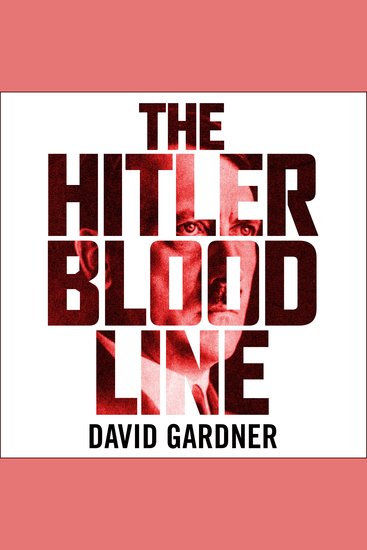
  • The Hitler Bloodline - Uncovering the Fuhrer’s Secret Family - cover

    The Hitler Bloodline -...

    David Gardner

    • 0
    • 0
    • 0
    The astounding story of the quest to find the living descendants of the most monstrous tyrant in history - Adolf HitlerAdolf Hitler was one of six children born to his mother, and one of eight born to his father from two of his three marriages. Alois Hitler, né Schicklgruber, was an official of the Austrian customs service, and the combination of an imperial uniform and a severe drinking habit seems to have ensured that Hitler's father was a drunken bully given to beating his children if they were not instantly obedient.Alois had two children, Alois junior and Angela, by his second wife, and six by his third, Hitler's mother Clara, of whom four, all boys, died at birth or in infancy. Young Adolf was therefore left with a half-brother, Alois, and half-sister, Angela, and a full sister, Paula, who died in 1960. When Hitler killed himself in April 1945, all his siblings were still living and some had children of their own. So, what happened to them?The answer is that no one was really certain until David Gardner published this book in 2001, having patiently and steadfastly tracked down Hitler's living relations to the USA, and made contact with some of them. Now revised and updated, this is a fascinating study of a little-known side of Hitler's history, as well as a riveting account of how the author traced and contacted the survivors of a bloodline that most of the world probably hoped had become extinct.
    Zum Buch
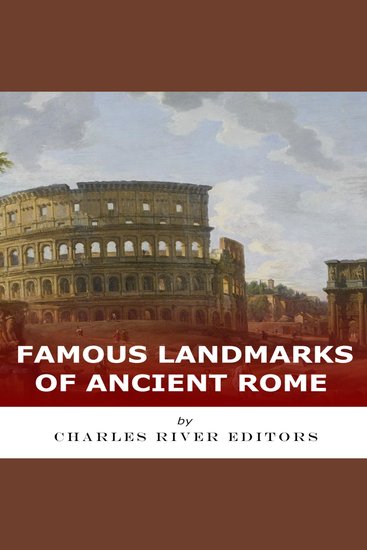
  • Famous Landmarks of Ancient Rome - cover

    Famous Landmarks of Ancient Rome

    Editors Charles River

    • 0
    • 0
    • 0
    When the Colosseum was built in the late 1st century A.D., the Romans, who were known for their architectural acumen, managed to amaze themselves. Martial, a Roman poet writing during the inauguration of the Colosseum, clearly believed the Colosseum was so grand a monument that it was even greater than the other Wonders of the Ancient World, which had been written about and visited endlessly by the Romans and Greeks in antiquity. Indeed, although the Wonders were wondrous to behold, the Colosseum was a spectacular achievement in architecture, something new and innovative, and therefore an amazing “Wonder” in its own way.  
    For well over a thousand years, the Forum was the scene of intense construction, as well as social, political, and commercial activity, making the Forum a boon for the study of Roman history, even though some buildings in the Forum are of such importance that they cannot be disassembled in order to discover the older layers underneath and thus find more evidence about the origins of this area. Ultimately, the Forum transformed from being a backwater used for grazing livestock into the religious and political center of Roman life, and it has long been an inspiration for subsequent generations, influencing the Renaissance, Romanticism, and even Fascism.  
    	Although Roman roads may not have attained the glamorous status of other inventions, their influence is just as profound; roads provide essential communication and transport lines for any country – throughout the hundreds of years when Rome was ascendant in the ancient world, the roads they built held together first their republic and then their empire into a cohesive unit. Since the Appian Way was first built in 312 BC, it has inspired poets, slaves, and conquerors, and Mark Antony, Spartacus, Hannibal, and Horace are just a few of the notable historical personalities who travelled on the Appian Way. 
    Zum Buch