Rejoignez-nous pour un voyage dans le monde des livres!
Ajouter ce livre à l'électronique
Grey
Ecrivez un nouveau commentaire Default profile 50px
Grey
Abonnez-vous pour lire le livre complet ou lisez les premières pages gratuitement!
All characters reduced
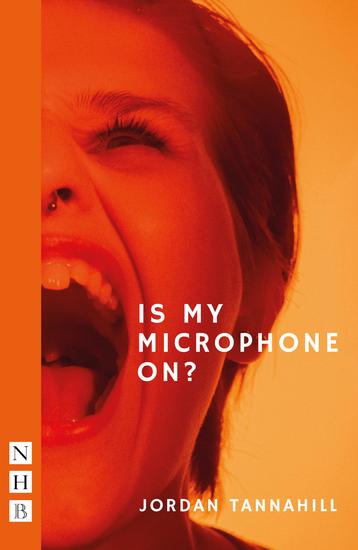
Is My Microphone On? - cover

Is My Microphone On?

Jordan Tannahill

Maison d'édition: Nick Hern Books

  • 0
  • 0
  • 0

Synopsis

'After thousands of years, I have a mouth… So if you don't mind, Mum, Dad, I'm going to speak. I'm going to shout. When I become a human I'm going to use some words. Can you still hear me? Is my microphone on?'
Young people have inherited a burning world. In Jordan Tannahill's urgent and lyrical play, they reckon with the generations who have come before them, questioning the choices that have been made, and the ones that they will yet be forced to make.
In Is My Microphone On? an ensemble of young performers hold the audience to account, and invite them to experience the world together anew.
The play was commissioned by the Theater der Welt festival in Germany, premiered in English by Canadian Stage, Toronto, in 2021, and performed by youth theatres across the UK as part of the 2023 National Theatre Connections Festival. It offers opportunities for a large, flexible cast of any size or mix of genders, and can incorporate chorus work, movement and music.
Disponible depuis: 21/09/2023.
Longueur d'impression: 64 pages.
D'autres livres qui pourraient vous intéresser

  • Coda - cover

    Coda

    Steven Seidenberg

    • 0
    • 0
    • 0
    The nameless narrator of Steven Seidenberg's latest work, Coda, attempts to trace the origins of linguistic and perceptual differentiation—of experience through the cipher of the subject, broadly understood—by advancing the linguistic experiments of contemporary lyric and narrative forms, moving between extravagant prosody and obsessive disquisition to reconfigure the conceptual imperatives common to many throughlines in philosophy and theology. Continuing the focus on the structure of memory and the decadence of body he began in his book Anon, Seidenberg here describes the epistemological regress of desire, intention, knowledge, and discernment, coupling the language and concerns of authors as diverse as Spinoza, Kant, Hegel, and Wittgenstein with a raucous humor in the tradition of Rabelais, Beckett, Lispector, and Sterne. 
    An unnamed narrator, possibly afloat, adrift, possibly asleep, or dreaming, or already dead, or as good as, being an exile, or a condemned fool on a ship of fools, takes the opportunity of this voyage of sorts, to try and make sense of their life and mental state. Through a dizzying, meandering syntax, and farcical flourish, the adventure takes us through philosophical events with dogs, how to tell one’s tale, plead one’s case, how to walk through doors, lose one’s limbs, if not one’s mind, how to make a liveable self in the world, while puffing out smokes of language to fight off the existential crisis at play: “I am waiting for something to wait for”. It might take a little while to adjust to this spinning language feast, adapted from bygone literary models, from Rabelais to Sterne, but once you’re in, you will find yourself unable to put down the addictive, comical and strangely urgent twists and turns of Seidenberg’s latest proposition. —Caroline Bergvall, author of Drift, Alisoun Sings, and Meddle English
    Voir livre
  • As You Like It - cover

    As You Like It

    William Shakespeare

    • 0
    • 0
    • 0
    Step into the enchanting world of William Shakespeare's timeless classic, "As You Like It," with our captivating digital audiobook. Immerse yourself in the whimsical forest of Arden as you join the delightful characters on their journey of love, self-discovery, and mirthful escapades. With expertly narrated prose that brings Shakespeare's lyrical language to life, you'll be transported to a realm of romance, comedy, and wit. Whether you're a seasoned Shakespeare enthusiast or a newcomer to his works, this digital audiobook promises to entertain, inspire, and illuminate the brilliance of the Bard in a way that's accessible and thoroughly enjoyable. Experience the magic of "As You Like It" like never before, wherever you are, with the convenience of an audiobook.
    Voir livre
  • Elegies & Laments - Poetic tributes to the dead - cover

    Elegies & Laments - Poetic...

    Percy Bysshe Shelley, Thomas...

    • 0
    • 0
    • 0
    In these more modern time perhaps our first thoughts of an Elegy or a Lament is for someone’s passing.  Wreathed in grief and death we think of a headstone on a silent grave and the memories that shelter within our hearts, slowly receding from one generation to the next, as an often lonely voice extols the virtues and traits of the one who has passed. 
     
    But these two very early forms of poetry, dating back to at least Ovid and probably further, are also surprising in their lyrical touch.  These are not just mournful and sad but also whimsical or rich with celebration and tribute as they journey through joy, laughter, love, tears and comfort. 
     
    Our Classic Poets, who have specifically chosen to include the form in the title of their work, include the likes of Percy Bysshe Shelley, Thomas Chatterton, Aphra Behn, Rainer Maria Rilke, Radclyffe Hall and many others of equal measure are always surprising in their views, their analysis and their sharing of words and thoughts, offering feelings that mirror our own and provide a balm of many hues for our wounded and tender souls. 
     
    1 - Elegies and Laments - An Introduction 
    2 - Elegy Written in a Country Churchyard by Thomas Gray 
    3 - The Lament of Swordy Well by John Clare 
    4 - An Elegy on a Pile of Ruins by John Cunningham 
    5 - Lament by Rainer Maria Rilke 
    6 - Elegy - Supposed to Be Written in Barnet Churchyard by George Townsend 
    7 - Elegy by Thomas Chatterton 
    8 - A Lament by Radclyffe Hall 
    9 - An Elegy by Ben Jonson 
    10 - Laeta - A Lament by HP Lovecraft 
    11 - Angellica's Lament by Aphra Behn 
    12 - Amores - Book I Elegy V - Corinna in an Afternoon by Ovid 
    13 - Morning Lament by Johann Wolfgang von Goethe 
    14 - The Wind's Lament by John Morris-Jones 
    15 - Noon Day Elegiacs by T W Rolleston 
    16 - Midnight Lamentation by Harold Munro 
    17 - February. An Elegy by Thomas Chatterton 
    18 - Elegy in April and September by Wilfred Owen 
    19 - Elegy by Anna Seward 
    20 - Autumn Elegy by Leslie Norris 
    21 - Elegy on the Year 1788 by Robert Burns 
    22 - Elegy for an Enemy by Stephen Vincent Benet 
    23 - An Elegy on the Death of a Mad Dog by Oliver Goldsmith 
    24 - Pointless It Is To Lament by Narsinh Mehta 
    25 - To the Beloved Dead - A Lament by Alice Meynell 
    26 - The Slave's Lament by Benjamin Cutler Clark 
    27 - The Slaves Lament by Robert Burns 
    28 - A Lament by Katharine Tynan 
    29 - The Going of the Battery (Wives Lament November the 2nd 1899) by Thomas Hardy 
    30 - Lament in 1915 by Harold Munro 
    31 - An Elegy on the Death of Llywelyn ab Gruyffyd by Gruffydd ap Yr Ynad Coch 
    32 - Elegy to the Memory of an Unfortunate Lady by Alexander Pope 
    33 - Elegy on a Lady Whom Grief for the Death of Her Bethrothed Killed by Robert Seymour Bridges 
    34 - Lament by Edna St Vincent Millay 
    35 - The Mother's Lament For Her Infant by Lucretia Maria Davidson 
    36 - Elegy on the Death of Mr Phillips by Thomas Chatterton 
    37 - Lament for the Poets, 1916 by Francis Ledwidge 
    38 - Lament for Thomas McDonagh by Francis Ledwidge 
    39 - Elegy on the Earl of Rochester by Anne Wharton 
    40 - Elegy on William Shakespeare by William Basse 
    41 - Adonais - An Elegy on the Death of John Keats by Percy Bysshe Shelley
    Voir livre
  • Julia or The Convent of St Claire - Poem by a 18th Century female author who was also an abolitionist pioneer - cover

    Julia or The Convent of St...

    Amelia Opie

    • 0
    • 0
    • 0
    Amelia Alderson, an only child, was born on the 12th November 1769 in Norwich, England. 
    After the death of her mother on New Year’s Eve 1784 she became her father's housekeeper and hostess. 
    The young Amelia was energetic, attractive, and an admirer of fashion.  She spent much of her youth writing poetry and plays and putting on local amateur theatricals.  At 18 she had published anonymously ‘The Dangers of Coquetry’. 
    Amelia married in the spring of 1798 to the artist John Opie at the Church of St Marylebone, in Westminster, and together they lived in Berners Street where Amelia was already living. 
    Her next novel in 1801 ‘Father and Daughter’, was very popular even though it dealt with such themes as illegitimacy, a socially difficult subject for its times.  From this point on published works were far more regular.  The following year her volume ‘Poems’ appeared and was again very popular.  Novels continued to flow and she never once abandoned her social activism and her call for better treatment of women and the dispossessed in her works.  She was also keenly involved in a love of society and its attendant frills. 
    Encouraged by her husband to write more she published Adeline Mowbray in 1804, an exploration of women's education, marriage, and the abolition of slavery.  
    Her husband died in 1807 and she paused from writing for a few years before resuming with further novels and poems.  Of particular interest was her short poem ‘The Black Man's Lament’ in 1826.  Her life now was in the main spent travelling and working for charities and against slavery.  She even helped create a Ladies Anti-Slavery Society in Norwich which organised a parliamentary petition of 187,000 names of which hers was the first name. 
    After a visit to Cromer, a seaside resort on the North Norfolk coast, she caught a chill and retired to her bedroom.  
    Amelia Opie died on the 2nd December 1853 in Norwich.  She was 84.
    Voir livre
  • Poems of the Sea - cover

    Poems of the Sea

    K. J. Neithercutt

    • 0
    • 0
    • 0
    A treasure of compiled poems about the magic and mysteries of the sea, K. J. Neithercutt invites us into a deeply magical, fantastical, and mysterious aquatic world with her poetry.
    Voir livre
  • Then the War - And Selected Poems 2007-2020 - cover

    Then the War - And Selected...

    Carly Phillips

    • 0
    • 0
    • 0
    "In much of the best contemporary poetry, beauty of thought is at least as important as beauty of language. Carl Phillips, here reading his own Pulitzer Prize-winning collection, has an ample supply of both, but it is the thinking behind each poem that makes it possible for the language to have power." - AudioFileWINNER OF THE 2023 PULITZER PRIZE IN POETRYA new collection of poems from one of America’s most essential, celebrated, and enduring poets, Carl Phillips's Then the WarI’m a song, changing. I’m a light rain falling through a vast darkness toward a different darkness.Carl Phillips has aptly described his work as an “ongoing quest”; Then the War is the next step in that meaningful process of self-discovery for both the poet and his reader. The new poems, written in a time of rising racial conflict in the United States, with its attendant violence and uncertainty, find Phillips entering deeper into the landscape he has made his own: a forest of intimacy, queerness, and moral inquiry, where the farther we go, the more difficult it is to remember why or where we started. Then the War includes a generous selection of Phillips’s work from the previous thirteen years, as well as his recent lyric prose memoir, “Among the Trees,” and his chapbook, Star Map with Action Figures.Ultimately, Phillips refuses pessimism, arguing for tenderness and human connection as profound forces for revolution and conjuring a spell against indifference and the easy escapes of nostalgia. Then the War is luminous testimony to the power of self-reckoning and to Carl Phillips as an ever-changing, necessary voice in contemporary poetry.
    Voir livre