Begleiten Sie uns auf eine literarische Weltreise!
Buch zum Bücherregal hinzufügen
Grey
Einen neuen Kommentar schreiben Default profile 50px
Grey
Jetzt das ganze Buch im Abo oder die ersten Seiten gratis lesen!
All characters reduced
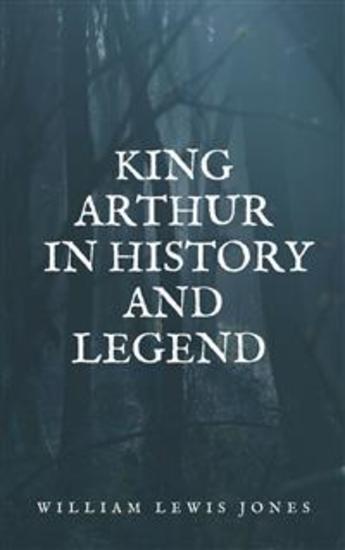
King Arthur in history and legend - cover

King Arthur in history and legend

Jones William Lewis

Verlag: PubMe

  • 0
  • 0
  • 0

Beschreibung

If, in Caxton’s words, “such a king called Arthur” ever lived in these islands, he must have flourished during the period between the first coming of the Saxons and the middle of the sixth century. So much, at any rate, is clearly attested by the meagre historical records which profess to recount his deeds. Nothing, however, can be found in these records to warrant the belief that he ever became “king” of any part of Britain. His achievements as a warrior alone are mentioned, and all that we can gather besides from Welsh tradition only serves to emphasise the fact that his renown among the British people rested mainly upon his warlike prowess. His admission to the so-called “Celtic pantheon,” and his gradual evolution in Celtic tradition as a great mythological figure, are matters of purely speculative interest, and cannot be taken into account in an attempt to answer our first question—Who, and what, was the historical Arthur? In Welsh we read of an “emperor” Arthur, but this title, as we shall see, implies nothing more than that he was a war-leader, or a commander-in-chief of a group of more or less celebrated generals. His kingship, and his state as the head of a great court, are entirely the creations of later romance.
Verfügbar seit: 11.01.2023.

Weitere Bücher, die Sie mögen werden

  • The Great Russian Famine of 1601-1603 - Causes and Consequences - cover

    The Great Russian Famine of...

    Sarah Willards

    • 0
    • 0
    • 0
    The Great Russian Famine of 1601-1603 was one of the most catastrophic events in Russian history, causing widespread death, social instability, and economic distress. This famine occurred during a period of political turmoil, just after the death of Tsar Ivan the Terrible and amid the struggle for the Russian throne. The famine’s impact was felt across Russia, particularly in the central and southern regions, and it highlighted both the fragility of the agrarian economy and the vulnerability of the Russian people to climatic and political disruptions. 
    The context of the famine is crucial to understanding its devastating effects. In the late 16th century, Russia was already experiencing significant strain, including the collapse of the feudal system, a declining central government, and the outbreak of the Time of Troubles, a series of civil wars and foreign invasions. The Russian agricultural system, heavily dependent on the success of yearly harvests, was not equipped to deal with the combination of extreme weather, crop failure, and a lack of effective governance. 
    The famine itself was primarily caused by a series of poor harvests, which were exacerbated by severe weather conditions, including droughts and unseasonably cold winters. The summer of 1601 saw a significant drought, which devastated crops, and the following winter brought freezing temperatures that further hindered the ability to cultivate food. As a result, grain production plummeted, and prices soared, making food increasingly inaccessible to the general population.
    Zum Buch
  • Forget Me Not - cover

    Forget Me Not

    Elisabeth Elliot

    • 0
    • 0
    • 0
    What do we do when those we love are no longer able to care for themselves? How are we to face the brokenness and suffering of those to whom we once looked for strength? Elisabeth Elliot wrestled with these difficult questions while watching the steady erosion of her mother's memory - an erosion that seemed to devour every strong and noble attribute that made her mother who she was. This book contains insights Elisabeth gained as she struggled to find perspective.
    Zum Buch
  • The Road - cover

    The Road

    Christopher Hadley

    • 0
    • 0
    • 0
    A TIMES BOOK OF THE YEAR 
    ‘An absolute joy to read and an early contender for every list of History Books of the Year’ Sunday Telegraph 
    ‘On nearly every page a random passage takes one’s breath away’ The Times 
    Have you ever heard the march of legions on a lonely country road?  
    For two thousand years, the roads the Romans built have determined the flow of ideas and folktales, where battles were fought and where pilgrims trod. Almost everyone in Britain lives close to a Roman road, if only we knew where to look. 
    In the beginning was Watling Street, the first road scored on the land when the invading Romans arrived on a cold and alien Kentish shore in 43 CE. Campaign roads rolled out to all points of the compass, forcing their way inland and as the Britons fell back, the roads pursued them relentlessly, carrying troops, supplies and military despatches. In the years of fighting that followed, as the legions pushed onwards across what is now England, into Wales and north into Scotland in search of booty, mineral wealth, land and tribute, they left behind a vast road network, linking marching camps and forts, changing the landscape, etching the story of the Roman advance into the face of the land, channelling our lives today. 
    Christopher Hadley, acclaimed author of Hollow Places, takes us on a lyrical journey into this past, retracing and searching for an elusive Roman road that sprang from one of the busiest road hubs in Roman Britain. His passage is not always easy. Time and nature have erased many clues; bridges rotted and whole woods grew across the route. Carters found an easier ford downstream, and people broke up its milestones to mend new paths. Year after year the heavy clay swallowed whole lengths of it; the once mighty road became a bridleway, an overgrown hollow-way, a parched mark in the soil. 
    Hadley leads us on a hunt to discover, in Hilaire Belloc’s phrase, ‘all that has arisen along the way’. Gathering traces of archaeology, history and landscape from poems, church walls, hag stones and cropmarks, oxlips, killing places, hauntings and immortals, and things buried too deep for archaeology, The Road is a mesmerising journey into two thousand years of history only now giving up its secrets. 
    In his latest work, The Road, Christopher Hadley delves into the historical and social aspects of Roman roads, enriching them with elements of mythology and folklore. His unique approach to historiography breathes new life into our understanding of past civilizations and their impact on our current geography. 
    For fans of Matthew Green (Shadowlands), Robert Macfarlane (Mountains of the Mind), Amy Jeffs (Storyland), Andrew Ziminski (Church Going), and Eleanor Parker (Winters in the World). 
    HarperCollins 2023
    Zum Buch
  • A Fitting of Halperin’s Bureaucratic Model with Domestic and Foreign Policy Events of the Vietnam War - cover

    A Fitting of Halperin’s...

    Steve Dafoe

    • 0
    • 0
    • 0
    A Fitting of Halperin’s Bureaucratic Model with Domestic and Foreign Policy Events of the Vietnam War
    Zum Buch
  • Not So Pink - cover

    Not So Pink

    Tenzim Norzom

    • 0
    • 0
    • 0
    This couple started their second venture to offer inclusive western workwear for women amidst the pandemic
    Zum Buch
  • Chanakya Neeti - cover

    Chanakya Neeti

    B K Chaturvedi

    • 0
    • 0
    • 0
    Chanakya is regarded as a great thinker and diplomat in India who is traditionally identified as Kautilya or Vishnu Gupta. Originally a professor of economics and political science at the ancient Takshashila University, Chanakya managed the first Maurya Emperor Chandragupta's rise to power at a young age. Instead of acquiring the seat of kingdom for himself, he crowned Chandragupta Maurya as the emperor and served as his chief advisor.
    
    Chanakya Neeti In Tamil is a treatise on the ideal way of life, and shows Chanakya's deep study of the Indian way of life. These practical and powerful strategies provide a path to live an orderly and planned life. Chanakya also developed Neeti-Sutras (aphorisms – pithy sentences) that tell people how they should behave. Chanakya used these sutras to groom Chandragupta and other selected disciples in the art of ruling a kingdom.
    Zum Buch