Join us on a literary world trip!
Add this book to bookshelf
Grey
Write a new comment Default profile 50px
Grey
Subscribe to read the full book or read the first pages for free!
All characters reduced
A Tale of a Tub - cover

A Tale of a Tub

Jonathan Swift

Publisher: DigiCat

  • 0
  • 0
  • 0

Summary

In "A Tale of a Tub," Jonathan Swift employs a satirical and allegorical narrative to critique religious and cultural dogmas of early 18th-century England. The book tells the stories of three brothers, representing various religious sects, who each inherit a tub that symbolizes their faiths. This richly layered work, employing a distinctive blend of linguistic clarity and complex metaphors, navigates themes of folly, corruption, and the inherent absurdity within organized religion. Swift's vivid imagery and biting irony serve not only to entertain but also to provoke thought about the philosophical vacuity underpinning his contemporary society. Jonathan Swift, an influential figure of the Enlightenment and a master of satire, was acutely aware of the social and political turmoil of his time. His experiences as a clergyman and a political pamphleteer shaped his perspective on the hypocrisy of religious institutions and their impact on human behavior. This background informs "A Tale of a Tub," as Swift deftly critiques not just the practices of religion but also the broader implications of unexamined beliefs and the nature of humanity. Readers seeking to delve into the intricacies of religious criticism and satire will find "A Tale of a Tub" an essential text. Swift invites us into a world where the absurdities of faith and doctrine are laid bare, offering wit and wisdom that resonate even in today's discourse on belief and identity. This work remains a cornerstone in the study of literary satire, encouraging readers to reflect on the nature of adherence and the folly that often accompanies it.
Available since: 09/15/2022.
Print length: 117 pages.

Other books that might interest you

  • How to Heal Trauma Using Polyvagal Theory - The Complete Guide to Vagus Nerve Activation Understanding Nervous System Dysregulation and Rewiring Your Body's Stress Response - cover

    How to Heal Trauma Using...

    Emily Stone

    • 0
    • 0
    • 0
    If your body still lives in the past even though your mind knows you're safe, then keep reading...


    You've tried talking about it. You've tried thinking your way through it. But trauma doesn't live in your thoughts—it lives in your nervous system.
     
    Your body is still keeping score, even when you're trying to move on.
     
    Traditional therapy asks you to understand your trauma. Polyvagal Theory teaches you to release it. Not through more talking, but through understanding the language your nervous system has been screaming in all along.
     
    This isn't about reliving your past. It's about rewiring your present.


    You'll discover:
    
    Why your body reacts before your mind can catch up
    How your vagus nerve controls your sense of safety
    The science behind why you freeze, flee, or fight
    How to shift from survival mode to thriving mode
    Why "just calm down" has never worked for you
    The missing piece in traditional trauma therapy
    
     
    Healing trauma isn't about being strong enough to push through it.
     
    It's about being wise enough to work with your body's natural systems. Your nervous system isn't broken—it's been protecting you. Now it's time to teach it that the danger has passed.


    Grab your copy and start speaking your body's language today!
    Show book
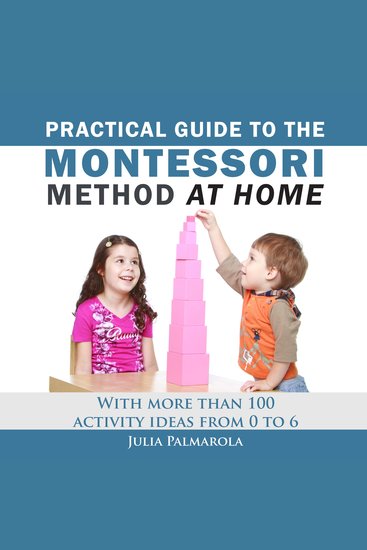
  • Practical Guide to the Montessori Method at Home - With more than 100 activity ideas from 0 to 6 - cover

    Practical Guide to the...

    Julia Palmarola

    • 0
    • 0
    • 0
    The Practical Guide to the Montessori Method at Home is a book for parents who want to integrate the Montessori philosophy at home with their children. 
    It includes:A basic introduction to the principles of the Montessori philosophy,Numerous illustrated examples of how to apply Montessori at home, classified by subject and age, and explained clearly and concisely. You will find explanations and activities for the following age groups:Babies 0-12 months;Montessori toddlers from 12 months to 3 years oldPreschool children from 3 to 6 years of age 
    The Guide is written in a pleasant and accessible tone, and has been structured so that it is:Easy and quick to use, created especially for parents who lack free time,Simple to implement, with activities classified by age, which include illustrations and pictures of the materials,Affordable to execute, with cheap and simple materials you can even make yourself on a very reduced budget. 
    The Montessori activities offered in this book are also classified by subject, including:Montessori daily life activitiesMontessori sensorial activitiesReading and writingMathematicsMusic and artNatural SciencesEtc. 
    The audiobook version of this Montessori book is ideal for parents who have their hands full throughout the day and prefer to listen to the contents of the book as they go about their daily life activities. 
    The audiobook includes a PDF downloadable file with pictures and other useful information.
    Show book
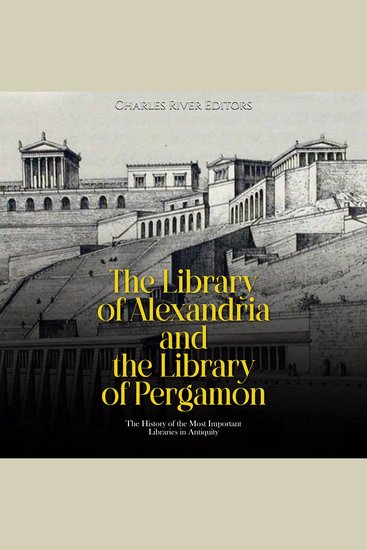
  • Library of Alexandria and the Library of Pergamon The: The History of the Most Important Libraries in Antiquity - cover

    Library of Alexandria and the...

    Editors Charles River

    • 0
    • 0
    • 0
    In the Middle Ages, the lack of libraries in the West helped contribute to the popular imagination of the ancient Library at Alexandria, and all the myths and legends that have come to be associated with it, but the Library of Alexandria deserves its reputation. Before medieval times, Greek scholars carefully collected and inventoried books and other written materials in the Library of Alexandria, which truly made it a sort of precursor to all modern libraries. In fact, the Library of Alexandria proved to be one of the greatest institutions created in the ancient world because it influenced the minds of countless people in profound ways for centuries. The Library not only inspired the imaginations of artists but gave birth to new research methods, which proved to provide the basis for many considered common-place today. The Library of Alexandria was one of the few libraries in the ancient Greek world, which helped ensure that mathematicians, scientists and other scholars from across the Mediterranean traveled to Egypt to study there, and it was so impressive in its size and influence that it left an indelible mark on the world that still reverberates today.  
    	The Library of Pergamon was established slightly later than the Library of Alexandria, during the reign of king Eumenes II, but Eumenes embarked on a program to stock the Library of Pergamon with some of the greatest works of Greek literature in order to rival the Library of Alexandria. For example, a complete set of Demosthenes’ works was among the classics that graced the shelves in the Pergamon collection. This competition seems to have been the basis for the papyrus ban, as the Ptolemies intended to halt academic work in Pergamon, such as editing new editions of the classics. While the Ptolemaic ban on papyrus may have slowed operations at the Library of Pergamon, the introduction of parchment as a medium of writing helped re-stock Pergamon’s Library.
    Show book
  • Being an Empath - It is Not Your Job to Absorb Other People's Emotions Protect Yourself From Toxicity Avoid Harmful People and Heighten Your Strengths with Proven Emotional Intelligence Methods - cover

    Being an Empath - It is Not Your...

    Sheila Trivett

    • 0
    • 0
    • 0
    Do you have the uncanny ability to sense exactly what another person is feeling? Are you often told to stop being too sensitive and start having "thicker skin"? Have you ever wondered how other people go through life without being overwhelmed by all the negativity of modern life? Then you need to keep reading... 
    As defined by the American Psychological Association (APA), empaths possess the ability to comprehend and vicariously experience another person's emotions and point of view. 
    Here's a preview of what you will discover:The revolutionary formula for transforming yourself into a joyful and healthy empath (even if you feel like the weight of the world is on your shoulders).The scientific research that provides undeniable proof that empaths are real and not just mystical creatures made up by the media.How to INSTANTLY recognize that you have the rare gift of empathy and utilize it in ways that few people know.The most effective ways to create an emotional force field and protect yourself (hint: you need to avoid certain types of people like the plague).The five worst self-damaging habits that empaths need to overcome IMMEDIATELY.Why being an empath is akin to having a superpower (and how to harness this ability to manifest success). 
    And much, much more... 
    Even if you're extremely sensitive and burnt out by being an emotional sponge, the expert research behind this guide can ensure that you'll develop self-management skills, boost your mental health, and achieve personal and professional goals. 
    If you want to unlock access to this potent information about the empath psyche and reach your full potential, then you should read this book!
    Show book
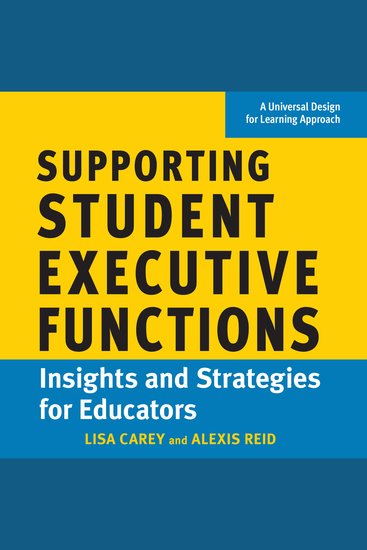
  • Supporting Student Executive Functions - Insights and Strategies for Educators - cover

    Supporting Student Executive...

    Lisa Carey, Alexis Reid

    • 0
    • 0
    • 0
    In Supporting Student Executive Functions, two clinical and classroom experts deliver an insightful and accessible guide to executive functioning skills. Lisa Carey, Ed.D., and Alexis Reid, M.A., explain how these skills develop, how executive functioning challenges show up in the classroom, and how, if unaddressed, those challenges interfere with student learning. 
    Part I builds an understanding of the science of executive functioning and how it develops during the K–12 years. Part II offers a practical, example-rich approach to help educators develop and support students’ executive functions with tips, suggestions, and action steps.  
    Building on the research-backed Universal Design for Learning (UDL) Guidelines, the authors pay special attention to the Guideline “Provide options for Executive Functions” to show which types of supports are most meaningful at different stages of a student’s K–12 journey. 
    Educators—but also medical professionals, caregivers and parents, and students themselves—will gain a deeper understanding of the latest science on executive functioning as well as valuable, easy-to-implement strategies to use in the classroom today.
    Show book
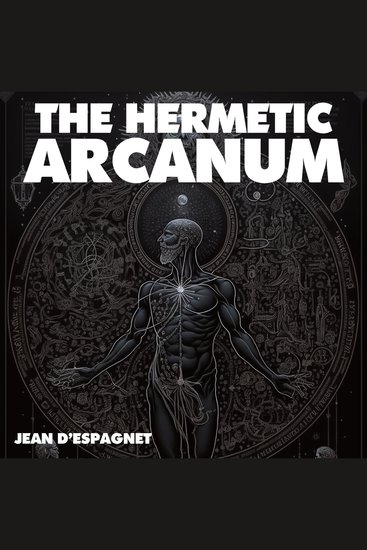
  • The Hermetic Arcanum - cover

    The Hermetic Arcanum

    Jean d'Espagnet

    • 0
    • 0
    • 0
    The secret work of the hermetic philosophy.Wherein the secrets of nature and art concerning the matter of the philosophers' stone and the manner of working are explained in an authentic and orderly manner. 
    This was a key work of 17th-century alchemy. It was written in Latin by Jean d'Espagnet as Enchiridion Physicae Restitutae, and the first edition was issued at Paris in 1623.  
    A number of editions were issued over the next decades, and it was included in a number of alchemical compendia. An English translation, translated by Elias Ashmole, was printed in 1650 in Arthur Dee's Fasciculus Chemicus: Or Chymical Collections.  
    The audiobook version features calming ambient music at a low volume that is fit for a relaxing listening experience.
    Show book