Join us on a literary world trip!
Add this book to bookshelf
Grey
Write a new comment Default profile 50px
Grey
Subscribe to read the full book or read the first pages for free!
All characters reduced
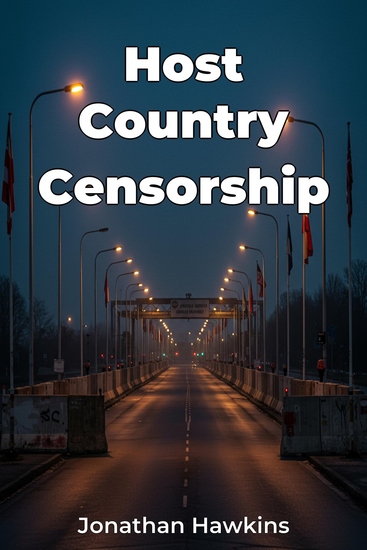
Host Country Censorship - cover

Host Country Censorship

Jonathan Hawkins

Translator A Ai

Publisher: Publifye

  • 0
  • 0
  • 0

Summary

Host Country Censorship examines the often-overlooked challenges LGBTQ travelers face regarding content restrictions abroad. It highlights how censorship, influenced by political and cultural norms, impacts access to information and personal safety. Many countries still have laws rooted in colonial-era or religious conservatism that suppress LGBTQ rights, creating a landscape where travelers must be acutely aware of local laws and customs. Understanding these restrictions is crucial for ensuring safe and responsible travel.

 
The book explores censorship's legal and digital dimensions. It investigates how governments monitor internet access, restrict LGBTQ-related websites, and surveil social media. Personal stories illustrate the real-world dangers travelers face due to content restrictions. Ultimately, it provides practical strategies like using VPNs and practicing self-censorship to mitigate risks, empowering travelers to navigate potentially hostile environments.

 
The book progresses logically, starting with core concepts and legal frameworks, then delving into digital censorship and its personal impact, and concludes with actionable strategies for safe travel. By blending legal analysis, cultural insights, and personal anecdotes, Host Country Censorship offers a comprehensive guide for LGBTQ travelers navigating a world with varying degrees of acceptance and freedom of expression.
Available since: 04/07/2025.
Print length: 69 pages.

Other books that might interest you

  • Beyond Guilt Trips - Mindful Travel in an Unequal World - cover

    Beyond Guilt Trips - Mindful...

    Anu Taranath

    • 0
    • 0
    • 0
    Every year, hundreds of thousands of young people pack their bags to study or volunteer abroad. Well-intentioned and curious Westerners—brought up to believe that international travel broadens our horizons—travel to low-income countries to learn about people and cultures different from their own. While travel abroad can provide much-needed perspective, it can also be deeply unsettling, confusing, and discomforting. Travelers can find themselves unsure about how to think or speak about the differences in race or culture they find, even though these differences might have fueled their desire to travel in the first place. 


    In Beyond Guilt Trips: Mindful Travel in an Unequal World, storyteller Anu Taranath begins at home, unpacking our baggage about who we are, where we come from, and how much we have. She takes us on a journey through engaging personal travel stories and thought-provoking questions, providing us with tools to grapple with our discomfort and navigate differences with accountability and connection. Yes, travel! But be mindful. Be present.
    Show book
  • Angkor Wat - Historical Facts about the Largest Religious Structure in the World - cover

    Angkor Wat - Historical Facts...

    Kelly Mass

    • 0
    • 0
    • 0
    Angkor Wat, in northwest Cambodia, is the world's largest spiritual structure in the shape of a temple complex, with an acreage of 401 +344 acres. A quincunx of 4 towers surrounds a center spire that rises up to a height of 65 meters (213 feet) in the air in the temple's heart. The temple is separated into 3 rectangle-shaped galleries, each of which rises over the one before it. It's surrounded by a 3.6-kilometer-long (24-mile-long) external wall and a five-kilometer-long (three-mile-long) moat. 
    The temple was built as the state temple for the Khmer Empire at the demand of Suryavarman II in the early 12th century in Yaodharapura (, contemporary Angkor), the Khmer Empire's capital. It was constructed in the early 12th century to honor the Hindu god Vishnu, but by the end of the century, it had been changed to a Buddhist temple. 
    Angkor Wat is a fascinating structure, dating back hundreds of years, and it’s impressive how much of it has remained intact.
    Show book
  • Ancient Egypt - Pharaohs Pyramids and the Cradle of Civilization - cover

    Ancient Egypt - Pharaohs...

    Rolf Hedger

    • 0
    • 0
    • 0
    The Nile River was the lifeblood of ancient Egypt, shaping its civilization, economy, and culture. Flowing over 4,000 miles from the heart of Africa to the Mediterranean Sea, the river provided a reliable source of water in an otherwise arid landscape. Without the Nile, Egypt as we know it would not have existed. 
    Each year, the river’s annual flooding deposited nutrient-rich silt onto the surrounding land, creating fertile soil ideal for agriculture. This natural cycle allowed the Egyptians to grow crops such as wheat, barley, and flax, sustaining a thriving population. The predictability of the flooding led to the development of an agricultural calendar, which played a crucial role in the organization of society. Farmers planted their crops after the waters receded and harvested them before the next flood, ensuring a steady food supply. 
    Beyond agriculture, the Nile was also Egypt’s main highway. With deserts on either side of the river, travel by land was difficult, but the Nile provided an efficient means of transportation. Boats carried goods, people, and even large stone blocks for temple and pyramid construction. Trade flourished as the Egyptians exchanged gold, papyrus, and linen for exotic products from neighboring regions, including spices from the east and cedarwood from Lebanon.
    Show book
  • This is Europe - The Way We Live Now - cover

    This is Europe - The Way We Live...

    Ben Judah

    • 0
    • 0
    • 0
    A Times, Financial Times and Telegraph Book of the Year 2023'Illuminates some of the great trends of our time' - Gideon Rachman, Financial Times'Vivid, urgent and unsettling' - Tom Holland, author of Dominion_____What does it now mean to call yourself European? Who makes up this population of some 750 million, sprawled from Ireland to Ukraine, from Sweden to Turkey? Who has always called it home, and who has newly arrived from elsewhere? Who are the people who drive our long-distance lorries, steward our criss-crossing planes, lovingly craft our legacy wines, fish our depleted waters, and risk life itself in search of safety and a new start?In a series of vivid but always empathetic portraits of other people’s lives, journalist Ben Judah invites us to meet them. Drawn from hours of painstaking interviews, these vital stories reveal a vibrant continent which has been transformed by diversity, migration, the internet, climate change, Covid, war and the quest for freedom.Laid dramatically bare, it may not always be a Europe we recognize – but this is Europe._____'An astonishing achievement' - Evening Standard'Brilliantly told . . . highly readable' - The Times
    Show book
  • Going AWOL - Inspiration and Insights from Adventurous Women On the Loose - cover

    Going AWOL - Inspiration and...

    Mary Somervell

    • 0
    • 0
    • 0
    Are you interested in living a more authentic and adventurous life? Would you like to be inspired by incredible outdoor adventures around New Zealand? Instead of making excuses for missing out, are you ready for experiences that will enrich your life? If so, this book is for you. You will be captivated by the ups and downs of real-life shared experiences of Adventurous Women on the Loose (AWOL), hiking up mountains, across golden sandy beaches and through spectacular bush, kayaking across idyllic fiords and busy harbours, exploring an active volcano, and so much more. In Going AWOL you will learn: • how being adventurous boosts our resilience for handling change, disruption and upheavals • when we step outside our comfort zone on stretch challenges, real growth happens • midlife transitions take longer than we think to recalibrate and become fully alive. Discover how being more courageous, choosing your own adventures and trying new experiences rebuild confidence and resilience to navigate through work and personal challenges. Mary Somervell is a transition guide, blogger and outdoor adventurer who lives in Nelson, New Zealand. Mary founded AWOL (Adventurous Women on the Loose) to share her passion for being active outdoors with other women. Including AWOL, she has organised over 70 different outdoor adventures around New Zealand. 
    Request your free AWOL guide: www.insideoutworks.co.nz/free-going-awol-guide
    Show book
  • The Wari Empire - Pre-Incan Conquerors and the Engineers of South America - cover

    The Wari Empire - Pre-Incan...

    Rolf Hedger

    • 0
    • 0
    • 0
    The Wari Empire emerged as one of the most influential pre-Incan civilizations in the Andean region, setting the foundation for future Andean states, including the Inca. Its origins can be traced back to the highlands of present-day Peru, where early societies laid the groundwork for its rise. The unique combination of environmental adaptation, cultural influences, and political innovation allowed the Wari to establish a powerful state that would dominate much of the central Andes for centuries. 
    Before the Wari civilization took shape, the Andean region was home to various cultures that contributed to its development. Among these, the Chavín culture, which thrived from around 900 to 200 BCE, played a crucial role in spreading religious and artistic traditions that later influenced Wari art and iconography. The Nazca civilization, known for its intricate geoglyphs and advanced irrigation techniques, also left an imprint on Wari agricultural and engineering practices. However, it was the lesser-known Huarpa culture of the Ayacucho Valley that provided the most direct influence on early Wari society. The Huarpa people developed small-scale irrigation systems, terraced farming, and distinct ceramic styles, all of which became defining features of Wari civilization. 
    Sometime between 500 and 600 CE, the Wari began to expand beyond their heartland in the Ayacucho region. This expansion was driven by both environmental necessity and strategic ambition. The high-altitude valleys of the central Andes provided fertile land for agriculture, but they were also subject to fluctuating climatic conditions. To mitigate these challenges, Wari elites developed large-scale irrigation systems and storage facilities, ensuring food security for growing populations. This ability to manage resources effectively gave them an advantage over neighboring groups, allowing them to assert dominance through both diplomacy and military conquest.
    Show book