Rejoignez-nous pour un voyage dans le monde des livres!
Ajouter ce livre à l'électronique
Grey
Ecrivez un nouveau commentaire Default profile 50px
Grey
Abonnez-vous pour lire le livre complet ou lisez les premières pages gratuitement!
All characters reduced
Swift Boats at War in Vietnam - cover

Swift Boats at War in Vietnam

John Yeoman, Guy Gugliotta, Neva Sullaway

Maison d'édition: Stackpole Books

  • 0
  • 0
  • 0

Synopsis

In this oral history, Vietnam veterans recount their stories of patrol and combat on the coast and in the Mekong Delta. Developed specifically for the Vietnam War, Swift Boats were versatile craft “big enough to outrun anything they couldn’t outfight” but too small to handle even a moderate ocean chop, too loud to sneak up on anyone, and too flimsy to withstand the mildest of rocket attacks. This added challenges to an already tough mission: navigating coastal waters for ships and sampans smuggling contraband to the Viet Cong, disrupting enemy supply lines on the rivers and canals of the Mekong Delta, and inserting SEALs behind enemy lines.   The stories in this book cover the Swift Boats’ early years, which saw search-and-inspect operations in Vietnam’s coastal waters, and their later years, when the Swift Boats' mission shifted to the Mekong Delta’s labyrinth of three-thousand miles of rivers, streams, and canals. This is an intimate, exciting oral history of Swift Boats at war in Vietnam.
Disponible depuis: 14/06/2023.
Longueur d'impression: 345 pages.
D'autres livres qui pourraient vous intéresser

  • The Will to Conquer - Mastering Power Strategy and the Art of War - cover

    The Will to Conquer - Mastering...

    A.A. Castor

    • 0
    • 0
    • 0
    The Will to Conquer: Mastering Power, Strategy, and the Art of War is a manifesto for those who refuse to be ruled. Power is not a privilege granted by fate—it is seized by those with the vision, discipline, and ruthlessness to take it. 
    In this book, A.A. Castor dismantles the myths of fairness, morality, and justice, exposing them for what they truly are: illusions designed to keep the weak in submission. Drawing from the principles of history's greatest strategists—Machiavelli, Sun Tzu, Nietzsche, and beyond—The Will to Conquer explores the foundations of dominance, manipulation, and control. 
    This book reveals: 
    ✔ The Laws of Power – How rulers impose their will and eliminate opposition. 
    ✔ The Art of Strategy – Why battles are won before they are fought. 
    ✔ The Psychology of a Ruler – How to think beyond morality and hesitation. 
    ✔ The Mastery of Deception – Why perception is more powerful than reality. 
    ✔ The Will to Power – How to overcome fear, doubt, and self-imposed limitations. 
    Power does not wait for the patient, nor does it reward those who seek validation. It belongs to those who demand it. If you are ready to break free from the illusions of the weak and forge your own destiny, this book will show you the way. 
    "There is no universal law—only the law of those strong enough to impose it."
    Voir livre
  • Becoming the Best Version of You - How to Elevate Every Part of Your Life - cover

    Becoming the Best Version of You...

    Vitoria David

    • 0
    • 0
    • 0
    Are you ready to unlock your fullest potential and craft a life that truly thrives? In a world constantly pushing us towards mediocrity, it's easy to feel stuck, overwhelmed, or simply unsure of how to reach that next level. But what if you held the key to a profound transformation, capable of elevating not just one aspect, but every single part of your existence? 
    Becoming the Best Version of You: How to Elevate Every Part of Your Life by acclaimed author Victoria David is your definitive guide to a holistic and sustainable personal revolution. This isn't just another self-help book; it's a meticulously crafted roadmap designed to empower you with actionable strategies, profound insights, and the unwavering motivation to sculpt the life you've always dreamed of.
    Voir livre
  • The New Goliaths - How Corporations Use Software to Dominate Industries Kill Innovation - cover

    The New Goliaths - How...

    James Bessen

    • 0
    • 0
    • 0
    An approach to reinvigorating economic competition that doesn’t break up corporate giants, but compels them to share their technology, data, and knowledge 
      
    “Bessen is a master of unpacking the nuances of a complex array of interrelated trends to build a coherent story of how the promise of the democratized Internet ended up under the control of just a few. Read The New Goliaths to see how the forest came to have only room for a few tall trees with the rest of us in the undergrowth.”—Joshua Gans, coauthor of Prediction Machines: The Simple Economics of Artificial Intelligence 
      
    Historically, competition has powered progress under capitalism. Companies with productive new products rise to the top, but sooner or later, competitors come along with better innovations and disrupt the threat of monopoly. Dominant firms like Walmart, Amazon, and Google argue that this process of “creative destruction” prevents them from becoming too powerful or entrenched. 
      
    But the threat of competition has sharply decreased over the past twenty years, and today’s corporate giants have come to power by using proprietary information technologies to create a tilted playing field. This development has increased economic inequality and social division, slowed innovation, and allowed dominant firms to evade government regulation. In the face of increasing calls to break up the largest companies, James Bessen argues that a better way to restore competitive balance and dynamism is to encourage or compel these companies to share technology, data, and knowledge.
    Voir livre
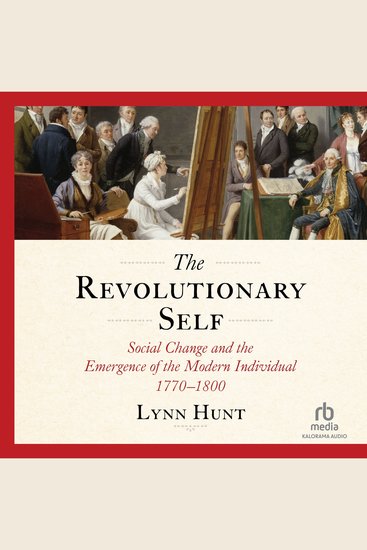
  • The Revolutionary Self - Social Change and the Emergence of the Modern Individual 1770-1800 - cover

    The Revolutionary Self - Social...

    Lynn Hunt

    • 0
    • 0
    • 0
    An illuminating exploration of the tensions between self and society in the age of revolutions. 


    The eighteenth century was a time of cultural friction: individuals began to assert greater independence and there was a new emphasis on social equality. In this surprising history, Lynn Hunt examines women's expanding societal roles, such as using tea to facilitate conversation between the sexes in Britain. In France, women also pushed boundaries by becoming artists, and printmakers' satiric takes on the elite gave the lower classes a chance to laugh at the upper classes and imagine the potential of political upheaval. Hunt also explores how promotion in French revolutionary armies was based on men's singular capabilities, rather than noble blood, and how the invention of financial instruments such as life insurance and national debt related to a changing idea of national identity. Wide-ranging and thought-provoking, The Revolutionary Self is a fascinating exploration of the conflict between individualism and the group ties that continues to shape our lives today.
    Voir livre
  • Essential Questions - cover

    Essential Questions

    Ph.D. Jacob Needleman

    • 0
    • 0
    • 0
    If we had the opportunity to speak to our younger self, what would we say? What wisdom could we give to that younger self about the meaning and purpose of life? What does our experience tell us about why we are here and who we are? This conversation explores these questions and why they may be important to our lives.
    Voir livre
  • How to Lose the Hounds - Maroon Geographies and a World Beyond Policing - cover

    How to Lose the Hounds - Maroon...

    Celeste Winston

    • 0
    • 0
    • 0
    In How to Lose the Hounds Celeste Winston explores marronage—the practice of flight from and placemaking beyond slavery—as a guide to police abolition. She examines historically Black maroon communities in the Maryland suburbs of Washington, DC, that have been subjected to violent excesses of police power from slavery until the present day. Tracing the long and ongoing historical geography of Black freedom struggles in the face of anti-Black police violence in these communities, Winston shows how marronage provides critical lessons for reimagining public safety and community well-being. These freedom struggles take place in what Winston calls maroon geographies—sites of flight from slavery and the spaces of freedom produced in multigenerational Black communities. Maroon geographies constitute part of a Black placemaking tradition that asserts life-affirming forms of community. Winston contends that maroon geographies operate as a central method of Black flight, holding ground, and constructing places of freedom in ways that imagine and plan a world beyond policing.
    Voir livre