Rejoignez-nous pour un voyage dans le monde des livres!
Ajouter ce livre à l'électronique
Grey
Ecrivez un nouveau commentaire Default profile 50px
Grey
Abonnez-vous pour lire le livre complet ou lisez les premières pages gratuitement!
All characters reduced
Recreations of Christopher North - Literary & Philosophical Essays - cover

Recreations of Christopher North - Literary & Philosophical Essays

John Wilson

Maison d'édition: Musaicum Books

  • 0
  • 0
  • 0

Synopsis

John Wilson's 'Recreations of Christopher North' is a collection of essays written under the pseudonym of the titular character, Christopher North. This work is a prime example of the Romantic literary style, known for its colorful descriptions, emotional depth, and exploration of nature and the human experience. Through the eyes of Christopher North, Wilson delves into themes of imagination, beauty, and the power of art, inviting readers to see the world through a different lens. The book's literary context can be situated within the Romantic era of literature, where authors sought to move away from the rationality of the Enlightenment and embrace more emotional and imaginative forms of expression. Wilson's writing style is characterized by its poetic language, vivid imagery, and philosophical musings, drawing readers into a world of introspection and wonder. John Wilson, a Scottish writer and professor, was known for his contributions to literature, philosophy, and education. His background in both academia and creative writing shaped the unique blend of intellect and creativity found in 'Recreations of Christopher North'. This book is recommended for readers interested in Romantic literature, nature writing, and philosophical reflections on art and beauty.
Disponible depuis: 04/01/2022.
Longueur d'impression: 856 pages.

D'autres livres qui pourraient vous intéresser

  • Irvin D Yalom: On Psychotherapy and the Human Condition - cover

    Irvin D Yalom: On Psychotherapy...

    Ruthellen Josselson Ph.D.

    • 0
    • 0
    • 0
    Irvin Yalom is one of the best known, most widely read and Through his many books, which are accessible to ordinary readers as well as illuminating for psychotherapists, he has provided a guide for living in a perplexing world. A recent poll of American psychotherapists voted him to be one of the three most important living therapists, but the worldwide success of his books suggests that his prominence is international.
    
    Rather than positioning himself as a representative of one of the hundreds of "schools" or approaches to psychotherapy. Yalom offers a message that goes to the heart of psychotherapy. Taking up the central existential concerns of human life, Yalom's work engages the problems of finding meaning in life and confronting death, concerns that had lain beyond the scope of psychiatry.
    
    Writing in a literary style that reviewers have compared to Freud, Yalom details what actually happens in the intimate human encounter that is psychotherapy. Yalom does not shrink from exposing his own thoughts and feelings about what occurs; he, too is a vulnerable and searching human being. He makes his thinking about his patients, and his efforts to treat them, transparent, exposing his doubts, reservations and struggles as well as his insights.
    He has written two textbook, two volumes of case history stories, three novels about therapy, a guide for therapists and one book of counsel for the masses confronting death. Across all of this work, he explores the limitless and complex possibilities of the healing inherent in genuine human connection and authentic awareness of the dilemmas of human existence.
    
    Irvin D. Yalom: On Psychotherapy and the Human Condition traces the genesis and evolution of his thinking and presents some of the seminal ideas of his writings.
    Voir livre
  • Tyrannosaurus Rex and Velociraptors: The History of the Cretaceous Period’s Most Famous Carnivores - cover

    Tyrannosaurus Rex and...

    Editors Charles River

    • 0
    • 0
    • 0
    The massively popular 1990 novel Jurassic Park by Michael Crichton and its subsequent movie adaptations led to a huge resurgence in interest in dinosaurs and the prehistoric world. That interest continues to the present day, even though most of the dinosaurs in Jurassic Park weren’t actually from the Jurassic period. Triceratops, Velociraptor, Tyrannosaurus Rex and the huge sauropods such as Brachiosaurus that feature in the book and movies all actually belong to the Late Cretaceous period, more than 40 million years after the end of the Jurassic. Regardless, certain kinds of dinosaurs remain instantly recognizable, and among them, the “king” is undoubtedly the Tyrannosaurus.  
    The first discovery of a Tyrannosaurus was made in 1902 and the largest carnivorous dinosaur ever found at the time quickly gripped the popular imagination. Even its name was dramatic - Tyrannosaurus Rex means “King of the Tyrant Lizards.” The T-Rex as it quickly became known didn’t appear until the last age of the Late Cretaceous period, the Maastrichtian, but when it did, it was the biggest and most terrifying of all the theropod predators.  
    	Thanks to the movie, there has been some unwitting confusion over the identity of the Velociraptor, and this confusion was due in large part to the fact the name sounds far more scary than the creature to which the name originally belonged. Moreover, the creature to which the label was applied in the novel and movie was actually a distant cousin named Deinonychus, but as the story goes, the author, Michael Crichton, thought “Velociraptor” sounded “more dramatic.” The actual Velociraptor lived not in the badlands of North America, but in the badlands of central-eastern Asia, and it was not nearly as intimidating as Deinonychus. In fact, the main species of genus Velociraptor - Velociraptor mongoliensis - was no bigger than a turkey.
    Voir livre
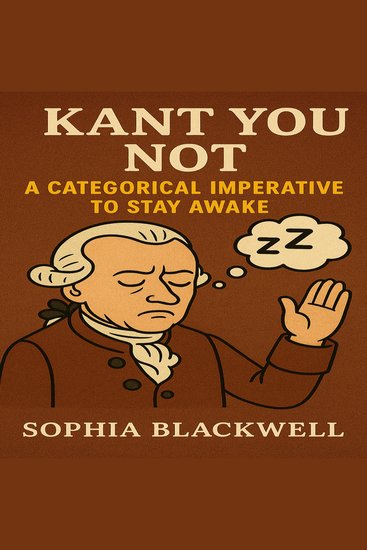
  • Kant You Not - A Categorical Imperative to Stay Awake - cover

    Kant You Not - A Categorical...

    Sophia Blackwell

    • 0
    • 0
    • 0
    Ever tried reading Kant and felt your brain melt into a puddle of transcendental confusion? You're not alone! "Kant You Not" is the hilarious antidote to philosophical pretension that explains Immanuel Kant's revolutionary ideas without inducing narcolepsy. 
    In this irreverent guide to history's most unnecessarily complicated philosopher, author Sophia Blackwell translates Kantian gibberish into actual human language while mercilessly mocking his impenetrable prose, bizarre personal habits, and occasionally absurd conclusions. 
    You'll discover: 
    Why a man who never left his hometown somehow revolutionized Western philosophy 
    How Kant needed 800 pages to say "we can't know things as they really are" 
    Why he thought lying to axe murderers was morally wrong (seriously) 
    How to fake Kantian knowledge at dinner parties without reading the originals 
    Why we're still talking about this guy 200+ years later (Stockholm syndrome) 
    Perfect for philosophy students suffering through assigned readings, professors who secretly hate teaching Kant, or anyone who enjoys watching brilliant ideas get roasted. "Kant You Not" proves that philosophy can be educational AND entertaining—a concept that would probably make Kant himself deeply uncomfortable. 
    Buy now and transform your philosophical confusion into laughter! No prior knowledge required—just a willingness to question everything, especially sentences that run for more than half a page. 
    Part of the bestselling "Cogito Ergo Nope!" series that makes philosophy accessible without being condescending and funny without sacrificing accuracy.
    Voir livre
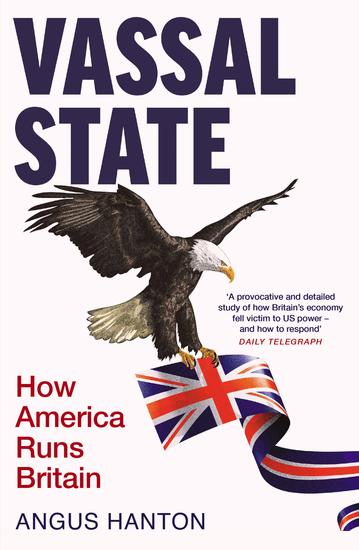
  • Vassal State - How America Runs Britain - cover

    Vassal State - How America Runs...

    Angus Hanton

    • 0
    • 0
    • 0
    'Provocative and detailed ... Excellent' The Telegraph
    'Shocking and meticulous' Danny Dorling
    'An eye-opening revelation ... a must-read' Joel Bakan
    THE TELEGRAPH BEST BOOKS OF 2024
    British politicians love to vaunt the benefits of the UK's supposed 'special relationship' with the US. But are we really America's economic partner – or its colony?
    Vassal State lays bare the extent to which US corporations own and control Britain's economy: how American business chiefs decide what we're paid, what we buy and how we buy it. US companies have carved up Britain between them, siphoning off enormous profits, buying up our most lucrative firms and assets, and extracting huge rents from UK PLC – all while paying little or no tax. Meanwhile, policymakers, from Whitehall mandarins to NHS chiefs, shape their decisions to suit the whims of our American corporate overlords.
    Based on his 40 years of business experience, devastating new research and interviews with the major players, Angus Hanton exposes why Britain has become the poor transatlantic relation – and what we can do to change it.
    Voir livre
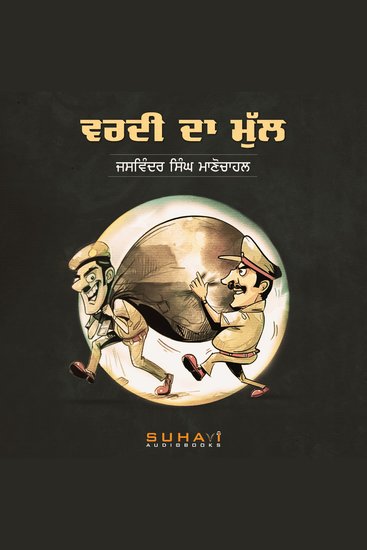
  • Vardi da mull - cover

    Vardi da mull

    Jaswinder singh manochahal

    • 0
    • 0
    • 0
    The book "Vardi Da Mull", a collection of short stories written by Jaswinder Singh Manochahal, contains a total of 14 stories. These stories revolve around various social issues, depicting the everyday struggles of common people. The themes include police excesses, the plight of poor farmers, the growing corruption in political systems, the exploitation of laborers, the hardships faced by working women, the rising drug menace in society, the suffering of tenants in cities, fractured relationships, the sorrows of rural laborers, and the issue of unemployment
    Voir livre
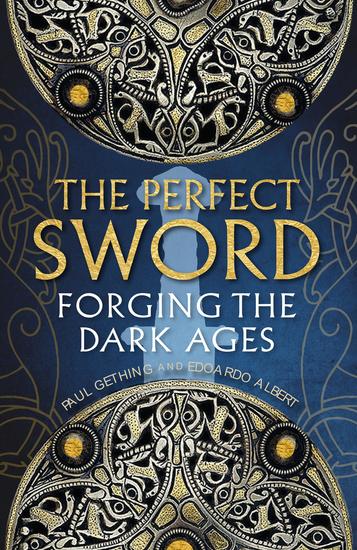
  • The Perfect Sword - Forging the Dark Ages - cover

    The Perfect Sword - Forging the...

    Edoardo Albert, Paul Gething

    • 0
    • 0
    • 0
    The story of the Bamburgh Sword – one of the finest swords ever forged.
    In 2000, archaeologist Paul Gething rediscovered a sword. An unprepossessing length of rusty metal, it had been left in a suitcase for thirty years. But Paul had a suspicion that the sword had more to tell than appeared, so he sent it for specialist tests. When the results came back, he realised that what he had in his possession was possibly the finest, and certainly the most complex, sword ever made, which had been forged in seventh-century Northumberland by an anonymous swordsmith.
    This is the story of the Bamburgh Sword – of how and why it was made, who made it and what it meant to the warriors and kings who wielded it over three centuries. It is also the remarkable story of the archaeologists and swordsmiths who found, studied and attempted to recreate the weapon using only the materials and technologies available to the original smith. 
    Voir livre