Rejoignez-nous pour un voyage dans le monde des livres!
Ajouter ce livre à l'électronique
Grey
Ecrivez un nouveau commentaire Default profile 50px
Grey
Abonnez-vous pour lire le livre complet ou lisez les premières pages gratuitement!
All characters reduced
History of the Conflict Between Religion and Science - cover

History of the Conflict Between Religion and Science

John William Draper

Maison d'édition: DigiCat

  • 0
  • 0
  • 0

Synopsis

In "History of the Conflict Between Religion and Science," John William Draper constructs a compelling narrative that meticulously examines the historical tensions between religious doctrines and scientific advancements. Draper's scholarly prose weaves together an analysis of critical moments in history, from the trials of Galileo to the more contemporary debates over evolution, employing a vigorous dialectical style that effectively engages with both historical events and philosophical implications. Rooted in the burgeoning context of the scientific revolution and the Enlightenment, Draper argues for the necessity of separating empirical inquiry from dogmatic belief, illustrating how science has often been at odds with established religious views. John William Draper, an accomplished scientist and historian, was deeply influenced by the tumultuous intellectual atmosphere of the 19th century, a period marked by rapid scientific discoveries and evolving religious paradigms. His background in chemistry and his role at the forefront of scientific inquiry inspired him to explore the complex relationship between faith and reason. Draper's work not only reflects his commitment to rationalism but also highlights the broader Victorian struggle to reconcile these two pivotal aspects of human thought. This book is essential reading for anyone interested in the historical interplay between science and religion. Draper's incisive analysis invites readers to reflect on timeless questions of belief, doubt, and the pursuit of knowledge. It serves as a crucial reminder of the importance of skepticism and inquiry in a world that often oscillates between faith and empiricism.
Disponible depuis: 15/09/2022.
Longueur d'impression: 287 pages.

D'autres livres qui pourraient vous intéresser

  • Medical Nutrition - The Role of Diet in Health and Disease - cover

    Medical Nutrition - The Role of...

    Ava Westwood

    • 0
    • 0
    • 0
    Medical nutrition is a specialized area of healthcare that focuses on the role of diet in maintaining health and managing diseases. It combines the science of nutrition with clinical practice, emphasizing the importance of individualized dietary interventions to prevent, treat, or manage health conditions. In recent decades, the significance of medical nutrition has become increasingly recognized due to the growing understanding of the profound impact diet has on overall well-being. 
    Diet plays a pivotal role in both the prevention and management of various diseases. It is now understood that nutrition can influence the development of chronic diseases such as heart disease, diabetes, cancer, and obesity. These conditions are not only prevalent globally but are also closely linked to poor dietary habits, making nutrition a key factor in reducing their burden. For individuals already living with chronic diseases, medical nutrition becomes even more critical, as it helps manage symptoms, improve quality of life, and in some cases, slow disease progression. 
    The core principle of medical nutrition is to design personalized nutrition care plans that meet the specific needs of patients. This involves taking into account factors such as age, gender, medical history, lifestyle, and specific health conditions. By using evidence-based approaches, healthcare professionals, including dietitians, doctors, and nutritionists, can guide patients toward dietary choices that support their health and recovery.
    Voir livre
  • How Far the Light Reaches - A Life in Ten Sea Creatures - cover

    How Far the Light Reaches - A...

    Sabrina Imbler

    • 0
    • 0
    • 0
    A fascinating tour of creatures from the surface to the deepest ocean floor: this "miraculous, transcendental book" invites us to envision wilder, grander, and more abundant possibilities for the way we live (Ed Yong, author of An Immense World). A queer, mixed race writer working in a largely white, male field, science and conservation journalist Sabrina Imbler has always been drawn to the mystery of life in the sea, and particularly to creatures living in hostile or remote environments. Each essay in their debut collection profiles one such creature, including:     ·the mother octopus who starves herself while watching over her eggs,     ·the Chinese sturgeon whose migration route has been decimated by pollution and dams,     ·the bizarre, predatory Bobbitt worm (named after Lorena),     ·the common goldfish that flourishes in the wild,     ·and more.  Imbler discovers that some of the most radical models of family, community, and care can be found in the sea, from gelatinous chains that are both individual organisms and colonies of clones to deep-sea crabs that have no need for the sun, nourished instead by the chemicals and heat throbbing from the core of the Earth. Exploring themes of adaptation, survival, sexuality, and care, and weaving the wonders of marine biology with stories of their own family, relationships, and coming of age, How Far the Light Reaches is a shimmering, otherworldly debut that attunes us to new visions of our world and its miracles.    WINNER OF THE LOS ANGELES TIMES BOOK PRIZE in SCIENCE & TECHNOLOGY  Finalist for the Lambda Literary Award One of TIME’s 10 Best Nonfiction Books of the Year •  A PEOPLE Best New Book  •  A Barnes & Noble and SHELF AWARENESS Best Book of 2022  •  An Indie Next Pick  •  One of Winter’s Most Eagerly Anticipated Books: VANITY FAIR, VULTURE, BOOKRIOT
    Voir livre
  • Tracking Giants - Big Trees Tiny Triumphs and Misadventures in the Forest - cover

    Tracking Giants - Big Trees Tiny...

    Amanda Lewis, Dr. Diana...

    • 0
    • 0
    • 0
    Amanda Lewis was an overachieving, burned-out book editor most familiar with trees as dead blocks of paper. A dedicated "indoorswoman," she could barely tell a birch from a beech. But that didn't stop her from pledging to visit all of the biggest trees in British Columbia, a Canadian province known for its rugged terrain and gigantic trees. 


    The "Champion" trees on Lewis's ambitious list ranged from mighty Western red cedars to towering arbutus. The only problem? Well, there were many . . . 


    Climate change and a pandemic aside, Lewis's lack of wilderness experience, the upsetting reality of old-growth logging, the ever-changing nature of trees, and the pressures of her one-year time frame complicated her quest. Burned out again—and realizing that her "checklist" approach to life might be the problem—she reframed her search for trees to something humbler and more meaningful: getting to know forests in an interconnected way. 


    Weaving in insights from writers and artists, Lewis uncovers what we're really after when we pursue the big things—revealing that sometimes it's the smaller joys, the mindsets we have, and the companions we're with that make us feel more connected to the natural world.
    Voir livre
  • No Place Like Nome - The Bering Street Seen Through Its Most Storied City - cover

    No Place Like Nome - The Bering...

    Michael Engelhard

    • 0
    • 0
    • 0
    Beyond Sled Dogs and Gold 


    Somewhere between myths and hard facts you find Nome, poised also between yesterday and tomorrow. Drawing on his background in anthropology and an equal passion for history, Michael Engelhard surveys the seam that links two neighboring continents through the lens of one pivotal city. The region's legacy of millennia shines on pages enriched by this writer's recollections—from mammoths to Cold War monuments, from a spa turned orphanage, to cyclist miners and shaman hoards. Meet the explorers and adventurers, reindeer herders and hustlers, the dancers, drummers, dreamers, warriors, walrus-tusk carvers, and whalers, clergy, foragers, and photographers who shaped a place of conflicting visions as thoroughly as it shaped them.
    Voir livre
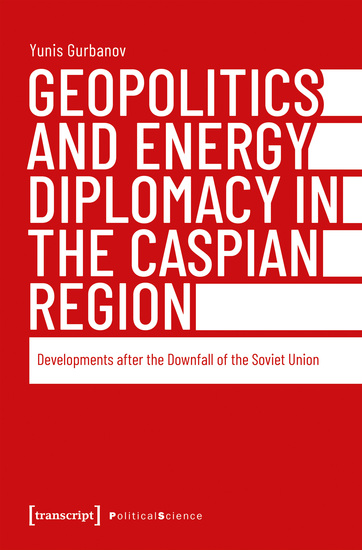
  • Geopolitics and Energy Diplomacy in the Caspian Region - Developments after the Downfall of the Soviet Union - cover

    Geopolitics and Energy Diplomacy...

    Yunis Gurbanov

    • 0
    • 0
    • 0
    Could the Caspian Region replace Russia's or the Persian Gulf's immense energy potential with their energy resources? Yunis Gurbanov explores the strategic importance of the region in post-USSR Eurasian policies of major global actors, namely China, the EU, the USA, and Russia, and examines Azerbaijan's, Kazakhstan's, and Turkmenistan's oil and gas resources as alternatives to conventional suppliers. He shows that the Caspian region's resources could serve as alternative energy sources on a global level, mitigating dependence on traditional suppliers and stabilizing energy prices.
    Voir livre
  • Scaling Responsible AI - From Enthusiasm to Execution - cover

    Scaling Responsible AI - From...

    Noelle Russell

    • 0
    • 0
    • 0
    In Scaling Responsible AI: From Enthusiasm to Execution, celebrated speaker, AI strategist, and tech visionary Noelle Russell delivers an exciting and fascinating new discussion of how to implement artificial intelligence responsibly, ethically, and profitably at your organization. Responsible AI promises immense opportunity, but unguided enthusiasm can unleash serious risks. Learn how to implement AI ethically and profitably at your company with Scaling Responsible AI. 


    In this groundbreaking book, Noelle Russell reveals an executable framework to harness AI's full potential while safeguarding your firm's reputation; mitigate bias, accuracy, privacy, and cybersecurity risks from the start; make informed choices by seeing through the hype and identifying true AI value; and develop an ethical AI culture across teams and leadership. 


    Scaling Responsible AI equips executives, managers, and board members with the knowledge and responsibility to make smart AI decisions. Avoid compliance disasters, brand damage, or wasted resources on AI that fails to deliver. 


    Implement artificial intelligence that drives profits, innovation, and competitive edge—the responsible way.
    Voir livre