Begleiten Sie uns auf eine literarische Weltreise!
Buch zum Bücherregal hinzufügen
Grey
Einen neuen Kommentar schreiben Default profile 50px
Grey
Jetzt das ganze Buch im Abo oder die ersten Seiten gratis lesen!
All characters reduced
The History of Tasmania (Vol 1&2) - Complete Edition - cover

The History of Tasmania (Vol 1&2) - Complete Edition

John West

Verlag: Good Press

  • 0
  • 0
  • 0

Beschreibung

John West's "The History of Tasmania (Vol. 1&2)" serves as a comprehensive chronicle that meticulously navigates the island'Äôs complex past. With a keen eye for detail, West employs an analytical narrative style that weaves historical events, socio-political dynamics, and Indigenous perspectives into a compelling tapestry. His work, pivotal in the genre of Australian historiography, sheds light on Tasmania's colonial history, emphasizing significant episodes such as European settlement and its impact on indigenous populations, while contextualizing them within broader national narratives. John West, a prominent figure in 19th-century Australian literature and journalism, was motivated by his deep-seated interest in preserving the stories of marginalized communities. His experiences as a member of various social reform movements and encounters with Tasmania's indigenous peoples profoundly shaped his worldview. West'Äôs dedication to historical accuracy and moral inquiry reveals his intent to foster a collective memory that honors both colonizer and colonized, urging readers to confront uncomfortable truths about the past. This monumental work is essential for anyone interested in Australian history, providing a critical foundation for understanding Tasmania'Äôs intricate cultural landscape. Scholars, students, and casual readers alike will find West's well-crafted prose to be both enlightening and thought-provoking, making it a vital addition to the library of anyone seeking to unravel the complexities of Tasmania's historical identity.
Verfügbar seit: 18.12.2023.
Drucklänge: 839 Seiten.

Weitere Bücher, die Sie mögen werden

  • Fear and Trembling - cover

    Fear and Trembling

    Søren Kierkegaard

    • 0
    • 0
    • 0
    Soren Kierkegaard was a Danish philosopher, theologian, and religious author interested in human psychology. He is regarded as a leading pioneer of existentialism and one of the greatest philosophers of the 19th Century.
    Zum Buch
  • Eight Bears - Mythic Past and Imperiled Future - cover

    Eight Bears - Mythic Past and...

    Gloria Dickie

    • 0
    • 0
    • 0
    A global exploration of the eight remaining species of bears—and the dangers they face. 


    Bears have always held a central place in our collective memory, from Indigenous folklore and Greek mythology to nineteenth-century fairytales and the modern toy shop. But as humans and bears come into ever-closer contact, our relationship nears a tipping point. Today, most of the eight remaining bear species are threatened with extinction. Some, such as the panda bear and the polar bear, are icons of the natural world; others, such as the spectacled bear and the sloth bear, are far less known. 


    In Eight Bears, journalist Gloria Dickie embarks on a globe-trotting journey to explore each bear's story, whisking listeners from the cloud forests of the Andes to the ice floes of the Arctic; from the jungles of India to the backwoods of the Rocky Mountain West. She meets with key figures on the frontlines of modern conservation efforts—the head of a rescue center for sun and moon bears freed from bile farms, a biologist known as Papa Panda, who has led China's panda-breeding efforts for almost four decades, a conservationist retraining a military radar system to detect and track polar bears near towns—to reveal the unparalleled challenges bears face as they contend with a rapidly changing climate and encroaching human populations.
    Zum Buch
  • Huey P Newton - Smoking Out Fascist America - cover

    Huey P Newton - Smoking Out...

    Geoffrey Giuliano

    • 0
    • 0
    • 0
    Huey Newton was born on February 17, 1942. He was an African-American revolutionary, notable as the founder of the Black Panther Party. Newton crafted the Party's ten-point manifesto with Bobby Seale in 1966. 
     
    The Black Panther Party founded over 60 community support programs including food banks, medical clinics, sickle cell anemia tests, prison busing for families of inmates, legal advice seminars, clothing banks, housing cooperatives, and their own ambulance service. The most famous of these programs was the Free Breakfast for Children program which fed thousands of impoverished children daily during the early 1970s. Newton also co-founded the Black Panther newspaper service, which became one of America's most widely distributed African-American newspapers. 
     
    In 1989, he was murdered in Oakland, California, by Tyrone Robinson, a member of the Black Guerrilla Family. Newton was known for being an advocate of self-defense and used his position as a leader within the Black Panther Party to welcome women and LGBT people into the party, holding the belief that homosexuals "might be the most oppressed people". 
     
    Huey Newton was never shy in talking to the media because after all the powerful movement he started with bobby Seale was all about communication and understanding leading to meaningful change. 
     
    What follows is a collection of interviews with the controversial charismatic leader commencing from his prison cell in 1968 right up until 1989 just weeks before his tragic death. Here is a chance to get to know and understand not only Huey the forward-thinking and intractable black rights advocate but also the sensitive and sensible intellectual ultimately compassionate and caring man.
    Zum Buch
  • Roman Society and Culture - A Comprehensive Guide - cover

    Roman Society and Culture - A...

    Rogan Fish

    • 0
    • 0
    • 0
    Roman society, one of the most influential civilizations in human history, was built upon a complex and well-structured foundation that evolved over centuries. The origins of Roman civilization can be traced back to the early settlements along the Tiber River, where communities of farmers and shepherds gradually coalesced into the city-state of Rome. As Rome expanded, both geographically and politically, its social structure grew more intricate, reflecting a blend of indigenous customs and influences from conquered territories. 
    At the heart of Roman society was a rigid social hierarchy, essential to maintaining order and stability. This structure was divided primarily into two main classes: the patricians and the plebeians. The patricians were the elite, consisting of noble families who claimed descent from Rome's founding fathers. They held significant political power and owned vast lands. In contrast, the plebeians represented the common people, including farmers, craftsmen, and laborers. Though initially excluded from many aspects of governance, the plebeians gradually secured political rights through persistent social struggles, leading to the establishment of the office of the Tribune, which protected their interests. 
    Apart from these major classes, Roman society also included a growing number of slaves, who were often prisoners of war or born into servitude. Slavery was integral to the Roman economy, with slaves performing various tasks, from domestic duties to skilled labor in workshops. Despite their lack of freedom, some slaves, particularly those with specialized skills, could earn their emancipation, gaining the status of freedmen and integrating into the lower echelons of society.
    Zum Buch
  • Longbow The: The History of the Weapon that Revolutionized Warfare in the Middle Ages - cover

    Longbow The: The History of the...

    Editors Charles River

    • 0
    • 0
    • 0
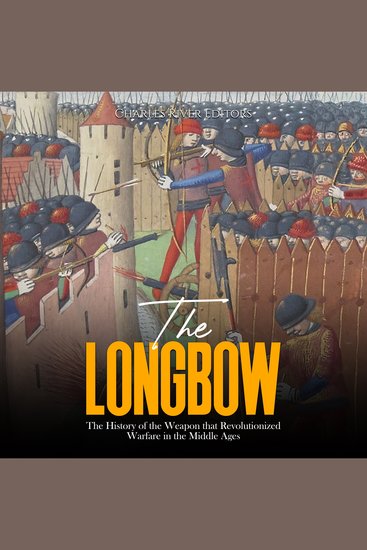
    While the bow was used throughout ancient times and the Middle Ages, on mainland Europe it was mostly replaced by the crossbow in the early 13th century, but that would change with the introduction of the longbow, a more powerful weapon than the traditional hunting bows. The original longbowmen were Welshmen recruited by King Edward I of England after he conquered Wales, and the weapon got its name from the fact that it was almost as tall as the man using it. This gave it a longer draw and therefore more force, as longbows were generally made of yew, a strong and pliable wood. The longbow was cheap and easy to make, but they required extensive training to be used well, so in England, commoners were encouraged and at times required to practice archery. A statute of Richard II dating from 1388 reads, “Servants and Laborers shall have Bows and Arrows, and use the same the Sundays and Holydays, and leave all playing at tennis or foot-ball, and other games called coits, dice, casting of the stone, kaikles [skittles], and other such importune games.” 
    	The longbow’s greatest day was at Agincourt in 1415, but the fact that this did not end the age of heavy plate cavalry indicated the longbow did have some limitations. For example, modern tests show that longbow arrows had trouble piercing plate armor, likely the main reason they were used as a massed weapon. With arrows raining down, it increased the chances of hitting a joint in the armor or an imperfection. Also, horse armor couldn’t protect the entire animal and the knights would soon find themselves dismounted. At some battles like Agincourt, the knights foundered in soft earth, and as their horses fell and the men became confused and hampered by the arrows clanking off their armor, they got mired in the mud and the English infantry could move in and finish them off. 
    Zum Buch
  • Ordinary Equality - The Fearless Women and Queer People Who Shaped the US Constitution and the Equal Rights Amendment - cover

    Ordinary Equality - The Fearless...

    Kate Kelly

    • 0
    • 0
    • 0
    Ordinary Equality digs into the fascinating and little-known history of the ERA and the lives of the incredible—and often overlooked—women and queer people who have helped shape the U.S. Constitution for more than 200 years. Based on author Kate Kelly’s acclaimed podcast of the same name, Ordinary Equality recounts a story centuries in the making.
    Zum Buch