Rejoignez-nous pour un voyage dans le monde des livres!
Ajouter ce livre à l'électronique
Grey
Ecrivez un nouveau commentaire Default profile 50px
Grey
Abonnez-vous pour lire le livre complet ou lisez les premières pages gratuitement!
All characters reduced
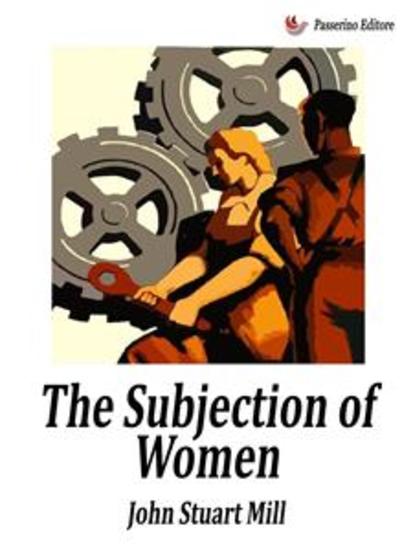
The Subjection of Women - cover

The Subjection of Women

John Stuart Mill

Maison d'édition: Passerino

  • 0
  • 0
  • 0

Synopsis

The Subjection of Women is an essay by English philosopher, political economist and civil servant John Stuart Mill published in 1869, with ideas he developed jointly with his wife Harriet Taylor Mill. Mill submitted the finished manuscript of their collaborative work On Liberty (1859) soon after her untimely death in late 1858, and then continued work on The Subjection of Women until its completion in 1861. At the time of its publication, the essay's argument for equality between the sexes was an affront to European conventional norms regarding the status of men and women.

In his autobiography, Mill describes his indebtedness to his wife, and his daughter Helen Taylor for the creation of The Subjection of Women:

As ultimately published it was enriched with some important ideas of my daughter’s and some passages of her writing. But all that is most striking and profound in what was written by me belongs to my wife, coming from the fund of thought that had been made common to us both by our innumerable conversations and discussions on a topic that filled so large a place in our minds.

While scholars generally agree that John Stuart Mill was the sole author, it is also noted that some of the arguments are similar to Harriet Taylor Mill's essay The Enfranchisement of Women, which was published in 1851.


John Stuart Mill (20 May 1806 – 7 May 1873) was an English philosopher, political economist, Member of Parliament (MP) and civil servant. One of the most influential thinkers in the history of classical liberalism, he contributed widely to social theory, political theory, and political economy. Dubbed "the most influential English-speaking philosopher of the nineteenth century", he conceived of liberty as justifying the freedom of the individual in opposition to unlimited state and social control.
Disponible depuis: 29/08/2022.

D'autres livres qui pourraient vous intéresser

  • Apology - cover

    Apology

    Plato

    • 0
    • 0
    • 0
    Apology by Plato is a crucial Socratic dialogue that provides an understanding of the philosopher's own views on the trial and execution of Socrates. The work serves as a defence speech given by Socrates as he attempts to persuade the court of his innocence. By providing an insight into his philosophical beliefs, Plato uses the Apology to articulate his teacher's thoughts on justice, virtue, piety and moral responsibility. Read in English, unabridged.
    Voir livre
  • Limits of Liberty The: Book Summary & Analysis - cover

    Limits of Liberty The: Book...

    Briefly Summaries

    • 0
    • 0
    • 0
    This is a concise summary and analysis of The Limits of Liberty, by James M. Buchanan.
     
    It is not the original book and is not affiliated with or endorsed by 
    James M. Buchanan.
    Ideal those seeking a quick and insightful overview.
     
    The Limits of Liberty explores the delicate balance between individual freedom and collective governance. It delves into how societal rules emerge from the tension between self-interest and the need for cooperation, examining the social contracts that shape modern democracies. The book provides a compelling analysis of how these agreements can both enable liberty and impose constraints, offering profound insights into the foundations of political order and the challenges of achieving sustainable governance.
    Voir livre
  • Economic Landscape of Puerto Rico - Historical Perspectives - cover

    Economic Landscape of Puerto...

    Anya Solace

    • 0
    • 0
    • 0
    Puerto Rico’s economic landscape has been shaped by centuries of historical, political, and social transformations. From the indigenous societies that first inhabited the island to its complex relationship with Spain and the United States, the economy has evolved in response to shifting global and regional forces. Understanding Puerto Rico’s economic foundations requires an examination of its early economic structures, the colonial period’s trade policies, and the profound effects of U.S. annexation. These key moments set the stage for the challenges and opportunities that have defined the island’s development.  
    Before European colonization, the indigenous Taíno people sustained themselves through subsistence agriculture, fishing, and trade with neighboring Caribbean islands. Their economy, though not based on large-scale commerce, was well-adapted to the island’s resources. With the arrival of the Spanish in 1493, Puerto Rico was integrated into Spain’s mercantilist system, marking the beginning of an economic transformation that would prioritize colonial extraction over local prosperity. The Spanish introduced new crops such as sugarcane and coffee, which would later become vital to the island’s economy. However, strict trade regulations limited Puerto Rico’s ability to develop independently, as it was required to conduct commerce exclusively with Spain.  
    During the 18th and 19th centuries, Puerto Rico transitioned into a plantation-based economy, with sugar and coffee emerging as dominant industries. Enslaved Africans and later immigrant laborers contributed to the agricultural boom, making the island a key supplier to European and American markets. Despite periods of growth, the economy remained vulnerable to global price fluctuations, natural disasters, and restrictive colonial policies. By the time of the Spanish-American War in 1898, Puerto Rico’s economy was still largely agrarian, with limited industrial development.
    Voir livre
  • The Old Kingdom of Egypt - The Age of the Pyramids - cover

    The Old Kingdom of Egypt - The...

    Omar Khalil

    • 0
    • 0
    • 0
    The Old Kingdom of Egypt, often referred to as the “Age of the Pyramids,” marks one of the most prosperous and significant periods in the history of ancient Egypt. This era, which lasted from around 2686 to 2181 BCE, witnessed the unification of Upper and Lower Egypt under a single ruler and the establishment of the pharaoh as the central figure of both politics and religion. It was a time when the foundations of the Egyptian state were solidified, and the monumental pyramids, including the Great Pyramid of Giza, were built. 
    The rise of the Old Kingdom began with the third dynasty, following the unification of Egypt by King Narmer (also known as Menes). Narmer’s victory over the rival kingdoms of Upper and Lower Egypt not only led to the establishment of the first dynasty but also laid the groundwork for the idea of divine kingship. The pharaoh, believed to be the living god Horus, became the supreme ruler, a position that was both political and religious. This divine status provided the pharaoh with unquestionable authority, ensuring stability and order across the kingdom. 
    Throughout the Old Kingdom, the notion of kingship was reinforced through monumental construction projects, such as the construction of step pyramids and later the smooth-sided pyramids that are so emblematic of ancient Egypt. The earliest monumental stone structure, the Step Pyramid of Djoser, built during the third dynasty, symbolized the pharaoh’s ability to control nature and destiny. These impressive structures were not just tombs for the pharaohs but also symbols of their eternal power and the journey to the afterlife.
    Voir livre
  • The Anxious Person's Guide to Non-Monogamy - Your Guide to Open Relationships Polyamory and Letting Go - cover

    The Anxious Person's Guide to...

    Lola Phoenix, LCSW Kathy G....

    • 0
    • 0
    • 0
    Embarking on a non-monogamous relationship can be a daunting experience, opening old wounds that cause anxiety, fear, and confusion, something Lola Phoenix knows about all too well. 


    In this all-you-need-to-know guide to exploring non-monogamy, polyamory, and open relationships, Lola draws upon their years of experience in giving advice and being non-monogamous to provide guidance for every stage of your journey, helping you to prioritize your mental health and wellbeing along the way. 


    Beginning with advice on starting out—such as finding your anchor, figuring out your personal reasons for pursuing non-monogamy, challenging your fears and practicing self-compassion—the book proceeds to cover the emotional aspects of non-monogamous relationships, including dealing with jealousy and judgement, managing anxiety and maintaining independence, as well as practical elements such as scheduling your time, negotiating boundaries, and managing your expectations, all accompanied with activities for further exploration. 
    Whether you are new to non-monogamy, or have been non-monogamous for years, this insightful and empowering book will provide you with the emotional tools you will need to live a happy non-monogamous life.
    Voir livre
  • Answer to Job - cover

    Answer to Job

    C. G. Jung

    • 0
    • 0
    • 0
    Of all the books of the Bible, few have had more resonance for modern listeners than the Book of Job.  
     
    For a world that over the past century has witnessed horrors the like of which could not have been imagined by earlier generations, Job’s cries of despair and incomprehension are all too recognisable. The visionary psychotherapist Carl Gustav Jung understood this and responded with this remarkable book, in which he set himself face to face with 'the unvarnished spectacle of divine savagery and ruthlessness'.  
     
    Jung perceived in the hidden recesses of the human psyche the cause of a crisis that plagues modern humanity and leaves the individual, like Job, isolated and bewildered in the face of impenetrable fortune. By correlating the transcendental with the unconscious, Jung, writing not as a biblical scholar but 'as a layman and physician who has been privileged to see deeply into the psychic life of many people', offers a way for every listener to come to terms with the divine darkness which confronts each individual.  
     
    Carl Gustav Jung (1875-1961) founded the analytical school of psychology and developed a radical new theory of the unconscious. Translated by R. F. C. Hull.
    Voir livre