Rejoignez-nous pour un voyage dans le monde des livres!
Ajouter ce livre à l'électronique
Grey
Ecrivez un nouveau commentaire Default profile 50px
Grey
Abonnez-vous pour lire le livre complet ou lisez les premières pages gratuitement!
All characters reduced
The Subjection of Women - cover

The Subjection of Women

John Stuart Mill

Maison d'édition: DigiCat

  • 0
  • 0
  • 0

Synopsis

In "The Subjection of Women," John Stuart Mill presents a compelling argument for gender equality and women's rights, articulating a progressive vision during the Victorian era's restrictive social norms. Employing a persuasive and analytical literary style, Mill blends philosophical reasoning with empirical observations, invoking Enlightenment ideals to challenge the subordination of women. He critiques both legal frameworks and societal mores that perpetuate inequality, positing that the emancipation of women would yield significant social and moral benefits to society as a whole. John Stuart Mill, a prominent 19th-century philosopher and political economist, was profoundly influenced by his liberal upbringing and the methodologies of utilitarianism. His collaboration with fellow intellectual Harriet Taylor, a staunch advocate for women's rights, intensified his commitment to the cause, motivating him to articulate a systematic case for gender equality. Mill's work emerges not only as a reflection of his personal convictions but also as a response to the broader debates surrounding individual liberties and social justice of his time. "The Subjection of Women" is an essential read for anyone interested in political theory, feminism, or social justice. Mill's nuanced arguments remain relevant today, providing a foundational understanding of gender dynamics and inspiring ongoing discussions about equality. This seminal text deserves a place on the bookshelves of scholars, activists, and any readers seeking to grapple with the complexities of human rights.
Disponible depuis: 25/05/2022.
Longueur d'impression: 98 pages.

D'autres livres qui pourraient vous intéresser

  • History of Ukraine - The Country’s Origin Conflicts Holodomor Soviet Era and More - cover

    History of Ukraine - The...

    Kelly Mass

    • 0
    • 0
    • 0
    The early history of the territory now known as Ukraine is marked by a series of ancient cultures and civilizations that shaped the region's development before and during the Dark Ages. The area was initially inhabited by the Dacians, a group known for their connections to the wider Thracian culture, alongside various nomadic tribes such as the Cimmerians, Scythians, and Sarmatians. These peoples made significant contributions to the cultural and political landscape of Eastern Europe during the Iron Age. 
    From around 750 BC to 250 BC, the Scythians established a powerful kingdom that extended its influence over much of the Eurasian steppes, including the territories of modern-day Ukraine. The Scythian kingdom is well-known for its unique art, horse-riding culture, and its role as a dominant force in the region. Meanwhile, Greek colonists founded several cities on the northern shores of the Black Sea during the 6th century BC, including Tyras, Olbia, and Hermonassa. These cities became important trading hubs and cultural centers, remaining under Roman and later Byzantine control until the 6th century AD.
    Voir livre
  • The Common Reader - "Volume 2" - cover

    The Common Reader - "Volume 2"

    Virginia Woolf

    • 0
    • 0
    • 0
    Do not think, because this collection of essays is titled Volume 2, that there is anything lesser or additional to it. Here is Virginia Woolf at her most entertaining and informative, relishing the portraits and insights she presents as she surveys a varied collection of individuals in English society and English literature. 
     
    The subjects range from the Elizabethans to Thomas Hardy, and then concludes, unexpectedly, with ‘How Should One Read A Book?’ Here is one delight after another: twenty-six occasional pieces (journalistic diversions) which demonstrate that her eye for history, for an individual’s place in history and in books, is just as acute and vivid as any character in her better-known novels. 
     
    Many are familiar names. John Donne, Robinson Crusoe, De Quincey, Lord Chesterfield. There is Dr Burney’s Evening Party and George Gissing, names which indicate there is no overall scheme whatsoever! Woolf champions certain figures, such as Mary Wollstonecraft (admiring her personal stance and strength) and yet has time to cast a softer, kindly eye on Dorothy Wordsworth. The detail contained in these portraits will last long in the memory—Beau Brummell descending from being the unimpeachable dandy to a sad decline; the curious eccentric personality of the poet and hymn writer William Cowper and his affection for Lady Austen. 
     
    Time and again, the skill and the wit of the great writer that is Virginia Woolf simply stops one in one’s tracks, as in her opening lines on Laurence Sterne. The essay is on A Sentimental Journey but she starts with tipping the hat to Tristram Shandy, which appeared when the author was 45. Woolf comments on Sterne: ‘No young writer could have dared to take such liberties with grammar and syntax and sense and propriety and the longstanding tradition of how a novel should be written. It needed a strong dose of the assurance of middle age and its indifference to censure to run such risks of shocking the lettered by the unconventionality of one's style, and the respectable by the irregularity of one's morals. But the risk was run and the success was prodigious.’ What a final sentence! Has the 21st century little time for the elegant essay, the joy of focused wit, of kindness, of acute observation, where the very brevity of format provides a space in which to think and reflect? In The Common Reader Volume 2, (published in 1932), the essay lives on and even more so in this sensitive and engaging book by Georgina Sutton.
    Voir livre
  • The World Is Always Coming to an End - Pulling Together and Apart in a Chicago Neighborhood - cover

    The World Is Always Coming to an...

    Carlo Rotella

    • 0
    • 0
    • 0
    An urban neighborhood remakes itself every day—and unmakes itself, too. Houses and stores and streets define it in one way. But it’s also people—the people who make it their home, some eagerly, others grudgingly. A neighborhood can thrive or it can decline, and neighbors move in and move out. Sometimes they stay but withdraw behind fences and burglar alarms. If a neighborhood becomes no longer a place of sociability and street life, but of privacy indoors and fearful distrust outdoors, is it still a neighborhood? 
      
    In the late 1960s and 1970s Carlo Rotella grew up in Chicago’s South Shore neighborhood—a place of neat bungalow blocks and desolate commercial strips, and sharp, sometimes painful social contrasts. In the decades since, the hollowing out of the middle class has left residents confronting—or avoiding—each other across an expanding gap that makes it ever harder for them to recognize each other as neighbors. Rotella tells the stories that reveal how that happened—stories of deindustrialization and street life; stories of gorgeous apartments with vistas onto Lake Michigan and of Section 8 housing vouchers held by the poor. 
     
    Blending journalism, memoir, and archival research, The World Is Always Coming to an End uses the story of one American neighborhood to challenge our assumptions about what neighborhoods are, and to think anew about what they might be if we can bridge gaps and commit anew to the people who share them with us. Tomorrow is another ending.
    Voir livre
  • US Naval Power in the 21st Century - A New Strategy for Facing the Chinese and Russian Threat - cover

    US Naval Power in the 21st...

    Brent Droste Sadler, J. William...

    • 0
    • 0
    • 0
    This nation's Cold War and Global War on Terror defense structures need an update. U.S. Naval Power in the 21st Century provides such a framework for the changed world we live in, offering a roadmap that shows how the U.S. can field a war-winning fleet that can also compete aggressively in peacetime against dangerous competitors. Brent Sadler presents a compelling new strategy and organizing approach that he calls naval statecraft, which acknowledges the centrality and importance of the maritime domain. While similar to Cold War containment strategies against the Soviets, naval statecraft is much more. It must be to challenge China's involvement in global supply chains, which gives that country significant financial heft and influence around the world. Unlike what existed during of the Cold War, however, Sadler provides a unique vision for competing with China and Russia. Rather than simply calling for better coordinated U.S. diplomacy, military operations, and economic statecraft, Sadler argues for integrating the levers of national power coherently and sustainably. It is an approach imminently appropriate to our times but comes with a realization that the nation is not ready for the competition it faces from China and Russia. The book is a valuable contribution to the national debate over how best to respond to China's rise and Russia's antagonisms.
    Voir livre
  • Teaching Primary Programming with Scratch Pupil Book Year 3 - cover

    Teaching Primary Programming...

    Phil Bagge

    • 0
    • 0
    • 0
    Scratch teaching and learning made easy thanks to up-to-date, classroom-tested methodologies. Draws on the expertise of Code-IT and HIAS.
    Voir livre
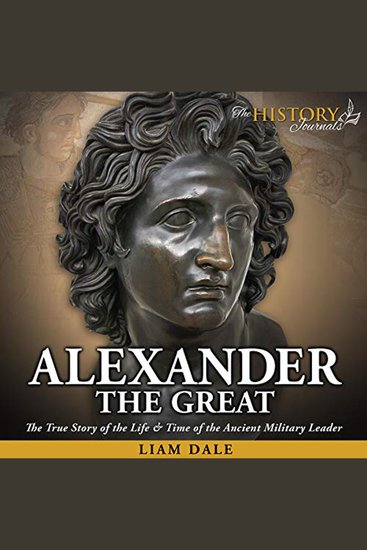
  • Alexander the Great - The True Story of the Life & Time of the Ancient Military Leader - cover

    Alexander the Great - The True...

    Liam Dale

    • 0
    • 0
    • 0
    Explore Alexander the Great's life through an hourly history tour. Alexander's name remains etched in ancient history, known for his conquests, remarkable horse, and premature death. Delve into this fascinating story, no need for in-depth knowledge of ancient Greece. Alexander's legacy endures, making his tale relevant to the present and future. 
     
    Discover: 
    - His life from beginning to end 
    - How his mother, Olympias, shaped him, claiming divine ancestry 
    - His deep bond with the magnificent horse, Bucephalus, and their first encounter 
    - His education under the philosopher Aristotle 
    - The influence of Homer's Iliad on his life 
     
    The History Journals offers concise history guides, perfect for a brief yet informative session over coffee. A great starting point for deeper exploration of specific subjects.
    Voir livre