Begleiten Sie uns auf eine literarische Weltreise!
Buch zum Bücherregal hinzufügen
Grey
Einen neuen Kommentar schreiben Default profile 50px
Grey
Jetzt das ganze Buch im Abo oder die ersten Seiten gratis lesen!
All characters reduced
ON LIBERTY - The Philosophy of Individual Freedom - Exploring the Tapestry of Human Liberty and Autonomy - cover

ON LIBERTY - The Philosophy of Individual Freedom - Exploring the Tapestry of Human Liberty and Autonomy

John Stuart Mill, W. L. Courtney

Verlag: Good Press

  • 0
  • 0
  • 0

Beschreibung

In the collection 'ON LIBERTY - The Philosophy of Individual Freedom,' readers are invited to explore the profound and multifaceted discourse surrounding the theme of liberty. Drawing from a range of literary styles, from abstract philosophical essays to more direct social commentaries, this anthology presents a rich tapestry of thoughts that dissect and expand upon the concept of individual freedom. The selected works not only highlight the philosophical underpinnings of liberty but also grapple with its implications in diverse real-world contexts, offering readers varied insights into the enduring significance of freedom. The authors, John Stuart Mill and W. L. Courtney, underpin this collection with their profound intellectual legacies. Mill's seminal contributions to the philosophy of liberalism are complemented by Courtney's perceptive analyses, which offer a broader, historically anchored understanding of freedom. These authors, positioned at the intersections of 19th-century liberal thought and social reform, bring to life a dialogue enriched by historical and cultural dimensions, weaving together voices that reflect both the transformative potential and the complexities of liberty. This anthology serves as an essential read for those eager to immerse themselves in the dynamic interplay of philosophical thought and societal application. Offering a unique opportunity to engage with multiple perspectives on a central theme, this collection not only educates but also provokes critical reflection and dialogue. Readers are encouraged to delve deep into these pages, where the philosophical meets the personal, and liberty finds its myriad expressions, making it a compelling addition to any intellectual pursuit.
Verfügbar seit: 17.01.2024.
Drucklänge: 123 Seiten.

Weitere Bücher, die Sie mögen werden

  • Learning Primary Programming with Scratch (Home Learning Book Years 5-6) - cover

    Learning Primary Programming...

    Phil Bagge

    • 0
    • 0
    • 0
    This book, written by Phil Bagge and published in conjunction with Hampshire Inspection and Advisory Service (HIAS), has been devised for children of KS2 (Year 5 and 6) age to learn programming outside of school.
    Zum Buch
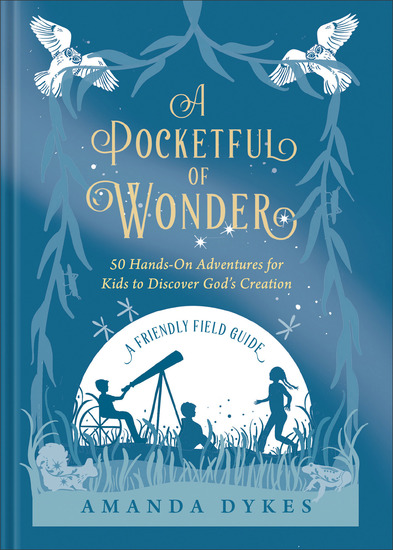
  • A Pocketful of Wonder - 50 Hands-On Adventures for Kids to Discover God's Creation - cover

    A Pocketful of Wonder - 50...

    Amanda Dykes

    • 0
    • 0
    • 0
    Invite Kids to Delight in the Wonder All around Them 
     
    In a world increasingly dependent upon screens and technology, it's as crucial as it is countercultural to help kids capture the natural joys and treasures each day holds. Written and illustrated by mom of four, former teacher, and award-winning author Amanda Dykes, this family-friendly field guide offers fifty low-prep or no-prep hands-on activities that invite children and their caregivers to spot the wonders of God's creation. Taking a multisensory approach, each entry 
     
    · incorporates physical activity, art, music, poetry, exploration, Scripture, and prayer 
    · appeals to a vast array of personalities, interests, learning types, and abilities 
    · offers tools to see and magnify the meaning God has woven into this world 
    · fills little hearts with hope while pointing to a Creator who loves them very much 
     
    Small in size but big in impact, A Pocketful of Wonder is an adventure-filled guide that encourages parents, caregivers, and young children to see and explore our amazing world.
    Zum Buch
  • TREASON - The Biden Administration’s Strategic and Malicious Destruction of America’s Sovereignty - cover

    TREASON - The Biden...

    J. Carrell

    • 0
    • 0
    • 0
    President Biden and his Administration have weaponized illegal immigration to fundamentally transform the United States of America. The intentional act of opening the borders of the United States of America is Treason. In this book, the evidence of this treason will be presented, as it would be by a federal agent, as a criminal case to an Assistant United States Attorney. Detailed evidence will be provided describing what the manifestation of this crime has wrought American cities and towns. A case will be laid out of treason against Joe Biden, Kamala Harris, Alejandro Mayorkas and the administrative state that controls our government.
    Zum Buch
  • Creative Evolution - cover

    Creative Evolution

    Henri Bergson

    • 0
    • 0
    • 0
    Henri Bergson’s highly influential book, ‘Creative Evolution’ (‘Evolution Creatrice’, 1907) established a theory of evolution - called ‘Creative Evolution Theory’ - which gained a considerable following in the first half of the 20th Century. It also helped the author to win the Nobel Prize in 1927 for his work investigating the origins of biological information and divergence in the evolutionary process.  
     
    In this work, Bergson seeks an alternative explanation as to how new forms of life emerge compared to those prevailing at the time. This included both the ‘mechanistic’ or deterministic explanations of biological science on the one hand, and on the other the ‘finalist’ or strictly teleological explanation of those who believed in the hand of a ‘Creator’ or God, coordinating life in a divine plan. 
     
    Creative Evolution proposes a third explanation in what Bergson calls élan vital’ or ‘vital impetus’, a force that infuses all matter and drives it forward into an ever-changing and infinite variety of living forms. This appears as a vital impetus that can also be related to humanity’s own creative life force. Bergson’s book builds on his ‘Theory of Time’ as set forth in works such as ‘Matter and Memory’ and ‘Time and Free Will’.  In these works, and in the present volume, Bergson sees continuous ‘duration’ as real time, as opposed to the way in which time is divided up into measured units by the ‘organising’ mind of science. 
     
    Life, as we really experience it, is subject to constant change and our tendency to explain evolutionary change by looking only at ‘ends’ achieved rather than the processes by which they emerge, divorces us from the life force itself.  
     
    Instead, Bergson feels we need to reengage with our instincts as well as with our intelligence in order to understand the evolutionary process, as both co-exist to some extent within us, all forms of life having a common origin in that instinctual, innate knowledge of simpler life forms. Though these may be unconscious or semi-conscious, they are, in Bergson’s view, much more in touch with the ever-changing nature of real time than the analytical and rational knowledge of our species 
     
    As he writes:  “Our thought, in its purely logical form, is incapable of presenting the true nature of life, the full meaning of the evolutionary movement. Created by life, in definite circumstances, to act on definite things, how can it embrace life, of which it is only an emanation or an aspect?”  
     
    It is to attempt an answer to this question that ‘Creative Evolution’ directs its attention.
    Zum Buch
  • Death Ray The: The History and Conspiracy Theories Surrounding Nikola Tesla’s Futuristic Weapon - cover

    Death Ray The: The History and...

    Charles River Editors

    • 0
    • 0
    • 0
    Nikola Tesla was one of history’s greatest scientists, and though he is best known for his pioneering work with electricity, the fact that he is mostly remembered solely for that actually does a disservice to his legacy. Born a Serb in the Austrian Empire, Tesla came to the United States and worked in a laboratory for none other than the Wizard of Menlo Park, Thomas Edison. 
    Having established AC as an electrical supply system, Tesla became a global celebrity, and his devices and inventions fascinated people. Tesla tinkered with everything from X-rays to wireless communications and even attempted a primitive form of the radio. While Tesla was not able to successfully execute the devices and concepts he foresaw, his forward thinking in fields like wireless communication certainly proved prescient, and his futuristic devices and his later reputation for eccentricity helped create the “mad scientist” image that still remains a pop culture fixture. Tesla seemed to have come to grips with this aspect of his legacy late in life, noting, “The scientific man does not aim at an immediate result. He does not expect that his advanced ideas will be readily taken up." 
    During World War I, in December 1915, Tesla gave an interview to The New York Times in which he claimed he was working on something entirely new, a weapon that would use electrical power to instantly destroy a distant target. He explained that this weapon was “so far developed that great destructive effects can be produced at any point on the globe, determined beforehand and with great accuracy.” Tesla called this new weapon the “Teleforce,” and he would continue working on this project for the rest of his life, but he consistently refused to give details of its operation. Many people believed it was impractical, but with Tesla, it was never possible to be entirely certain.
    Zum Buch
  • A Brilliant Commodity - Diamonds and Jews in a Modern Setting - cover

    A Brilliant Commodity - Diamonds...

    Saskia Coenen Snyder

    • 0
    • 0
    • 0
    During the late nineteenth century, tens of thousands of diggers, prospectors, merchants, and dealers extracted and shipped over 50 million carats of diamonds from South Africa to London. The primary supplier to the world, South Africa's diamond fields became one of the formative sites of modern capitalist production. At each stage of the diamond's route through the British empire and beyond—from Cape Town to London, from Amsterdam to New York City—carbon gems were primarily mined, processed, appraised, and sold by Jews. 


    In A Brilliant Commodity, historian Saskia Coenen Snyder traces how once-peripheral Jewish populations became the central architects of a new, global exchange of diamonds. Centuries of restrictions had limited Jews to trade and finance, businesses that often heavily relied on internal networks. Jews were well-positioned to become key players in the earliest stage of the diamond trade and its growth into a global industry. Relying on mercantile and familial ties across continents, Jews created a highly successful commodity chain that included buyers, brokers, cutters, factory owners, financiers, and retailers. 


    Working within a diasporic ethnic community that bridged city and countryside, metropole and colony, Jews helped build a flourishing diamond industry and a place for themselves in the modern world.
    Zum Buch