Rejoignez-nous pour un voyage dans le monde des livres!
Ajouter ce livre à l'électronique
Grey
Ecrivez un nouveau commentaire Default profile 50px
Grey
Abonnez-vous pour lire le livre complet ou lisez les premières pages gratuitement!
All characters reduced
Platonism in English poetry of the sixteenth and seventeenth centuries - cover

Platonism in English poetry of the sixteenth and seventeenth centuries

John Smith Harrison

Maison d'édition: Good Press

  • 0
  • 0
  • 0

Synopsis

In "Platonism in English Poetry of the Sixteenth and Seventeenth Centuries," John Smith Harrison deftly explores the intricate relationship between Platonic philosophy and the poetic imagination of early modern England. Through a meticulous analysis of seminal poets such as Spenser, Donne, and Milton, Harrison reveals how Platonic ideals of beauty, love, and the soul's ascent profoundly influenced literary expression during this transformative era. The book employs a rich, academic prose style, situating the poetic texts within their wider philosophical and cultural contexts, thus illuminating the deeper existential questions that permeated the artistic endeavors of the time. John Smith Harrison, an esteemed scholar of Renaissance literature, brings a wealth of expertise to the subject, having delved into the intersections of philosophy and poetry throughout his career. His extensive research into the historical and intellectual climates of the sixteenth and seventeenth centuries stems from a lifelong fascination with how classical thought rejuvenated the English literary landscape. Harrison's adept synthesis of philosophical concepts and poetic practice underscores not only the importance of Platonism but also its enduring legacy in shaping English literature. This book is an invaluable resource for scholars, students, and general readers alike, offering profound insights into the ways in which Platonic thought informs the poetry of the period. Harrison's work invites readers to reconsider well-known texts and encourages a deeper appreciation of the nuanced dialogues between philosophy and poetry. It is a must-read for those seeking to enrich their understanding of Renaissance literary culture.
Disponible depuis: 02/03/2025.
Longueur d'impression: 160 pages.

D'autres livres qui pourraient vous intéresser

  • Crimes Against Nature: Book Summary & Analysis - cover

    Crimes Against Nature: Book...

    Briefly Summaries

    • 0
    • 0
    • 0
    This is a concise summary and analysis of Crimes Against Nature, by  Robert F. Kennedy Jr.
    It is not the original book and is not affiliated with or endorsed by 
    Robert F. Kennedy Jr.
     
    Ideal those seeking a quick and insightful overview.
     
    Crimes Against Nature reveals the devastating effects of corporate greed and governmental corruption on the environment and public health. With a sharp focus on the collusion between powerful industries and regulatory agencies, this compelling exposé uncovers how environmental policies have been dismantled to prioritize profits over people and ecosystems. From polluted waterways to endangered wildlife, the book offers an urgent call to action for citizens to reclaim their rights and protect the planet for future generations.
    Voir livre
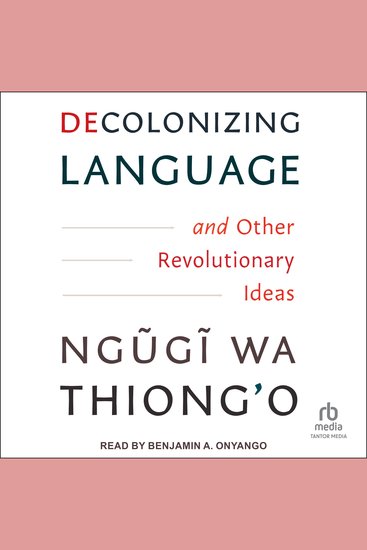
  • Decolonizing Language and Other Revolutionary Ideas - cover

    Decolonizing Language and Other...

    Ngũgĩ wa Thiong’o

    • 0
    • 0
    • 0
    Ngũgĩ wa Thiong'o was a towering figure in African literature, and his novels A Grain of Wheat; Weep Not, Child; and Petals of Blood are modern classics. Emerging from a literary scene that flourished in the 1950s and '60s during the last years of colonialism in Africa, he became known not just as a novelist—one who, in the late '70s, famously stopped writing novels in English and turned to the language he grew up speaking, Gĩkũyũ—but as a major postcolonial theorist. 


    In Decolonizing Language and Other Revolutionary Ideas, Ngũgĩ gives us a series of essays that build on the revolutionary ideas about language and its constructive role in national culture, history, and identity that he set out in his earlier work. 


    Intricate and deeply nuanced, this collection examines the enduring power of African languages in resisting both the psychic and material impacts of colonialism, past and present. 


    A brave call for discourse and immensely relevant to our present moment, Decolonizing Language and Other Revolutionary Ideas works both as a wonderful introduction to the enduring themes of Ngũgĩ's work as well as a vital addition to the library of the world's greatest and most provocative writers.
    Voir livre
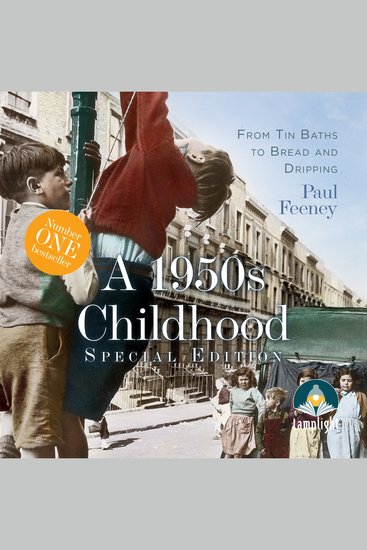
  • A 1950s Childhood - From Tin Baths to Bread and Dripping - cover

    A 1950s Childhood - From Tin...

    Paul Feeney

    • 0
    • 0
    • 0
    Do you remember Pathe News? Taking the train to the seaside? The purple stains of iodine on the knees of boys in short trousers? Knitted bathing costumes? Then the chances are you were born in or around 1950. To the young people of today, the 1950s seems like another age. But for those born around then, this era of childhood seems like yesterday. From waking up to ice on the inside of the windows, washing in a tin bath by the fire and spoonfuls of cod-liver oil, home life was very different to today. This delightful compendium of memories will appeal to all who grew up in this post-war decade, whether in town or country, wealth or poverty. With chapters on games and hobbies, holidays, music and fashion, the wonderful memories will bring back this decade of childhood, and jog memories about all aspects of life.
    Voir livre
  • Mother's Journey A: Love Loss and Justice in Her Own Words - Dive into 'A Mother's Journey' – Hear her powerful story of love loss and the fight for justice - cover

    Mother's Journey A: Love Loss...

    Evan Drummond

    • 0
    • 0
    • 0
    A Mother's Journey: Love, Loss, and Justice in Her Own Words 
    ⭐⭐ Simplified Audio Guide with Explanations Included⭐⭐ 
    Are you searching for a powerful testament to a mother's undying love? 
    Do you seek a comprehensive narrative that encompasses all aspects of her journey through love, loss, and the pursuit of justice? 
    Your search ends here! 
    This compelling audiobook serves as your definitive companion for understanding, connecting emotionally, and reflecting deeply on a mother's experiences. With this, you're set for an enriching journey. 
    Key features of this enriched guide: 
    - Profound insights about a mother's journey through love, loss, and justice 
    - Detailed explanation of the trials and triumphs she faced 
    - Fruitful strategies for coping with grief and seeking justice 
    Our audiobook distinguishes itself through comprehensive coverage, essential for grasping the depth of the story. Concepts aren't merely skimmed; they are delved into with precision. 
    Please note that this audiobook is not affiliated with any official entity and is purely an independent resource for your enrichment. 
    Designed with a clear structure and easy-to-understand language, "A Mother's Journey: Love, Loss, and Justice in Her Own Words" ensures smooth transitions between topics. Say goodbye to dense jargon and welcome clear, precise, and emotionally resonant content. 
    So, why wait? Click the BUY NOW button, secure your audiobook, and begin your journey into "A Mother's Journey: Love, Loss, and Justice in Her Own Words"!
    Voir livre
  • Conduct of Life volume 2 - cover

    Conduct of Life volume 2

    Moses Almosnino, Walter Hilliger

    • 0
    • 0
    • 0
    The major work of Rabbi Moses Almosnino (1515-1580), “Conduct of Life,” remains to this day an essential reference in classical Judeo-Spanish literature, now finally available in English in its first translation. First published in Ladino in 1564 as, Sefer Hanhagat ha-hayim and in 1729 as “Regimiento de la vida”, this three-volume edition is part of the prestigious collection Veritas è terra orietur. The work aims to disseminate the timeless teachings of ethics, in the words of the author: “In all that has been said, my intention is only to make you understand how the one who follows the path of virtue and customs of practising good and pure knowledge since childhood, lives a happy and fulfilled life (Volume 1, chapter 2)” This second volume addresses the confusion of indeterminism with free will (Volume 2, chapter 1) and how virtues arise from free will to surpass the force of destiny chapter 2), their conditions (chapter 3); the three types of strength or courage, which is the first virtue (chapter 4), its five properties and eleven conditions (chapter 5); as well as the ten ethical virtues, temperance (chapter 6), the sixteen properties of liberality chapters 7-8), magnificence (chapter 9), magnanimity and its fifty properties (chapter 10-12), modesty (chapter 13), meekness (chapters 14-16), affability (chapter 17), honesty or truth (chapters 18-19), and courtesy (chapter 20); following the order and numbering of Aristotle's Nicomachean Ethics.“Conduct of Life” draws heavily from the Nicomachean Ethics but transcends this source by situating itself at the universal intersection of several traditions: Greco-Arabic philosophy, Judeo-Christian scholasticism, classical Sephardic Judaism, and medieval Jewish thought. Thus, this work contributes to peace and intercultural understanding among peoples.
    Voir livre
  • Can the Mind Be Free of Thought? - Berkeley 1969 - Public Talk 1 - cover

    Can the Mind Be Free of Thought?...

    Jiddu Krishnamurti

    • 0
    • 0
    • 0
    – The society in which we live is the result of our psychological state. 
    – Where there is fear there is aggression. 
    – For most of us, freedom is something that we don’t want. 
    – Inaction is total action. 
    – What is the machinery that builds images? 
    Questions from the audience followed the talk.
    Voir livre