Begleiten Sie uns auf eine literarische Weltreise!
Buch zum Bücherregal hinzufügen
Grey
Einen neuen Kommentar schreiben Default profile 50px
Grey
Jetzt das ganze Buch im Abo oder die ersten Seiten gratis lesen!
All characters reduced
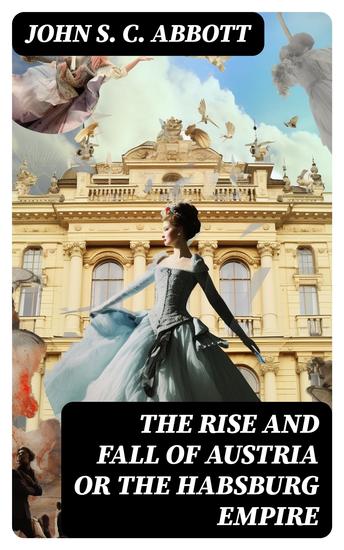
The Rise and Fall of Austria or the Habsburg Empire - Enriched edition - cover

The Rise and Fall of Austria or the Habsburg Empire - Enriched edition

John S. C. Abbott

Verlag: DigiCat

  • 0
  • 0
  • 0

Beschreibung

In "The Rise and Fall of Austria or the Habsburg Empire," John S. C. Abbott expertly navigates the complex tapestry of the Habsburg dynasty, from its ascension to prominence in Europe through to its eventual decline in the 20th century. Abbott employs a clear and engaging narrative style, interweaving historical events with vivid character portrayals, offering readers a multifaceted understanding of political maneuvers, socio-economic changes, and cultural transformations. The book's rich context situates the Habsburg Empire within the broader scope of European history, illustrating its significant impact on the continent's political landscape and cultural heritage. John S. C. Abbott was a prolific 19th-century American historian and author, renowned for his ability to distill complex historical narratives into accessible and compelling prose. His education and writing were heavily influenced by the burgeoning interest in European history during his time, driven by a desire to make such histories comprehensible to the average reader. Abbott's background provides a fascinating lens through which he examines the intricacies of the Habsburg Empire, reflecting not only the era's historical issues but also the intellectual currents of his own age. This book is a must-read for historians, students, and anyone fascinated by the intricate web of European power dynamics. Abbott's insightful analysis beckons readers to explore the legacies and lessons of the Habsburg Empire, offering a comprehensive understanding that resonates with contemporary political and cultural studies. Dive into the captivating saga of ambition, intrigue, and downfall that defines one of Europe's most influential dynasties.

In this enriched edition, we have carefully created added value for your reading experience:
- A succinct Introduction situates the work's timeless appeal and themes.
- The Synopsis outlines the central plot, highlighting key developments without spoiling critical twists.
- A detailed Historical Context immerses you in the era's events and influences that shaped the writing.
- A thorough Analysis dissects symbols, motifs, and character arcs to unearth underlying meanings.
- Reflection questions prompt you to engage personally with the work's messages, connecting them to modern life.
- Hand‐picked Memorable Quotes shine a spotlight on moments of literary brilliance.
- Interactive footnotes clarify unusual references, historical allusions, and archaic phrases for an effortless, more informed read.
Verfügbar seit: 15.11.2023.
Drucklänge: 399 Seiten.
Weitere Bücher, die Sie mögen werden

  • Road to Serfdom The: Book Summary & Analysis - cover

    Road to Serfdom The: Book...

    Briefly Summaries

    • 0
    • 0
    • 0
    This is a concise summary and analysis of The Road to Serfdom, by Friedrich A. Hayek.
     
    It is not the original book and is not affiliated with or endorsed by Friedrich A. Hayek.
    Ideal those seeking a quick and insightful overview.
     
    The Road to Serfdom is a powerful critique of centralized economic planning and the dangers it poses to individual liberty and democratic institutions. Drawing from historical analysis and philosophical reasoning, this seminal work explores how the concentration of economic control can lead to the erosion of personal freedoms, the rise of authoritarian governments, and the decline of open societies. A cornerstone of political and economic thought, it remains an essential read for anyone seeking to understand the balance between freedom and government intervention in modern society.
    Zum Buch
  • Essay on the Principle of Population An - cover

    Essay on the Principle of...

    Thomas Malthus

    • 0
    • 0
    • 0
    Thomas Malthus, an English economist and cleric, published his influential work "An Essay on the Principle of Population" in 1798. The book introduced the idea that population growth would outstrip resources in the long run, leading to catastrophic consequences such as famine, disease, and war. 
    Malthus argued that population growth was exponential, while resources grew at a much slower arithmetic rate. This meant that over time, the population would inevitably outstrip the ability of the land to produce food, leading to a "positive check" on population growth in the form of famine, disease, or war. 
    Malthus also identified a "preventative check" on population growth, which he saw as the moral restraint of individuals to delay marriage and childbirth until they could support a family. However, he believed that this restraint would only be effective for the wealthy and educated classes, while the poor would continue to have large families out of necessity. 
    Malthus's ideas were controversial at the time, as they challenged the prevailing belief in progress and the idea that human ingenuity and technological advances could overcome any resource constraints. However, his ideas gained traction in the 19th century as Europe experienced a series of famines and population pressures, and his work influenced later economists such as David Ricardo and John Stuart Mill. 
    Critics of Malthus have argued that his predictions did not come to pass, as the world has experienced significant improvements in food production and living standards over the last two centuries. However, Malthus's ideas continue to influence debates on population growth, resource constraints, and environmental sustainability.
    Zum Buch
  • John F Kennedy's Inaugural Address - cover

    John F Kennedy's Inaugural Address

    John F. Kennedy

    • 0
    • 0
    • 0
    John F. Kennedy's inaugural address, delivered on January 20, 1961, is a historic and iconic speech that marked the beginning of his presidency. In his address, Kennedy emphasized the themes of unity, freedom, and responsibility, calling on Americans to join together in a common purpose to face the challenges of the Cold War era.
    Zum Buch
  • Waning Crescent - The Rise and Fall of Global Islam - cover

    Waning Crescent - The Rise and...

    Faisal Devji

    • 0
    • 0
    • 0
    A compelling examination of the rise of Islam as a global historical actor Until the nineteenth century, Islam was variously understood as a set of beliefs and practices. But after Muslims began to see their faith as an historical actor on the world stage, they needed to narrate Islam's birth anew as well as to imagine its possible death. Faisal Devji argues that this change, sparked by the crisis of Muslim sovereignty in the age of European empire, provided a way of thinking about agency in a global context: an Islam liberated from the authority of kings and clerics had the potential to represent the human race itself as a newly empirical reality. Ordinary Muslims, now recognized as the privileged representatives of Islam, were freed from traditional forms of Islamic authority. However, their conception of Islam as an impersonal actor in history meant that it could not be defined in either religious or political terms. Its existence as a civilizational and later ideological subject also deprived figures like God and the Prophet of their theological subjectivities while robbing the Muslim community of its political agency. Devji illuminates this history and explores its ramifications for the contemporary Muslim world.
    Zum Buch
  • Foundations of Creative Imagination - Adapted from The Lectures of Neville Goddard - cover

    Foundations of Creative...

    NevGodd, Neville Goddard

    • 0
    • 0
    • 0
    Foundations of Creative Imagination is an audiobook drawing from the transformative lectures of Neville Goddard, including "At Your Command," "Awakened Imagination," "The Foundation Stone," "Imagination - My Slave," "Imagining Creates Reality," and "Imagination’s Power". 
      
    This direct and practical guide reveals a profound and liberating truth: your own human imagination is the conscious creator of your reality and the very essence of God within you. 
      
    You will learn to master powerful techniques such as: 
    - "Thinking from the end"—mentally inhabiting your desired outcome as if it has already occurred. 
    - Controlling your "inner speech" to align with your fulfilled desires. 
    - The art of "revision"—reliving past events as you wish they had happened to transform your future. 
      
    Discover that the external world is merely a reflection of your inner imaginative activity. By embracing unwavering faith in your divine imaginative power, this audiobook empowers you to overcome limitations, reshape your life, and manifest your deepest desires. 
      
    Prepare to awaken to the magnificent being you truly are and put your world truly "AT YOUR COMMAND". 
    - 
    Disclaimer: This audiobook is a modern adaptation of Neville Goddard’s lectures and writings. It is not a literal transcription but an updated version designed to make his teachings easier to understand.
    Zum Buch
  • Beyond Measure - The Hidden History of Measurement from Cubits to Quantum Constants - cover

    Beyond Measure - The Hidden...

    James Vincent

    • 0
    • 0
    • 0
    A vibrant account of how measurement has invisibly shaped our world, from ancient civilizations to the modern day. 


    From the cubit to the kilogram, the humble inch to the speed of light, measurement is a powerful tool that humans invented to make sense of the world. In this revelatory work of science and social history, James Vincent dives into its hidden world, taking listeners from ancient Egypt, where measuring the annual depth of the Nile was an essential task, to the intellectual origins of the metric system in the French Revolution, and from the surprisingly animated rivalry between metric and imperial, to our current age of the "quantified self." At every turn, Vincent is keenly attuned to the political consequences of measurement, exploring how it has also been used as a tool for oppression and control. 


    Beyond Measure reveals how measurement is not only deeply entwined with our experience of the world, but also how its history encompasses and shapes the human quest for knowledge.
    Zum Buch