Rejoignez-nous pour un voyage dans le monde des livres!
Ajouter ce livre à l'électronique
Grey
Ecrivez un nouveau commentaire Default profile 50px
Grey
Abonnez-vous pour lire le livre complet ou lisez les premières pages gratuitement!
All characters reduced
Races and Immigrants in America - cover

Races and Immigrants in America

John R. Commons

Maison d'édition: DigiCat

  • 0
  • 0
  • 0

Synopsis

In "Races and Immigrants in America," John R. Commons offers a profound examination of the socio-economic dynamics that shape the experiences of diverse racial and ethnic groups in the United States. Drawing from a wealth of historical data, Commons employs a rigorous analytical lens, effectively intertwining statistical analysis with narrative storytelling. His project is situated within the early 20th-century intellectual landscape that grappled with issues of labor, race, and immigration, reflecting the tumultuous social realities of a nation in flux. The book's incisive arguments challenge prevailing narratives by investigating how policy, economics, and cultural perceptions collectively influence the immigrant experience. John R. Commons was a pivotal figure in the development of labor economics and sociology, deeply influenced by the Progressive Era's ideals of social reform. His commitment to understanding the intricacies of economic cooperation and the role of governmental intervention in ameliorating societal inequities is evident throughout his work. Commons's blending of empirical research with a philosophical inquiry into the American identity provided a necessary foundation for this pivotal exploration of race and immigration. This book is essential for readers interested in American history, sociology, and immigration studies. Commons's insightful analysis invites a critical reflection on the intersection of race, policy, and economic opportunity—an inquiry that remains crucial in contemporary discourses on immigration and identity. Engaging and thought-provoking, it is a vital resource for scholars and general readers alike.
Disponible depuis: 13/11/2022.
Longueur d'impression: 162 pages.


D'autres livres qui pourraient vous intéresser

  • The Soviet Famine of 1932-1933 - Stalin's Harvest of Despair - cover

    The Soviet Famine of 1932-1933 -...

    Sarah Willards

    • 0
    • 0
    • 0
    The Soviet famine of 1932-1933, one of the most devastating events in Soviet history, can be traced back to the aggressive agricultural policies enforced under Joseph Stalin’s leadership. The roots of the famine lay in the drastic changes to agriculture during the late 1920s and early 1930s, particularly the forced collectivization campaign, which aimed to reshape the entire agricultural sector to fit the needs of the Soviet state. This chapter explores the key policies that set the stage for the disaster that would unfold in the early 1930s. 
    The first step towards the famine was the rise of collectivization, a policy introduced by Stalin to consolidate individual farms into large, state-controlled collective farms. The goal was to increase agricultural productivity and provide the state with a surplus of grain to fuel industrialization. However, this policy met with widespread resistance from peasants who feared losing their land and livelihood. In response, the Soviet government resorted to violent measures to force peasants to join collective farms, including the execution or deportation of so-called "kulaks"—wealthier peasants—whom the regime labeled as class enemies. 
    Alongside collectivization, Stalin’s government implemented harsh grain procurement quotas. These quotas demanded that peasants surrender large portions of their harvest to the state at low prices, which were often below the cost of production. The policy was particularly detrimental to regions with fertile land, where the government set even higher quotas to maximize exports, often at the expense of local populations. The pressure to meet these quotas, combined with the challenges of collectivized farming, led to a dramatic reduction in food available for local consumption.
    Voir livre
  • The Dialectical Behavior Therapy Skills Workbook for CPTSD - Heal from Complex Post-Traumatic Stress Disorder Find Emotional Balance and Take Back Your Life - cover

    The Dialectical Behavior Therapy...

    MSW Sheri Van Dijk

    • 0
    • 0
    • 0
    Powerful and evidence-based dialectical behavior therapy (DBT) skills to help you heal from traumas, balance emotions, and feel safe in the present moment. 


    If you've experienced chronic, multiple, or ongoing instances of trauma, you may be experiencing complex post-traumatic stress disorder, or C-PTSD—and one-size-fits-all treatment methods just aren't enough. In this evidence-based workbook, dialectical behavior therapy (DBT) expert Sheri Van Dijk combines cutting-edge research and evidence-based skills to help you feel safer and more stable, and recognize and reconcile traumas, so you can take charge of your life. 


    Based in DBT, polyvagal theory, and other proven-effective modalities, this powerful and accessible workbook will help you process and manage intense emotions, free yourself from self-destructive behaviors, and feel more stable—and safe—in the present. 


    What happened to you in your past wasn't your fault, and it doesn't have to define your future. Drawing on the best practices of DBT and polyvagal theory, this vital workbook will help you begin healing and reclaim wholeness.
    Voir livre
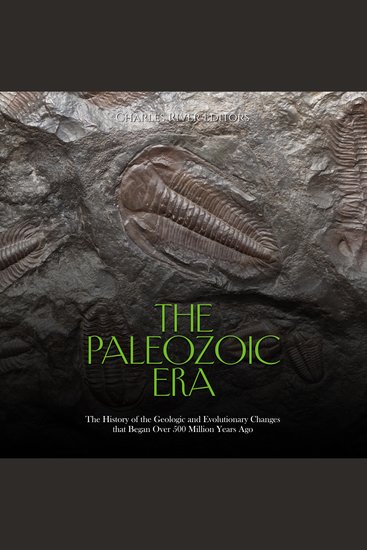
  • Paleozoic Era The: The History of the Geologic and Evolutionary Changes that Began Over 500 Million Years Ago - cover

    Paleozoic Era The: The History...

    Editors Charles River

    • 0
    • 0
    • 0
    The current view of science is that Earth is around 4.6 billion years old, and the first 4 billion years of its development are known as the Precambrian period. For the first billion years or so, there was no life in Earth. Then the first single-celled life-forms, early bacteria and algae, began to emerge. It’s unclear where they came from or even if they originated on this planet at all, but this gradual development continued until around four billion years ago when suddenly (in geological terms) more complex forms of life began to emerge.  
    	Scientists call this time of an explosion of new forms of life the Paleozoic Era, and it stretched from around 541 to 250 million years ago. In the oceans and then on land, new creatures and plants began to appear in bewildering variety, and by the end of this period, life on Earth had diversified into a myriad of complex forms that filled virtually every habitat and niche available in the seas and on the planet’s only continent, Pangea. 
    	The Precambrian Period is divided into three eons: the Hadean, the Archaean, and the Proterozoic. One layer of carbon in rocks that date to the Archaean Eon, found on islands west of Greenland, seems to have fossilized tracks that may have been left by some form of organic life, but scientists simply are not certain. The oldest confirmed remains of life date from the same eon and were found in rocks in Western Australia, which were found to contain fossilized bacteria estimated to be 3.46 billion years old. It seems likely that there were thousands, perhaps even millions of forms of life in these early periods, and most seem to have been microscopic in size and very simple in developmental terms.
    Voir livre
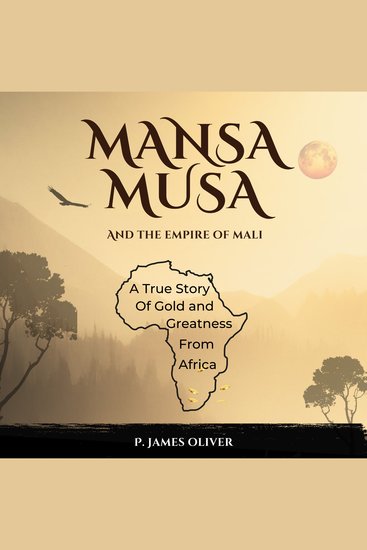
  • Mansa Musa and the Empire of Mali - A True Story of Gold and Greatness from Africa - cover

    Mansa Musa and the Empire of...

    P. James Oliver

    • 0
    • 0
    • 0
    Oliver's well-researched biography of Mansa Musa reads like an exotic tale of gold, glory, and adventure. During his long reign as Mali's emperor, Mansa Musa led his empire into its Golden Age; presided over a spectacular, 60,000 person, 9,000 mile pilgrimage; founded a university in Timbuktu; and helped revolutionize architecture across the Sudan. Oliver does not allow Musa's story to get bogged down in detail by seamlessly weaving a lot of history into his narrative and by supplying curious readers with an extensive description. 
    Many of the African ancestors of today's African-Americans came from West Africa. From 700 -- 1600 A. D., one after the other, three great, black, commercial empires dominated West Africa. They were powerful, prosperous, complex, stable -- and large. At its height, the Empire of Mali was the size of all of Western Europe.
    Voir livre
  • Dealing with Narcissistic Abuse Coaching session & meditation Find your way out - leave the toxic relationship traumas abuses heal emotional trauma move out of comfort zone end the cycle - cover

    Dealing with Narcissistic Abuse...

    ThinkAndBloom

    • 0
    • 0
    • 0
    Narcissistic people stretch your boundaries. They embody a complex superiority and lack of empathy for others. Sometimes the manipulations and control are subtle which you find hard to realize. It is a form of relationship that suffers tremendous stress and distress. 
    There may be verbal abuses that drag your self-esteem down. There may be emotional abuses through control, manipulations. They impose guilt trips over you if you do not do something that they want. They constantly step over your boundary and disrespect your energies time and values. They tend to deny what they have done and create a story in their head without understanding. 
    In this course, we will cut ties contracts and obligations in the relationship. We dissolve attachments energetically. So you empower yourself and not be influenced by them. We will have a deep healing meditation to resolve the hurts pains guilt shame that they have imposed on us. We draw a healthy boundary and learn to say no. We teach them to respect us physically mentally and energetically. 
    In this course, we will Deep emotional healingMove out of comfort zoneEmpower yourselfKnow you valueRaise self-esteemDraw healthy boundaryLove yourself deeply through sleepAnd much more 
    Who’s this course for End the narcissistic abuseFind ways to empower themselvesHave deep emotional healingBuild healthy boundaryTake back their power 
    After this course, you will stay more in your power and center. You will not be easily affected by them. You let go of attachments and own your truth. You value your uniqueness and respect your boundary. You love yourself deeply and build your life based on your judgment
    Voir livre
  • Learn Japanese With Music - cover

    Learn Japanese With Music

    Innovative Language Learning, ...

    • 0
    • 0
    • 0
    Can learning Japanese be as simple as listening to music? 


    And as easy as remembering song lyrics?


    Just think. You remember song lyrics because lyrics are catchy, repeated throughout the song, and go with the music, right? Now, if you stuck in Japanese, you’d easily learn Japanese words and phrases the same way! 


    So, yes, learning Japanese is as easy as listening to music… with the Learn Japanese With Music Audiobook.


    Just press play, and you’ll hear Japanese words and phrases repeated to the beat of upbeat and cheerful music. And… follow along!


    You’ll learn 180+ most common Japanese words and phrases… while relaxing at home, or while driving to work.


    Learn Japanese With Music is the easiest way to start learning Japanese.. without getting overwhelmed by complicated explanations. Perfect for new learners with little to no language learning experience.


    What will you learn?
     
    180+ Words & Phrases Including...
     
    • Basic Greetings
     
    • Numbers
     
    • Common Questions and Answers
     
    • Parts of the Body & Talking About Your Wellbeing
     
    • Common Hobbies
     
    • And much more


    Learn Japanese With Music includes...
     
    • 15 Songs/Lessons Inside (Each is about 7 minutes long)
     
    • Fast-Paced Review Section at the End of Each Lesson
     
    • 1 Hour 50 Minutes in Total
     
    • Accompanying PDF eBook with the Words, Phrases and Translations


    Download the PDF and read along
    Voir livre