Rejoignez-nous pour un voyage dans le monde des livres!
Ajouter ce livre à l'électronique
Grey
Ecrivez un nouveau commentaire Default profile 50px
Grey
Abonnez-vous pour lire le livre complet ou lisez les premières pages gratuitement!
All characters reduced
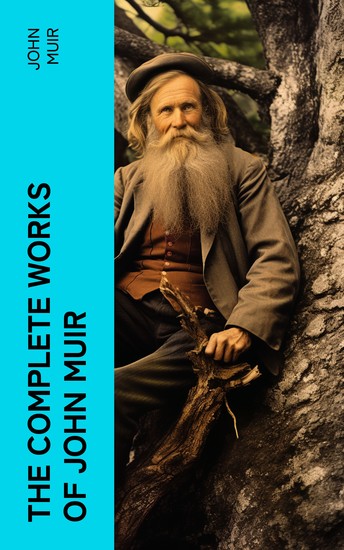
The Complete Works of John Muir - cover

The Complete Works of John Muir

John Muir

Maison d'édition: e-artnow

  • 0
  • 0
  • 0

Synopsis

This meticulously edited book brings you the complete works of an influential Scottish-American naturalist, author, environmental philosopher, glaciologist and advocate for the preservation of wilderness in the United States of America, known as "John of the Mountains" and "Father of the National Parks". This exceptional collection is comprised of Muir's travel memoirs, wilderness essays, environmental studies and personal letters. Contents: Books Picturesque California The Mountains of California Our National Parks My First Summer in the Sierra The Yosemite Travels in Alaska Stickeen: The Story of a Dog The Cruise of the Corwin A Thousand-mile Walk to the Gulf Steep Trails Studies in Sierra Articles and Speeches The National Parks and Forest Reservations Save the Redwoods Snow-storm on Mount Shasta Features of the Proposed Yosemite National Park A Rival of the Yosemite The Treasures of the Yosemite Yosemite Glaciers Yosemite in Winter Yosemite in Spring Edward Henry Harriman Edward Taylor Parsons The Hetch Hetchy Valley The Grand Cañon of the Colorado Autobiography The Story of My Boyhood and Youth Letters to a Friend Tribute Alaska Days With John Muir by Samuel Hall Young
Disponible depuis: 13/12/2023.
Longueur d'impression: 2263 pages.

D'autres livres qui pourraient vous intéresser

  • Creative Evolution - cover

    Creative Evolution

    Henri Bergson

    • 0
    • 0
    • 0
    Henri Bergson’s highly influential book, ‘Creative Evolution’ (‘Evolution Creatrice’, 1907) established a theory of evolution - called ‘Creative Evolution Theory’ - which gained a considerable following in the first half of the 20th Century. It also helped the author to win the Nobel Prize in 1927 for his work investigating the origins of biological information and divergence in the evolutionary process.  
     
    In this work, Bergson seeks an alternative explanation as to how new forms of life emerge compared to those prevailing at the time. This included both the ‘mechanistic’ or deterministic explanations of biological science on the one hand, and on the other the ‘finalist’ or strictly teleological explanation of those who believed in the hand of a ‘Creator’ or God, coordinating life in a divine plan. 
     
    Creative Evolution proposes a third explanation in what Bergson calls élan vital’ or ‘vital impetus’, a force that infuses all matter and drives it forward into an ever-changing and infinite variety of living forms. This appears as a vital impetus that can also be related to humanity’s own creative life force. Bergson’s book builds on his ‘Theory of Time’ as set forth in works such as ‘Matter and Memory’ and ‘Time and Free Will’.  In these works, and in the present volume, Bergson sees continuous ‘duration’ as real time, as opposed to the way in which time is divided up into measured units by the ‘organising’ mind of science. 
     
    Life, as we really experience it, is subject to constant change and our tendency to explain evolutionary change by looking only at ‘ends’ achieved rather than the processes by which they emerge, divorces us from the life force itself.  
     
    Instead, Bergson feels we need to reengage with our instincts as well as with our intelligence in order to understand the evolutionary process, as both co-exist to some extent within us, all forms of life having a common origin in that instinctual, innate knowledge of simpler life forms. Though these may be unconscious or semi-conscious, they are, in Bergson’s view, much more in touch with the ever-changing nature of real time than the analytical and rational knowledge of our species 
     
    As he writes:  “Our thought, in its purely logical form, is incapable of presenting the true nature of life, the full meaning of the evolutionary movement. Created by life, in definite circumstances, to act on definite things, how can it embrace life, of which it is only an emanation or an aspect?”  
     
    It is to attempt an answer to this question that ‘Creative Evolution’ directs its attention.
    Voir livre
  • Feature Engineering for Beginners - Feature Engineering for Beginners - cover

    Feature Engineering for...

    Chuck Sherman

    • 0
    • 0
    • 0
    Unravel the art and science behind effective data analysis with this comprehensive guide to feature engineering. Crafted for beginners, this book is your gateway to understanding the pivotal role of features in extracting meaningful insights from data. 
    From the basics of feature engineering to hands-on techniques, this guide navigates through the intricate landscape of transforming raw data into powerful features. You'll explore the fundamental principles that underpin feature engineering and gain practical skills through real-world examples and case studies. 
    Whether you're a student taking your first steps into the realm of data science or a professional seeking to enhance your analytical toolkit, this guide provides a structured and accessible approach to feature engineering. Learn how to identify, create, and optimize features that unlock the true potential of your data. 
    Key Features: 
    ·        Comprehensive introduction to feature engineering concepts and techniques. 
    ·        Practical examples and case studies for hands-on learning. 
    ·        Step-by-step guidance for crafting effective data features. 
    ·        Insights into the impact of feature engineering on model performance. 
    ·        Tips and best practices for feature selection and optimization. 
    Equip yourself with the essential skills to transform raw data into actionable insights. 'Feature Engineering for Beginners' is your companion in the journey towards mastering the craft of feature engineering and unleashing the true potential of your data analysis endeavors. 
     
    Voir livre
  • The Parting of the Sea - How Volcanoes Earthquakes and Plagues Shaped the Story of Exodus - cover

    The Parting of the Sea - How...

    Barbara J. Sivertsen

    • 0
    • 0
    • 0
    “[Sivertsen] has done an exceptional job of digging into the wide variety of fields relevant to understanding the Exodus. A superb and stunning book.” ―Paul and Elizabeth Barber, authors of When They Severed Earth from Sky 
     
    For more than four decades, biblical experts have tried to place the story of Exodus into historical context—without success. What could explain the Nile turning to blood, insects swarming the land, and the sky falling to darkness? Integrating biblical accounts with substantive archaeological evidence, The Parting of the Sea looks at how natural phenomena shaped the stories of Exodus, the Sojourn in the Wilderness, and the Israelite conquest of Canaan. Barbara Sivertsen demonstrates that the Exodus was in fact two separate exoduses both triggered by volcanic eruptions—and provides scientific explanations for the ten plagues and the parting of the Red Sea. Over time, Israelite oral tradition combined these events into the Exodus narrative known today. 
     
    Skillfully unifying textual and archaeological records with details of ancient geological events, Sivertsen shows how the first exodus followed a 1628 B.C.E Minoan eruption that produced all but one of the first nine plagues. The second exodus followed an eruption of a volcano off the Aegean island of Yali almost two centuries later, creating the tenth plague of darkness and a series of tsunamis that “parted the sea” and drowned the pursuing Egyptian army. Sivertsen’s brilliant account explains inconsistencies in the biblical story, fits chronologically with the conquest of Jericho, and confirms that the Israelites were in Canaan before the end of the sixteenth century B.C.E. 
     
    In examining oral traditions and how these practices absorb and process geological details through storytelling, The Parting of the Sea reveals how powerful historical narratives are transformed into myth.
    Voir livre
  • The Telephone Radio & Television – Changing the Way We Communicate - The Innovations That Connected the World and Shaped Modern Media - cover

    The Telephone Radio & Television...

    Donovan Hill

    • 0
    • 0
    • 0
    Before the internet, there were three inventions that shaped the way humans connected: the telephone, radio, and television. These groundbreaking technologies revolutionized communication, bringing people closer and transforming how we share information. 
    This audiobook takes you deep into the history of communication, uncovering the inventors, challenges, and technological breakthroughs that made modern media possible. Discover: 
    ✅ How Alexander Graham Bell’s telephone connected the world 
    ✅ The radio’s role in entertainment, war, and mass media 
    ✅ How television became a global phenomenon 
    ✅ The evolution of these inventions into the digital age 
    The Telephone, Radio & Television – Changing the Way We Communicate is a must-listen for *history lovers, technology enthusiasts, and anyone fascinated by how communication has shaped our world.
    Voir livre
  • Chaos and Nonlinear Dynamics - Understanding Complex Systems and Behavior - cover

    Chaos and Nonlinear Dynamics -...

    Mark Hedges

    • 0
    • 0
    • 0
    Chaos and nonlinear dynamics are fundamental concepts in understanding the behavior of complex systems. Unlike linear systems, which exhibit proportionality and predictability, nonlinear systems often display unexpected, highly sensitive, and seemingly random behaviors. This unpredictability, despite being governed by deterministic rules, is the hallmark of chaos theory. 
    The study of chaos and nonlinear dynamics has evolved over centuries, but it gained prominence in the 20th century with the advent of modern computing. One of the most well-known figures in this field is Edward Lorenz, a meteorologist who, in the 1960s, discovered that small changes in initial conditions could lead to vastly different outcomes in weather models. This phenomenon, later termed the "butterfly effect," became a defining feature of chaotic systems. Lorenz’s discovery challenged the classical notion that the universe operates like a clockwork mechanism, reinforcing the idea that certain systems, though deterministic, are inherently unpredictable. 
    Nonlinear dynamics appear in a wide array of disciplines, from physics and engineering to biology and economics. In physics, chaotic motion is evident in fluid turbulence, celestial mechanics, and quantum systems. Engineering applications include secure communication systems that exploit chaotic signals for encryption. Biological systems, such as neural activity in the brain and heartbeat irregularities, also follow nonlinear principles. Ecological systems, particularly predator-prey relationships and population dynamics, demonstrate chaotic fluctuations over time. Even in finance, stock market movements and economic cycles exhibit nonlinear behaviors that make precise long-term predictions nearly impossible.
    Voir livre
  • Consciousness - Where Did It Come From and Where Is It Going? - cover

    Consciousness - Where Did It...

    Ylia Callan

    • 0
    • 0
    • 0
    This audiobook is narrated by an AI Voice.   
    What is consciousness, and why does it matter? Is it a byproduct of the brain, a reflection of the cosmos, or the very fabric of reality itself? Consciousness – Where Did It Come From and Where Is It Going? takes listeners on a profound journey through the mysteries of awareness, exploring both the science and the spirit of mind. 
    From leading theories such as Integrated Information Theory and Global Workspace Theory, to deeper explorations of memory, dreams, the self, and even the quantum question, this audiobook illuminates the many faces of consciousness. It traces the evolution of awareness - from the earliest stirrings of life’s inner eye, to the possibility of a universal consciousness shaping the cosmos. 
    With clarity and depth, the chapters reveal consciousness as both a scientific puzzle and a timeless mystery. Is the self an illusion? Can dreams open gateways to hidden dimensions of mind? What role does the body play in shaping awareness? And most importantly, what might the future of consciousness hold for humanity and beyond? 
    Whether you are fascinated by neuroscience, intrigued by philosophy, or drawn to the spiritual dimensions of mind, this audiobook offers a sweeping exploration of one of the greatest questions of existence: Where did consciousness come from - and where is it going?
    Voir livre