Rejoignez-nous pour un voyage dans le monde des livres!
Ajouter ce livre à l'électronique
Grey
Ecrivez un nouveau commentaire Default profile 50px
Grey
Abonnez-vous pour lire le livre complet ou lisez les premières pages gratuitement!
All characters reduced
Paradise Lost - cover

Paradise Lost

John Milton

Maison d'édition: CLXBX

  • 0
  • 0
  • 0

Synopsis

Paradise Lost by John Milton is one of the greatest epic poems in English literature, a monumental work that explores the timeless struggle between obedience and rebellion, good and evil, heaven and hell. First published in 1667, this masterpiece presents a powerful and imaginative retelling of the biblical story of the Fall of Man, transforming it into a sweeping epic filled with profound philosophical and spiritual themes.

The poem opens in the aftermath of a great cosmic battle in which Satan and his rebel angels have been cast out of Heaven and condemned to rule in Hell. Refusing to accept defeat, Satan vows revenge against God by corrupting His newest creation—humanity. With determination and cunning, he journeys from the depths of Hell to the newly created Earth, where he discovers Adam and Eve living in innocence and harmony within the Garden of Eden.

As the story unfolds, Milton portrays the events that lead to the tragic fall of humanity. Through deception and temptation, Satan convinces Eve to disobey God's command and eat the forbidden fruit, an act that brings sin, suffering, and mortality into the world. Adam, choosing love and loyalty over obedience, follows her into disobedience, forever changing the destiny of humankind.

What makes Paradise Lost extraordinary is not only its dramatic story but also its rich exploration of complex ideas. Milton examines themes such as free will, divine justice, temptation, pride, forgiveness, and redemption. The poem invites readers to reflect on the nature of authority, the consequences of rebellion, and the moral choices that shape human destiny.

Written in majestic blank verse and filled with vivid imagery, grand speeches, and unforgettable characters, the epic combines classical literary traditions with deep theological insight. Milton's portrayal of Satan as a charismatic yet tragic figure has sparked centuries of discussion and interpretation, making the poem one of the most analyzed works in literary history.

Beyond its religious themes, Paradise Lost stands as a profound meditation on human nature and the eternal tension between ambition and obedience. Its influence can be seen across literature, philosophy, and art, inspiring generations of writers and thinkers.

Epic in scope and profound in meaning, Paradise Lost remains a timeless literary achievement—an unforgettable journey through heaven, hell, and the human soul that continues to captivate readers around the world.
Disponible depuis: 14/03/2026.
Longueur d'impression: 307 pages.
D'autres livres qui pourraient vous intéresser

  • The Beekeeper of Aleppo - cover

    The Beekeeper of Aleppo

    Christy Lefteri

    • 0
    • 0
    • 0
    'I was scared of the bees at first, but now, they make me feel alive. They are like a society in complete harmony with itself. Not like people at all, but maybe what people have the potential to be.'
    Nuri is a beekeeper; his wife, Afra, an artist. They live a simple life, rich in family and friends, in the beautiful Syrian city of Aleppo – until the unthinkable happens. 
    When all they care for is destroyed by war, they are forced to flee. On their terrifying journey, they must face the pain of their immeasurable loss alongside incredible danger. Above all, they must keep going in order to find each other again.
    Nesrin Alrefaai and Matthew Spangler's adaptation of Christy Lefteri's compassionate and beautiful bestselling novel The Beekeeper of Aleppo premiered at Nottingham Playhouse in 2023, directed by Miranda Cromwell. It was revived in 2026 for a tour of the UK and Ireland.
    Voir livre
  • Crush - 20th Anniversary Edition - cover

    Crush - 20th Anniversary Edition

    Richard Siken, Introduction by...

    • 0
    • 0
    • 0
    The twentieth-anniversary edition of the influential first poetry collection by Richard Siken Since winning the 2004 Yale Series of Younger Poets competition, Crush has become a modern classic. This twentieth-anniversary edition includes a new introduction by award-winning poet Dana Levin and a new afterword by the author.
    Voir livre
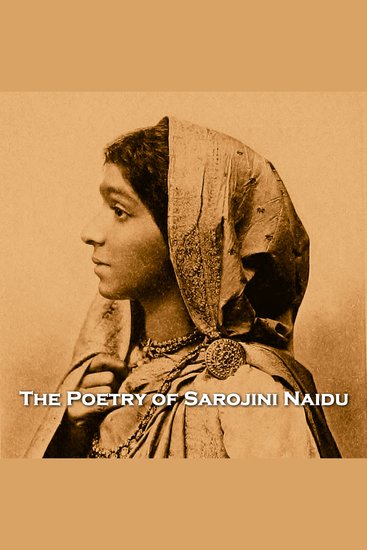
  • The Poetry of Sarojini Naidu - One of the finest modern global poets - cover

    The Poetry of Sarojini Naidu -...

    Sarojini Naidu

    • 0
    • 0
    • 0
    Sarojini Chattopadhyay was born into a Bengali family in Hyderabad, India on 13th February 1879, the eldest of the eight siblings. The family was well-respected in Hyderabad and were established artists. 
     
    Naidu passed her matriculation examination at the University of Madras and took a four-year break from her studies.  
     
    In 1895, H.E.H. the Nizam's Charitable Trust founded by the 6th Nizam, Mahbub Ali Khan, gave her the chance to study in England, first at King's College, London and later at Girton College, Cambridge.  
     
    Even in these early times she was a social activist.  It was whilst in England that she worked as a suffragist and was first drawn to the Indian National Congress' Hindu movement for India's independence from British Colonial rule.  
     
    She began writing at the age of twelve. Her play, ‘Maher Muneer’, written in Persian, impressed the Nawab of Hyderabad. It was an auspicious start. 
     
    Sarojini met Paidipati Govindarajulu Naidu, a physician, and after finishing her studies at age 19 married him. The couple would have five children.  Interestingly their families approved their marriage even though they were from different castes and society was not as tolerant as it might be today.  Additionally, Sarojini was from Bengal and Naidu from Andhra Pradesh and marriages between those from the north and south were frowned upon.  Happily, they overcame these problems and both marriage and careers thrived. 
     
    In 1905, her first collection of poems, ‘The Golden Threshold’ was published. 
     
    Naidu became a part of the Indian nationalist movement and was a follower of Mahatma Gandhi and his idea of swaraj (this was an India without its colonial administration systems).  Despite her growing political career she still found time to write and published several further volumes of poetry. Such was her eloquence that she became known as the ‘Nightingale of India’. 
    Sarojini was appointed the President of the Indian National Congress in 1925 and was a major influence and figure in the Independence movement.  
     
    Along with several other Congress leaders including Gandhi and Jawaharlal Nehru she was arrested for taking part in the 1930 Salt March.  Indeed Sarojini faced frequent arrest by the British Authorities and spent, in total, many months in prison. 
     
    Following India's independence from British rule in 1947, Sarojini was appointed as the governor of the present-day Uttar Pradesh in so doing she became India's first female governor. 
     
    Returning from work in New Delhi on 15th February, 1949 she was advised to rest by her doctors, and her official engagements were cancelled.  Her health deteriorated rapidly and on 1st March bloodletting was performed after she complained of severe headache.  
     
    Sarojini Naidu died of a cardiac arrest on 2nd March 1949.  She was 70.
    Voir livre
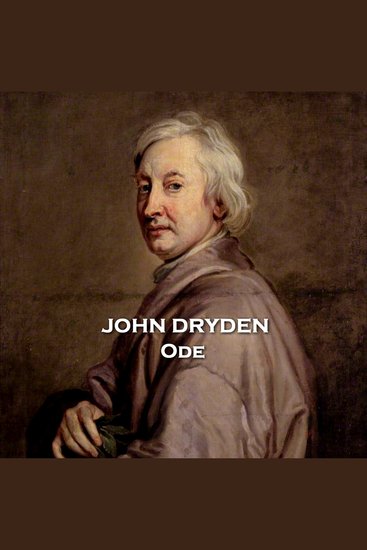
  • Ode - The Age of Dryden' is a fitting marker for why he stood above all the others of his age - cover

    Ode - The Age of Dryden' is a...

    John Dryden

    • 0
    • 0
    • 0
    John Dryden was born on August 9th, 1631 in the village rectory of Aldwincle near Thrapston in Northamptonshire. As a boy Dryden lived in the nearby village of Titchmarsh, Northamptonshire. In 1644 he was sent to Westminster School as a King's Scholar.  
    Dryden obtained his BA in 1654, graduating top of the list for Trinity College, Cambridge that year.  
    Returning to London during The Protectorate, Dryden now obtained work with Cromwell's Secretary of State, John Thurloe. 
     At Cromwell's funeral on 23 November 1658 Dryden was in the company of the Puritan poets John Milton and Andrew Marvell.  The setting was to be a sea change in English history. From Republic to Monarchy and from one set of lauded poets to what would soon become the Age of Dryden. 
    The start began later that year when Dryden published the first of his great poems, Heroic Stanzas (1658), a eulogy on Cromwell's death.  
    With the Restoration of the Monarchy in 1660 Dryden celebrated in verse with Astraea Redux, an authentic royalist panegyric. 
     With the re-opening of the theatres after the Puritan ban, Dryden began to also write plays. His first play, The Wild Gallant, appeared in 1663 but was not successful. From 1668 on he was contracted to produce three plays a year for the King's Company, in which he became a shareholder. During the 1660s and '70s, theatrical writing was his main source of income.  
    In 1667, he published Annus Mirabilis, a lengthy historical poem which described the English defeat of the Dutch naval fleet and the Great Fire of London in 1666. It established him as the pre-eminent poet of his generation, and was crucial in his attaining the posts of Poet Laureate (1668) and then historiographer royal (1670). 
    This was truly the Age of Dryden, he was the foremost English Literary figure in Poetry, Plays, translations and other forms. 
    In 1694 he began work on what would be his most ambitious and defining work as translator, The Works of Virgil (1697), which was published by subscription. It was a national event.  
    John Dryden died on May 12th, 1700, and was initially buried in St. Anne's cemetery in Soho, before being exhumed and reburied in Westminster Abbey ten days later.
    Voir livre
  • Five Senses - cover

    Five Senses

    Arthur Macy

    • 0
    • 0
    • 0
    Arthur Macy was a Nantucket boy of Quaker extraction. His name alone is evidence of this, for it is safe to say that a Macy, wherever found in the United States, is descended from that sturdy old Quaker who was one of those who bought Nantucket from the Indians, paid them fairly for it, treated them with justice, and lived on friendly terms with them. In many ways Arthur Macy showed that he was a Nantucketer and, at least by descent, a Quaker. He often used phrases peculiar to our island in the sea, and was given, in conversation at least, to similes which smacked of salt water. Almost the last time I saw him he said, "I'm coming round soon for a good long gam."Arthur Macy's view of life was certainly broad and generous, with a philosophic flavor. (from the Introduction (by William Alfred Hovey) to POEMS BY ARTHUR MACY (1905))
    Voir livre
  • Macbeth - cover

    Macbeth

    William Shakespeare

    • 0
    • 0
    • 0
    Shakespeare's most celebrated and shortest tragedy. This cast performance is by the Marlowe Society.
    Voir livre