Rejoignez-nous pour un voyage dans le monde des livres!
Ajouter ce livre à l'électronique
Grey
Ecrivez un nouveau commentaire Default profile 50px
Grey
Abonnez-vous pour lire le livre complet ou lisez les premières pages gratuitement!
All characters reduced
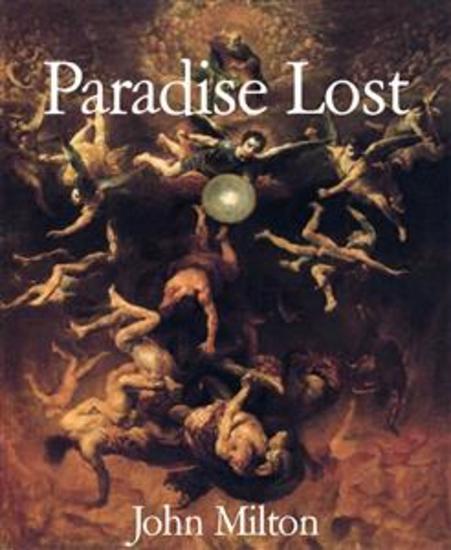
Paradise Lost - cover

Paradise Lost

John Milton

Maison d'édition: BookRix

  • 0
  • 0
  • 0

Synopsis

Paradise Lost is an epic poem in blank verse by the English poet John Milton. The poem concerns the Biblical story of the Fall of Man: the temptation of Adam and Eve by the fallen angel Satan and their expulsion from the Garden of Eden. Milton's purpose, stated in Book I, is to "justify the ways of God to men". Milton's story has two narrative arcs, one about Satan and the other following Adam and Eve. It begins after Satan and the other rebel angels have been defeated and banished to Hell, or, as it is also called in the poem, Tartarus. In Pandemonium, Satan employs his rhetorical skill to organize his followers; he is aided by Mammon and Beelzebub. Belial and Moloch are also present. At the end of the debate, Satan volunteers to poison the newly created Earth and God's new and most favored creation, Mankind. He braves the dangers of the Abyss alone in a manner reminiscent of Odysseus or Aeneas. After an arduous traversal of the Chaos outside Hell, he enters God's new material World, and later the Garden of Eden.

At several points in the poem, an Angelic War over Heaven is recounted from different perspectives. Satan's rebellion follows the epic convention of large-scale warfare. The battles between the faithful angels and Satan's forces take place over three days. At the final battle, the Son of God single-handedly defeats the entire legion of angelic rebels and banishes them from Heaven. Following this purge, God creates the World, culminating in his creation of Adam and Eve. While God gave Adam and Eve total freedom and power to rule over all creation, He gave them one explicit command: not to eat from the Tree of the knowledge of good and evil on penalty of death.

The story of Adam and Eve's temptation and fall is a fundamentally different, new kind of epic: a domestic one. Adam and Eve are presented for the first time[citation needed] in Christian literature as having a full relationship while still being without sin. They have passions and distinct personalities. Satan, disguised in the form of a serpent, successfully tempts Eve to eat from the Tree by preying on her vanity and tricking her with rhetoric. Adam, learning that Eve has sinned, knowingly commits the same sin. He declares to Eve that since she was made from his flesh, they are bound to one another ‒ if she dies, he must also die. In this manner, Milton portrays Adam as a heroic figure, but also as a greater sinner than Eve, as he is aware that what he is doing is wrong. After eating the fruit, Adam and Eve have lustful sex. At first, Adam is convinced that Eve was right in thinking that eating the fruit would be beneficial. However, they soon fall asleep and have terrible nightmares, and after they awake, they experience guilt and shame for the first time. Realizing that they have committed a terrible act against God, they engage in mutual recrimination.
Disponible depuis: 19/12/2023.
Longueur d'impression: 321 pages.
D'autres livres qui pourraient vous intéresser

  • Where My Books Go - cover

    Where My Books Go

    William Butler Yeats

    • 0
    • 0
    • 0
    Librivox volunteers bring you thirteen different readings of the short poem Where My Books Go by William Butler Yeats, a weekly poetry project. (Summary by Annie Coleman)
    Voir livre
  • Unicorn - cover

    Unicorn

    Mike Bartlett

    • 0
    • 0
    • 0
    'My point is we're at the frontier here. No one knows. And I find that really fucking exciting.'
    Polly and Nick have it all. Happily married, two children, successful careers. And yet there's something missing… something rare and unforeseen… waiting to add a much-needed sparkle…
    Unicorn by Mike Bartlett is an explicit, funny and provocative play, which was first performed at the Garrick Theatre in London's West End in 2025. It was directed by James Macdonald and starred Nicola Walker, Stephen Mangan and Erin Doherty.
    Voir livre
  • Short Poetry Collection 069 - cover

    Short Poetry Collection 069

    Various

    • 0
    • 0
    • 0
    LibriVox's Short Poetry Collection 069: a collection of 20 public-domain poems, chosen and read by Librivox volunteers.
    Voir livre
  • The Lake Poets - Three of the titans of English poetry muse in one of Englands finest landscapes - cover

    The Lake Poets - Three of the...

    William Wordsworth

    • 0
    • 0
    • 0
    Strictly speaking The Lake Poets were not a movement or school of poetry they were only so named as such by The Edinburgh Review so that they could be disparaged. 
    It was a spectacular backfire! 
    The three main figures would be rightly seen as among the most monumental figures in English poetry - William Wordsworth, Samuel Taylor Coleridge and the under rated but immense Robert Southey, himself a thirty year poet laureate. 
    The profound majesty of the Lake District, an area of almost unequalled beauty, of mythical landscapes and beguiling charm influenced and acted as muse to their burgeoning talents. 
    Their creations have ennobled this poetry as an art form that is intense, lyrical, moving and above all deliciously satisfying. 
    This volume comes to you from Portable Poetry, a specialized imprint from Deadtree Publishing.  Our range is large and growing and covers single poets, themes, and many compilations.
    Voir livre
  • Timeless Tall from Two Distinct Perspectives A - A Sailor's Dream: - cover

    Timeless Tall from Two Distinct...

    Christian Capri, Amon Aeinarr

    • 0
    • 0
    • 0
    This opus is loosely based on a true story – and it is dedicated to the twenty-nine men who lost their lives on Michigan’s Lake Superior, the evening that the S.S. Edmund Fitzgerald mysteriously went down. “Does anyone know where the love of God goes when the waves turn the minutes to hours?”Gordon Lightfoot… The Mysterious Wreck of The S.S. Edmund Fitzgerald: there’s songs sung about her! Books written about her! Stories upon stories are told about her, and each year in Detroit, Michigan, a play about her is performed! “The legend lives on from the Chippewa on down from the big lake they called Gitchee Gumee…” Now isn’t it time for another fabulous tale, and a movie?!www.davidswarbrick.webs.com
    Voir livre
  • For the Marriage of Faustus and Helen - Poem attempting to bridge the gap between the classic past and the oncoming industrial era - cover

    For the Marriage of Faustus and...

    Hart Crane

    • 0
    • 0
    • 0
    Harold Hart Crane was born on the 21st July 1899 in Garrettsville, Ohio. 
    Crane was drawn to literature at an early age, becoming a voracious reader and pursuing self-education rather than attach himself to a more formal college education, although he did attend East High School in 1913.  His developing love of poetry was nurtured with the works of the English Romantics and the French Symbolists, as well as near contemporary American poets. 
    Much of his youth was spent shuttling between Cleveland and New York as his parents’ marriage descended into continuing conflict before they separated with Crane still in his teens.  Shortly after Crane attempted to enlist in the U S Military but was rejected for being a minor. 
    His first published poem also came in 1917 with ‘C33’ and its reference to the cell number that Oscar Wilde was incarcerated in. 
    Crane now centred more of his time in New York and immersed himself in the vibrant artistic scene of Greenwich Village.  Alongside this he dabbled in various jobs to support himself, including copywriting and work in a munitions factory, as he continued to develop his ambitions for a poetic career.   
    His early work was already being noticed for its lush and rich use of words and by the time ‘White Buildings’ was published in 1926 he was being critically acclaimed. 
    Despite this success his personal life was troubled.  It was both nourishing his work and fuelling complex patterns of despair as he sought to establish his identity.  In a time when homosexuality was openly condemned his openly gay attitude sat uneasily as he pursued relationships that were both intense and emotionally fraught. 
    His acclaimed work ‘The Bridge’ in 1930 was both ambitious and a foundation stone for new American poetry.  Against this his battles with depression and alcoholism were being lost. 
    Hart Crane died on the 27th April 1932 by jumping from the deck of a steamship into the Gulf of Mexico upon his return to the United States from Mexico.  He was 32.
    Voir livre