Rejoignez-nous pour un voyage dans le monde des livres!
Ajouter ce livre à l'électronique
Grey
Ecrivez un nouveau commentaire Default profile 50px
Grey
Abonnez-vous pour lire le livre complet ou lisez les premières pages gratuitement!
All characters reduced
KNCCI Vihiga: enabling county revenue raising legislation - cover

KNCCI Vihiga: enabling county revenue raising legislation

John Kabaa

Maison d'édition: BellTower

  • 0
  • 0
  • 0

Synopsis

The Kenya National Chamber of Commerce and Industry (KNCCI) is a membership-based trade support institution working to protect the commercial and industrial interests of the Kenyan business community. KNCCI advocates the creation of a favourable commercial, trade and investment environment that supports enterprise expansion. The membership of KNCCI constitutes micro and small enterprises (MSEs), medium and large enterprises.

KNCCI Vihiga County Chamber (KNCCI Vihiga) is a Chapter of KNCCI and a business platform in Vihiga, whose mission is to represent, support and protect the interests of the business community in Vihiga. It does so by lobbying for a favourable environment for businesses in the county and works to promote Vihiga as a preferred national and international business and investment hub.

Impact assessment/evaluation is done after a policy change to determine its impact or lack thereof. This report determines whether there was any impact after the policy change in Vihiga County, Kenya. The report shows how the Business Advocacy Fund made a point of attempting to assess the impact made by the KNCCI. This was the first of many successes to persuade County legislatures to put in place the appropriate legislation to raise revenue. The report covers the effort by the Vihiga branch of KNCCI to persuade the county to abide by national legislation when raising revenue.
Disponible depuis: 31/03/2022.

D'autres livres qui pourraient vous intéresser

  • COVID Lockdown Insanity - The COVID Deaths It Prevented the Depression and Suicides It Caused What We Should Have Done and What It Shows We Could Do Now to Address Real Crises - cover

    COVID Lockdown Insanity - The...

    Hugh McTavish Ph.D.

    • 0
    • 0
    • 0
    A Ph.D. biochemist and immunologist goes through the data on one of the greatest public policy disasters in human history—the lockdown response to COVID.  How deadly was COVID originally and after it had evolved for a year or two?  How many COVID deaths were prevented by the lockdowns?  How many people did the lockdowns throw into depression? How many people did the lockdowns kill by deaths of despair?  	But the good news from the lockdowns is it shows citizens are willing to make enormous sacrifices for their society and that we can transform society on a dime.  What if we used that for good purposes?  What if we governed for the goal of happiness instead of maximizing GDP? What if we governed to protect the planet, instead of with the exclusive goal of extending the lives of the oldest and sickest people in society, even at the cost of killing the young and middle aged by deaths of despair and destroying the education and lives of children?
    Voir livre
  • Reflections on the Revolution in France: Book Summary & Analysis - cover

    Reflections on the Revolution in...

    Briefly Summaries

    • 0
    • 0
    • 0
    This is a concise summary and analysis of Reflections on the Revolution in France, by Edmund Burke.
     
    It is not the original book and is not affiliated with or endorsed by Edmund Burke.
     
    Ideal those seeking a quick and insightful overview.
     
    A seminal work of political philosophy, Reflections on the Revolution in France offers a profound critique of the French Revolution and its radical departure from tradition and order. Written as a series of letters, this book examines the consequences of upheaval, the dangers of unchecked progress, and the importance of preserving social institutions. Blending eloquence with sharp insight, it provides a timeless analysis of liberty, democracy, and the delicate balance between change and stability, making it essential reading for anyone interested in history, politics, or philosophy.
    Voir livre
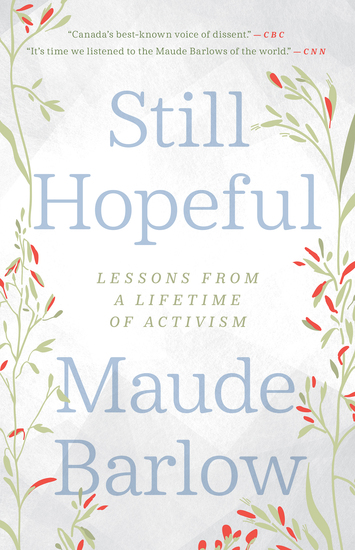
  • Still Hopeful - Lessons from a Lifetime of Activism - cover

    Still Hopeful - Lessons from a...

    Maude Barlow

    • 0
    • 0
    • 0
    “Canada’s best-known voice of dissent.” — CBC
    		 
    “It’s time we listened to the Maude Barlows of the world.” — CNN
    		 
    In this timely book, Barlow counters the prevailing atmosphere of pessimism that surrounds us and offers lessons of hope that she has learned from a lifetime of activism. She has been a linchpin in three major movements in her life: second-wave feminism, the battle against free trade and globalization, and the global fight for water justice. From each of these she draws her lessons of hope, emphasizing that effective activism is not really about the goal, rather it is about building a movement and finding like-minded people to carry the load with you. Barlow knows firsthand how hard fighting for change can be. But she also knows that change does happen and that hope is the essential ingredient.
    Voir livre
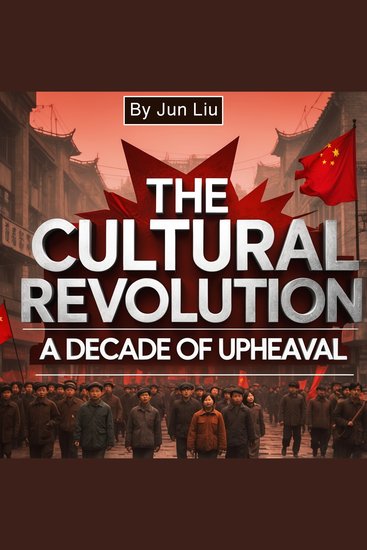
  • The Cultural Revolution - A Decade of Upheaval - cover

    The Cultural Revolution - A...

    Jun Liu

    • 0
    • 0
    • 0
    The Cultural Revolution, which lasted from 1966 to 1976, was a decade of intense political and social upheaval in China. It was initiated by Mao Zedong, the Chairman of the Chinese Communist Party, as a means to reassert his ideological dominance and eliminate perceived threats within the party and society. The roots of the Cultural Revolution can be traced back to the aftermath of the Great Leap Forward, growing political divisions, and Mao’s desire to reshape China’s ideological landscape. 
    One of the key factors that led to the Cultural Revolution was Mao’s declining influence following the disastrous Great Leap Forward (1958–1962). This economic and social campaign, aimed at transforming China into a communist utopia through rapid industrialization and collectivization, resulted in widespread famine and the deaths of millions. The failures of the Great Leap Forward weakened Mao’s credibility, and he was forced to step back from day-to-day governance, allowing more pragmatic leaders such as Liu Shaoqi and Deng Xiaoping to implement economic reforms. These leaders promoted policies that prioritized economic stability over radical communist ideology, which Mao saw as a betrayal of the revolution’s goals. 
    In response to his diminished authority, Mao sought to reassert control by launching an ideological campaign against those he deemed “capitalist roaders” within the party. By the early 1960s, internal power struggles intensified as Mao and his radical supporters, including Lin Biao and Jiang Qing, clashed with moderate leaders advocating for a more pragmatic approach to governance. Mao viewed the growing influence of his rivals as a direct threat to his vision for China. To counter their policies, he began promoting the idea of a new revolutionary movement that would purify Chinese society and eliminate counterrevolutionary elements.
    Voir livre
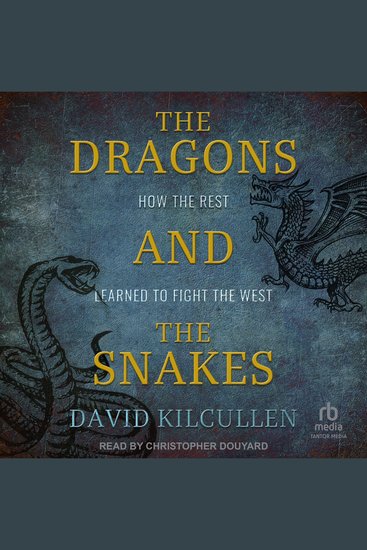
  • The Dragons and the Snakes - How the Rest Learned to Fight the West - cover

    The Dragons and the Snakes - How...

    David Kilcullen

    • 0
    • 0
    • 0
    Just a few years ago, people spoke of the US as a hyperpower—a titan stalking the world stage with more relative power than any empire in history. Yet as early as 1993, CIA director James Woolsey pointed out that although Western powers had "slain a large dragon" by defeating the Soviet Union in the Cold War, they now faced a "variety of poisonous snakes." 


    In The Dragons and the Snakes, the eminent soldier-scholar David Kilcullen asks how, and what, opponents of the West have learned during the last quarter-century of conflict. Applying a combination of evolutionary theory and detailed field observation, he explains what happened to the "snakes"-non-state threats including terrorists and guerrillas-and the "dragons"-state-based competitors such as Russia and China. He explores how enemies learn under conditions of conflict, and examines how Western dominance over a very particular form of warfare since the Cold War has created a fitness landscape that forces adversaries to adapt in ways that present serious new challenges to America and its allies. Within the world's contemporary conflict zones, Kilcullen argues, state and non-state threats have increasingly come to resemble each other, with states adopting non-state techniques and non-state actors now able to access levels of precision and lethal weapon systems once only available to governments.
    Voir livre
  • Hate and Reconciliation - Approaches to Fostering Relationships between People and Peace - cover

    Hate and Reconciliation -...

    Guido Cuyvers

    • 0
    • 0
    • 0
    Hatred is human and current. It is an intrinsic part of what can happen between people. Personal experiences can lead people to hate someone. In society and even on a global level, hatred is again and again the motor of misunderstanding and often also of violence between people. Sometimes hate smolders almost unconsciously; at other times he is furious and serves as a flag for serious violence. 


    Hatred has many faces and seems omnipresent, that much is clear. The term "Erida complex," after the Greek goddess of hate, symbolizes the common and deeply rooted nature of hatred. After examining the nature of hate, this book focuses a wide-angle lens on its many faces, in individuals and groups as well as peoples. Facing the negativity of hatred, this book presents constructive approaches to fostering relationships between people and peace.
    Voir livre