Begleiten Sie uns auf eine literarische Weltreise!
Buch zum Bücherregal hinzufügen
Grey
Einen neuen Kommentar schreiben Default profile 50px
Grey
Jetzt das ganze Buch im Abo oder die ersten Seiten gratis lesen!
All characters reduced
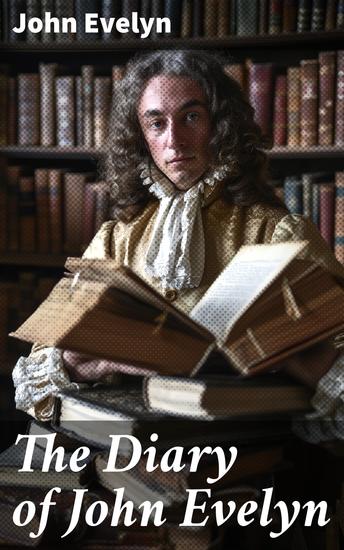
The Diary of John Evelyn - Reflections of a Renaissance Man: Insights from a 17th Century English Diarist - cover

The Diary of John Evelyn - Reflections of a Renaissance Man: Insights from a 17th Century English Diarist

John Evelyn

Verlag: Good Press

  • 0
  • 0
  • 0

Beschreibung

In "The Diary of John Evelyn," the renowned 17th-century English writer delivers an intimate and unvarnished account of his life, capturing the intricacies of social, political, and cultural shifts during the Restoration period. Written in a reflective and eloquent literary style, the diary juxtaposes personal anecdotes with broader historical events, offering a rare glimpse into the sentiments of a gentleman-scholar navigating the tumultuous landscape of his time. Evelyn's meticulous documentation of his observations'Äîranging from nature to art, politics, and scientific inquiry'Äîpositions the work as a vital primary source for understanding the era's intellectual and cultural milieu. John Evelyn (1620-1706), a prominent figure in the Royal Society and a proto-environmentalist, was deeply influenced by the scientific advancements and prevailing artistic trends of his day. His background as a nobleman allowed him unique access to influential circles where he engaged in discussions on horticulture, architecture, and philosophy. This cross-pollination of interests is evident throughout his diary, which reveals not only the public endeavors of an accomplished man but also his private reflections and moral deliberations. For those interested in the interplay of personal experience and historical narrative, "The Diary of John Evelyn" serves as an indispensable text. It is highly recommended for readers seeking a comprehensive understanding of early modern Britain through the eyes of a perceptive and engaged mind. Evelyn's reflections provide a rich tapestry of thought, making this work not only informative but profoundly relatable.
Verfügbar seit: 21.12.2023.
Drucklänge: 733 Seiten.

Weitere Bücher, die Sie mögen werden

  • Murder in Battle Creek - The Mysterious Death of Daisy Zick - cover

    Murder in Battle Creek - The...

    Blaine L. Pardoe

    • 0
    • 0
    • 0
    Investigate the mysteries surrounding the horrifying murder of Battle Creek's Daisy Zick. A must-listen for fans of true crime and Michigan history enthusiasts. 


    On a bitterly cold morning in January 1963, Daisy Zick was brutally murdered in her Battle Creek home. No fewer than three witnesses caught a glimpse of the killer, yet today, it remains one of Michigan's most sensational unsolved crimes. 


    The act of pure savagery rocked not only the community but also the Kellogg Company, where she worked. Here, Blaine Pardoe artfully takes the listener into this true crime thriller. Utilizing long-sealed police files and interviews with the surviving investigators, the true story of the investigation can finally be told. 


    Who were the key suspects? What evidence does the police still have on this five-decades-old cold case? Just how close did this murder come to being solved? Is the killer still alive? These questions and more are masterfully brought to the forefront for true crime fans and armchair detectives.
    Zum Buch
  • High Times - The Extraordinary Life of a Joburg Dope Smuggler - cover

    High Times - The Extraordinary...

    Jeremy Gordin, Roy Isacowitz

    • 0
    • 0
    • 0
    High Times is the true story of Michael Medjuck, whose taste for weed, women and the good life led him from late-1960s Johannesburg to notoriety as one of the biggest hash and weed smugglers in North America.
    From his base in Vancouver, Michael built up a smuggling network that supplied dealers in scores of cities across Canada and the United States. The proceeds from smuggling afforded this former King David High School pupil a lifestyle of hedonistic excess – the finest wines, the most glamorous hookers, the best weed in the world.
    In 1991, Michael was nabbed by US federal agents while smuggling an enormous shipload of Afghani hash into the West Coast of Canada. Put on trial as the scheme's mastermind, Michael was convicted and sentenced to 24 years behind bars.
    His prison experiences, from dingy county lock-ups to brutal federal penitentiaries, are the stuff of legend. Eventually, a chance remark to his lawyer led to his early release and return to Canada.
    After barely a year of freedom, Michael was again arrested – this time in Spain for an ill-judged cocaine smuggling venture – and sentenced to an additional prison term of nine years.
    This is Michael's extraordinary story, as told to fellow South Africans Roy Isacowitz, author and journalist, and the late Jeremy Gordin, award-winning journalist, editor and author.
    Zum Buch
  • 3 Stories - Set Entirely on Trains - A trio of classic tales perfect for a commute walk or quiet night in - cover

    3 Stories - Set Entirely on...

    Virginia Woolf, Saki Saki, W G...

    • 0
    • 0
    • 0
    There is something about the number 3.    
     
    The Ancient Greeks believed 3 was the perfect number, and in China 3 has always been a lucky number, and they know a thing or two.   
     
    Most religions also have 3 this and 3 that and, of course, in these more modern times, three’s a crowd may be too many, except when it’s a ménage à trois.  It seems good things usually come in threes. 
     
    Whatever history and culture says WE think 3, a hat-trick of stories, is a great number to explore themes and literary avenues that classic authors were so adept at creating. 
     
    From their pens to your your ears.
    Zum Buch
  • The Legend of Sleepy Hollow - The iconic gothic tale of the headless horseman that is still widely known today despite being written over 200 years ago - cover

    The Legend of Sleepy Hollow -...

    Washington Irving

    • 0
    • 0
    • 0
    Washington Irving was born on 3rd April, 1783, the youngest of 11, in New York. 
      
    Irving found his real interests away from school in literature and the theatre.  An outbreak of yellow fever at 15 moved him away from Manhattan and into the surrounding countryside providing valuable settings for later works such as ‘The Legend of Sleepy Hollow’. 
     
    By 19 Irving was writing regularly to the New York Morning Chronicle, commenting on the theatrical and social scenes.  When his health began to fail, he was sent on the Grand Tour of Europe.  Bizarrely he ignored most of the great sights on offer to concentrate on developing his social and conversational powers.  His health, though, did improve.  
     
    In 1806, back in New York to study law, he scraped a pass at the bar and then founded with several others the literary magazine Salmagundi. Irving nicknamed the city ‘Gotham City’, a name still in use today.  Moderately successful, the magazine spread Irving’s reputation beyond New York. 
     
    In 1809 while mourning the death of his teenage fiancée Irving finished his first significant book, ‘A History of New-York from the Beginning of the World to the End of the Dutch Dynsasty, by Diedrich Knickerbocker’.  It satirised local history, local historians and politics.  It received great critical acclaim. 
     
    Unfortunately his family’s established trading company was now facing great upheavals and Irving was dispatched to England to try to sort it out.  After two years he could see no way out but bankruptcy.  This left him in England with no real employment prospects, and so he returned to writing.  
     
    He sent some short stories back to New York to be published as ‘The Sketch Book of Geoffrey Crayon, Gent’.  The first part included ‘Rip Van Winkle’ and was extremely successful.  The sixth part contained ‘The Legend of Sleepy Hollow’.  
     
    Beset by literary piracy, with no copyright law at the time, he set about publishing legitimate copies in England to outwit the bootleggers.  From now on Irving published concurrently in America and England in order to render piracy obsolete.  
     
    In August 1824, he published ‘Tales of a Traveller’, which included the famed ‘The Devil and Tom Walker’.  
     
    In 1826, the American Minister to Spain, invited him to Madrid where he could examine the many historical documents that he had access to.  Irving reveled in both the size of the libraries he was granted access to and their rich quality.  Historical works flowed from his pen further enhancing his reputation and fortune.   
     
    Following the completion of ‘Tales of the Alhambra’ in 1832, Irving returned to America after 17 years abroad. He was now a figurehead of American literature and dispensed advice to Edgar Allan Poe amongst others.  Irving also became an advocate for American copyright legislation.  
     
    A later appointment as Minister to Spain in 1842 left him disheartened at the antics of the various political factions he encountered.  It also afforded him no time to write as he had hoped.  
     
    On his return home he began an ‘Author’s Revised Edition’ of his works agreeing an unprecedented deal for 12 per cent of the retail profits.  
     
    Washington Irving died of a heart attack at his ‘Sunnyside’ home on the 28th November 1859 at the age of 76, a few months after completing his five volume George Washington biography, in whose honour he had been named.  
     
    ‘The Legend of Sleepy Hollow’ is a story almost everyone has encountered.  An enormous success at the time it is now an undeniable American Spooky classic.
    Zum Buch
  • Stokely Carmichael: The Life and Legacy of the Civil Rights Activist Who Led the Black Power Movement - cover

    Stokely Carmichael: The Life and...

    Editors Charles River

    • 0
    • 0
    • 0
    “Our grandfathers had to run, run, run. My generation's out of breath. We ain't running no more.” – Stokely Carmichael 
    In the late 1960s, Stokely Carmichael would become one of the most influential and controversial figures in America, founding and leading new organizations while being meticulously shadowed by the country’s national security apparatus, particularly J. Edgar Hoover’s FBI. The attention would ultimately compel him to move to Africa, where he changed his name to Kwame Ture and became one of the world’s most famous Pan-African leaders until his death in Guinea in 1998.  
    Since then, he has remained a subject of both praise and criticism, from contemporaries and historians alike. SNCC Chairman Phil Hutchings, despite being the one who pushed Carmichael out of the organization, aptly summed up the dichotomy: "Even though we kidded and called him 'Starmichael', he could sublimate his ego to get done what was needed to be done....He would say what he thought, and you could disagree with it but you wouldn't cease being a human being and someone with whom he wanted to be in relationship." 
    Zum Buch
  • My Broken Soldier - The untold story of life beyond the front line - cover

    My Broken Soldier - The untold...

    Karen Page

    • 0
    • 0
    • 0
    This is the story of one family’s resilience and ultimate triumph despite seemingly insurmountable odds. 
    My Broken Soldier takes the reader on a journey of life beyond the front line for those who serve and return home forever broken, and for the loved ones who walk the journey with them. 
    The book has been written for the unseen, the unacknowledged, the quiet sufferers of PTSD, anxiety, adjustment disorder, depression, substance abuse, blast trauma, bullet wounds, and all the other wounds no one sees. It has also been written for the families of soldiers who are either directly affected by their time spent at war or who never returned. Narrated by the author, Karen Page and interspersed with the perspective and reflections of her husband, soldier and former elite SAS candidate, Corporal Matthew John Page, My Broken Soldier transcends financial ruin, family politics, two wars and unspeakable loss. 
    Written with raw emotion and warts and all honesty, it depicts the struggle between a husband and wife fighting an invisible, ever-present ‘demon’ and a system that was meant to have their backs. Ultimately, this story is a vehicle to generate awareness about the injustices of an ironclad institution and to give a voice to those who love the broken or the ones who are no longer here to tell their stories.
    Zum Buch