Begleiten Sie uns auf eine literarische Weltreise!
Buch zum Bücherregal hinzufügen
Grey
Einen neuen Kommentar schreiben Default profile 50px
Grey
Jetzt das ganze Buch im Abo oder die ersten Seiten gratis lesen!
All characters reduced
The Youth of Jefferson - Or a Chronicle of College Scrapes at Williamsburg in Virginia AD 1764 - cover

The Youth of Jefferson - Or a Chronicle of College Scrapes at Williamsburg in Virginia AD 1764

John Esten Cooke

Verlag: DigiCat

  • 0
  • 0
  • 0

Beschreibung

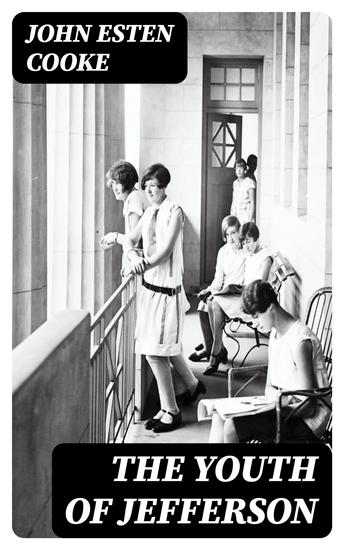
In 'The Youth of Jefferson,' John Esten Cooke explores the formative years of Thomas Jefferson, deftly blending historical narrative with rich character development. The book employs a vivid literary style that captures the atmosphere of 18th-century Virginia, while delving into Jefferson's early influences, education, and burgeoning thoughts on liberty and governance. Cooke's work is positioned within the broader context of antebellum literature, echoing the Romantic idealization of American history, and serves to illuminate the intellectual and moral foundations that shaped one of America's founding fathers. John Esten Cooke, a prominent figure in 19th-century Southern literature, was deeply influenced by his own Virginia roots and the complexities of the Civil War era. Cooke's affinity for history, combined with his experiences as a soldier and writer, instilled in him a passion for portraying noble Southern characters. His inclination to celebrate the American past and its giants like Jefferson is evident in this work, where he evocatively captures the spirit and culture of the time. 'The Youth of Jefferson' is highly recommended for readers interested in American history, literature, and the cultural context of the early Republic. Cooke's engaging narrative not only provides insights into Jefferson's character but also invites reflection on the values that continue to resonate in contemporary society.
Verfügbar seit: 16.09.2022.
Drucklänge: 143 Seiten.
Weitere Bücher, die Sie mögen werden

  • Greece Against Rome - The Fall of the Hellenistic Kingdoms 250–31 BC - cover

    Greece Against Rome - The Fall...

    Philip Matyszak

    • 0
    • 0
    • 0
    The acclaimed ancient world historian examines the centuries-long decline of Greek powers in the face of the growing Roman threat. 


    Towards the middle of the third century BC, the Hellenistic kingdoms were near their peak. In terms of population, economy, and military power, each was vastly superior to Rome, not to mention in fields such as medicine, architecture, science, philosophy, and literature. But over the next two and a half centuries, Rome would eventually conquer these kingdoms while adopting so much of Hellenistic culture that the resultant hybrid is known as "Graeco-Roman." 


    In Greece Against Rome, Philip Matyszak relates this epic tale from the Hellenistic perspective. At first, the Romans appear to be little more than another small state in the barbarian west as the Hellenistic powers are consumed by war amongst themselves. It is a time of assassinations, double crosses, dynastic incest, and warfare. By the time they turn their attention to Rome, it is already too late.
    Zum Buch
  • uTOpia - Towards a New Toronto - cover

    uTOpia - Towards a New Toronto

    Alana Wilcox, Jason McBride

    • 0
    • 0
    • 0
    Since the election of Mayor David Miller in November 2003, Toronto has experienced a wave of civic pride and enthusiasm not felt in decades. At long last, Torontonians see their city as a place of possibility and potential. Visions of a truly workable, liveable and world-class city are once again dancing in citizens’ heads. In the past two years, this spirit has, directly or indirectly, manifested itself in multifarious forms: in writer Sheila Heti’s sui generis lecture series, Trampoline Hall; in the transformation of derelict hotels such as the Drake and the Gladstone into cultural hotspots; in renewed interest in waterfront revitalization and public transportation; in exciting, controversial architectural developments such as the OCAD building, the expansion of the ROM and the AGO; in the [murmur] project, which catalogues stories about Toronto neighbourhoods and broadcasts them to people’s cell phones; in the explosion of the local independent music scene.
       
    uTOpia aims to capture and chronicle that spirit, collecting writing by many of the people inspired by and involved in these projects. Featuring passionate, visionary essays by thirty-four different journalists, artists, thinkers, architects and activists, uTOpia is a compendium of ideas, opinions and strategies. The anthology explores plans to redevelop the Island airport into a Ward’s Island-style community; how the Zeidlerfamily is energizing artist-run centres; what a car-free Kensington Market might mean; the necessity and beauty of laneway housing; the way past efforts to combat devastating developments like the Spadina Expressway have shaped current activism; what a utopian Toronto might look like mapped out; and much, much more. Playful, erudite and accessible, uTOpia writes Toronto as it is shared and created by the people who live here. Though it is by no means a complete picture of what is happening in the city right now, it will hopefully show that what was once just a T-shirt slogan – I Heart T.O. – is now genuine, heartfelt sentiment.
       
    Contributors include Howard Akler, Andrew Alfred-Duggan, Jacob Allderdice, Bert Archer, James Bow, Nicole Cohen, Jonny Dovercourt, Dale Duncan, Philip Evans, Mark Fram, Misha Glouberman, Chris Hardwicke, Sheila Heti, Alfred Holden, Luis Jacob, Lorraine Johnson, Edward Keenan, Mark Kingwell, John Lorinc, Sally McKay, Heather McLean, Dave Meslin, Shawn Micallef, Derek Murr, Ninjalicious, Darren O’Donnell, Planning Action, Barbara Rahder, Dylan Reid, Erik Rutherford, Jeffrey Stinson, Deanne Taylor, Conan Tobias, Stéphanie Verge, Adam Vaughan and Marlena Zuber.
    Zum Buch
  • The History of the Oberlin-Wellington Rescue - cover

    The History of the...

    Herbert Addison Burns

    • 0
    • 0
    • 0
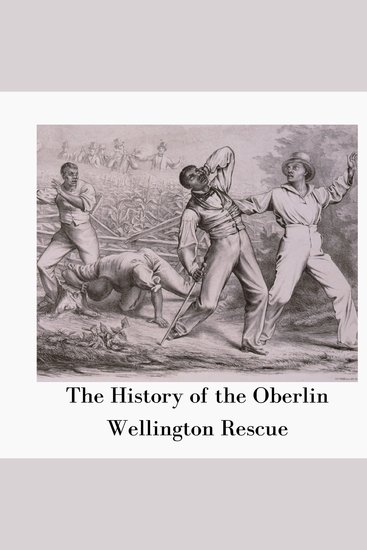
    This audio book is based on the famous and successful slave rescue mission," Titled the Oberlin-Wellington Rescue. " A true historical account of how a fugitive slave named John was rescued from slave catchers from Kentucky in Wellington Ohio in the mid-nineteenth century. Thirty -seven men were indicted and put on trial for rescuing John in violation of the Fugitive Slave Law of 1850. It is this trial which is the center of attention for this audiobook production. Multiple character voices duplicating the officers of the court places the listener in this courtroom drama. Legal ramifications of the indictment are also brought to light. Various flaws in Ohio's legal system aligned with racial injustice also takes the center stage. Never before has an historical account of this nature been presented to history buffs and all interested parties of Ohio's fascinating history.
    Zum Buch
  • The Survival Imperative - Upshifting to Conscious Evolution - cover

    The Survival Imperative -...

    Ervin Laszlo

    • 0
    • 0
    • 0
    A Guide to Returning Peace and Harmony to the Planet 


    With humanity facing its greatest series of simultaneous crises, Ervin Laszlo offers a scientifically based perspective on what is called for at this critical juncture of our existence: a phase of upshift to higher levels of order and coherence to keep us on our evolutionary path. This book lays out why this upshift is needed, what resources we possess to draw upon, and what the action steps are that will move us all toward this achievable vision of well-being and wholeness. With an inclusive list of conscious organizations already contributing to this vision, Laszlo's book is essential listening for completing the process of global transformation already underway.
    Zum Buch
  • George Eliot - A Very Short Introduction - cover

    George Eliot - A Very Short...

    Juliette Atkinson

    • 0
    • 0
    • 0
    George Eliot pushed the boundaries of fiction and of Victorian society. She was an extraordinary woman whose unconventional life meant that she was judged harshly by family, friends, and strangers. Eliot wanted to draw attention to the feelings and motivations of ordinary people, so that we might feel more generous towards each other. But human beings are complex, and to capture that complexity Eliot drew on an astonishing range of philosophical, psychological, and scientific ideas. She hoped her work might do good, yet she was clear-eyed about the limits of both human sympathy and the novel.In this Very Short Introduction, Juliette Atkinson explores the ideas feeding Eliot's fiction and looks at the literary techniques—such as narrative voice, genre, imagery, structure, and syntax—that she used to embody them. These shape her recurrent themes: the stifling nature of gossip, the hardships experienced by commonplace individuals, the duty of practicing fellow-feeling and the difficulty of doing so. Atkinson argues that George Eliot was a social outcast who became a sage, through the creation of some of the most influential novels ever written in English.
    Zum Buch
  • Slaughter in Ukraine: 1941 Battle for Kyiv and Campaign to Capture Moscow - cover

    Slaughter in Ukraine: 1941...

    Daniel Wrinn

    • 0
    • 0
    • 0
    " Putin is making the same mistakes that doomed Hitler when he invaded the Soviet Union." – Reviewer 
    A Gripping and Riveting Short History of Operation Barbarossa 
    In just four weeks in the summer of 1941, the German Wehrmacht wrought unprecedented destruction on four Soviet armies. They conquered central Ukraine, killing or capturing three-quarters of a million men. 
    This is an informative and insightful military history of the Battles of Kyiv and Leningrad as well as Hitler's march on Moscow. This was one of the largest and most decisive battles of World War II and, for Hitler and Stalin, a battle of crucial importance. Daniel Wrinn charts the battle's dramatic course and aftermath, uncovering the irreplaceable losses suffered by Germany's "panzer groups" despite their battlefield gains, and the implications of these losses for the German war effort.
    Zum Buch