Join us on a literary world trip!
Add this book to bookshelf
Grey
Write a new comment Default profile 50px
Grey
Subscribe to read the full book or read the first pages for free!
All characters reduced
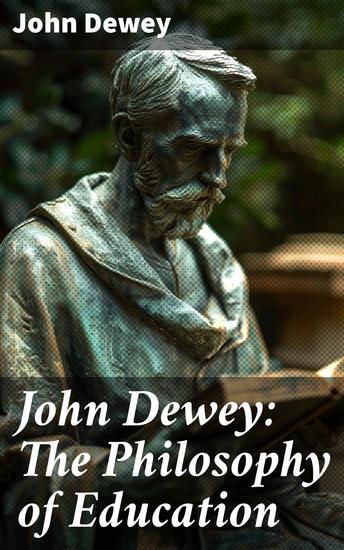
John Dewey: The Philosophy of Education - Democracy & Education in USA Moral Principles in Education Health and Sex in Higher Education The Child and the Curriculum - cover

John Dewey: The Philosophy of Education - Democracy & Education in USA Moral Principles in Education Health and Sex in Higher Education The Child and the Curriculum

John Dewey

Publisher: Good Press

  • 0
  • 0
  • 0

Summary

In "John Dewey: The Philosophy of Education," celebrated pragmatist philosopher John Dewey presents a profound exploration of education as a fundamental aspect of human experience and democracy. Employing a clear and didactic literary style, Dewey intertwines theory and practice, advocating for experiential learning as a way to foster critical thinking and social responsibility. The book delves into the historical context of early 20th-century educational reforms, highlighting Dewey's innovative ideas that challenge traditional pedagogical methods and emphasize the importance of a student-centered approach in nurturing informed and engaged citizens. Dewey, who lived through a period of significant societal change, was deeply influenced by diverse fields such as psychology, sociology, and philosophy, which shaped his views on education. His experiences as a teacher and his observations of the classroom dynamics informed his pioneering theories that sought to democratize education, paving the way for a more interactive and adaptive learning environment. Dewey's commitment to improving educational practices is evident in his advocacy for an experimental and progressive educational philosophy. This essential text is a must-read for educators, philosophers, and anyone interested in the interplay between education and democratic society. Dewey's insights remain relevant, inviting readers to reconsider the purpose of education in cultivating not only knowledge but also the skills and values necessary for active, thoughtful participation in civic life.
Available since: 12/04/2023.
Print length: 764 pages.

Other books that might interest you

  • The Unification of Germany - The History of the Merge of Germany with Prussia - cover

    The Unification of Germany - The...

    Kelly Mass

    • 0
    • 0
    • 0
    The Unification of Germany had a significant impact on the whole country, the empire, and the decades after that. It was the inauguration for Germany into the 20th century, and the dreaded World War I and World War II that were partially consequences of that unification. 
    On January 18th, 1871, in the Palace of Versailles in France, Germany was lawfully merged into the German Empire, a Prussia-dominated country state with federal components. Throughout the Franco-Prussian War, princes of German countries assembled there to declare King Wilhelm I of Prussia Emperor of the German Empire. 
    The Treaty of Verdun in 843 developed a confederated kingdom of German princedoms that had existed for over 1,000 years. Even so, till 1800, there was no development of a German country identity, owing to the independent nature of baronial states; most occupants of the Holy Roman Empire, beyond those straight governed by the emperor, determined themselves mainly with their prince, instead of with the Empire as a whole. Kleinstaaterei, or "small-statery," happened called a result of this practice. Improvements in transport and interactions brought these areas closer together by the nineteenth century. 
    Today, you can learn more about what made this unification so special, and how it led to other events in history.
    Show book
  • Fitness for Mental Health - Exercise for Stress Relief and Well-Being - cover

    Fitness for Mental Health -...

    Zane Ryder

    • 0
    • 0
    • 0
    Mental health is just as important as physical health, yet it is often overlooked when discussing overall well-being. As the world becomes more fast-paced and demanding, people are increasingly experiencing stress, anxiety, and depression. While therapy and medication are common approaches to managing mental health, an often overlooked yet highly effective method is exercise. Physical activity has been proven to be a powerful tool in improving mental health, relieving stress, and enhancing overall well-being. 
    The connection between physical and mental health has been a topic of research for decades, and studies consistently show that regular exercise positively impacts the brain. When we engage in physical activity, our bodies release endorphins, often referred to as "feel-good" hormones, which help to improve our mood and reduce feelings of anxiety and depression. Exercise has also been shown to reduce cortisol levels, a hormone associated with stress. The combination of these effects makes exercise an excellent natural remedy for mental health struggles. 
    Incorporating exercise into a daily routine provides numerous benefits beyond the body. It not only strengthens muscles and improves cardiovascular health, but it also helps with mental clarity, boosts self-esteem, and enhances cognitive function. Whether it's a brisk walk, a yoga session, or a high-intensity workout, each form of exercise offers unique benefits that contribute to mental well-being.
    Show book
  • House of the Spirits by Isabel Allende The (Book Analysis) - Detailed Summary Analysis and Reading Guide - cover

    House of the Spirits by Isabel...

    Bright Summaries

    • 0
    • 0
    • 0
    Unlock the more straightforward side of The House of the Spirits with this concise and insightful summary and analysis!
    This engaging summary presents an analysis of The House of the Spirits by Isabel Allende, a sweeping narrative which chronicles the lives of three generations of the Trueba-del Valle family. As the members of this family grow older, fall in love, develop their own political beliefs and come into conflict with each other, their story provides a constant echo of the rise and fall of the ideologies, traditions and systems that shaped Latin America itself. Isabel Allende is a Chilean writer, and is one of the most popular Spanish-language authors in the world. The House of the Spirits was her debut novel, and its popularity with readers catapulted her to widespread fame when it was published in 1982. Allende was awarded the Chilean National Prize for Literature in 2010 in tribute to her long and varied literary career.
    Find out everything you need to know about The House of the Spirits in a fraction of the time!
    This in-depth and informative reading guide brings you:
    •A complete plot summary
    •Character studies
    •Key themes and symbols
    •Questions for further reflection
    Why choose BrightSummaries.com?
    Available in print and digital format, our publications are designed to accompany you on your reading journey. The clear and concise style makes for easy understanding, providing the perfect opportunity to improve your literary knowledge in no time.
    See the very best of literature in a whole new light with BrightSummaries.com!
    Show book
  • Clandestine Cabals - History's Most Cryptic Organizations - cover

    Clandestine Cabals - History's...

    John Harpoon

    • 0
    • 0
    • 0
    Throughout history, secret societies have captivated the human imagination, their names whispered in shadowy corners, their rituals shrouded in secrecy. These clandestine groups, often operating in the hidden recesses of society, have been associated with the most significant events in world history, from political upheavals to revolutions. Despite the efforts of many to uncover their mysteries, much of what we know about them remains speculative, fueling a fascination that spans generations. But what drives this intrigue? Is it the promise of power, knowledge, or the allure of forbidden truths that draws people to these societies? 
    Secret societies are as old as civilization itself. From the ancient mystery schools of Egypt and Greece to the modern-day shadow organizations influencing global events, these groups have often been at the forefront of societal change, albeit behind the scenes. They are typically defined by their closed membership, strict initiation rites, and exclusive access to knowledge or practices that the outside world is not privy to. This secrecy has often been a point of both fascination and suspicion. Some view these societies as forces of good, safeguarding wisdom or advancing human progress, while others see them as dark, insidious entities working behind closed doors to manipulate world events for their own gain. 
    The historical roots of these secret organizations stretch back to times when religious, political, or philosophical beliefs were closely guarded. Ancient societies, such as the Egyptians, Greeks, and Romans, established mystery schools where knowledge was passed down only to those deemed worthy. These teachings often involved esoteric wisdom, such as alchemy, astrology, or sacred geometry, and were believed to hold the key to unlocking hidden truths about the universe and humanity's place within it.
    Show book
  • Plantagenets The: A Captivating Guide to the Rise and Fall of the House of Plantagenet - cover

    Plantagenets The: A Captivating...

    Captivating History

    • 0
    • 0
    • 0
    The Plantagenets: A Dynasty Built on Power and Betrayal 
    Do you want to dive into the gripping story of a royal family that changed a whole country? The Plantagenets ruled England with strength and cunning, and their story is filled with drama, battles, and family fights. If you love stories of kings, queens, and the fight for power, keep reading! 
    What You’ll Discover:How It All Began: Learn how the Plantagenets started as a small family and became rulers of England. What challenges did they face to gain power?The Lives of Kings and Queens: Meet rulers like King John, who was such a weak ruler that his people forced him to agree to the Magna Carta, and Richard the Lionheart, who fought bravely but met a tragic end. Also, discover the queens who had just as much power as the kings.Legendary Battles: Explore the famous Wars of the Roses, where family members fought against each other for the throne. See how these battles were about more than just winning—they were about survival.Secrets and Scandals: The Plantagenets didn’t just fight on the battlefield; they also had to deal with backstabbing and secret plots in their own courts. Find out how these hidden betrayals changed the course of history.Lasting Impact: The Plantagenets helped create important laws and systems that we still use today. They weren’t just fighters; they were builders of the future.The Fall of a Dynasty: What caused the end of this powerful family’s rule? See how the Plantagenets went from ruling England to losing it all. 
    Don’t miss out on this thrilling adventure through time. Scroll up and click the “add to cart” button to start your journey into the world of the Plantagenets!
    Show book
  • Postmortem - What Survives the John Wayne Gacy Murders - cover

    Postmortem - What Survives the...

    Courtney Lund O'Neil

    • 0
    • 0
    • 0
    On a December night in 1978, Courtney Lund O'Neil's mother, teenaged Kim Byers, saw her friend Rob Piest alive for the last time. At the end of his shift at the pharmacy where they both worked, fifteen-year-old Rob went outside to speak to a contractor named John Wayne Gacy about a possible job. That night Rob became Gacy's final victim; his body was later found in the Des Plaines River. Kim's testimony, along with a receipt belonging to her found in Gacy's house, proving that Rob had been there, would be pivotal in convicting the serial killer who assaulted and killed over thirty young men and boys. 


    Though she grew up far from Des Plaines, Courtney has lived in the shadow of that nightmare, keenly aware of its impact on her mother. In search of deeper understanding and closure, Courtney and Kim travel back to Illinois. Postmortem transforms their personal journey into a powerful exploration of the ever-widening ripples generated by Gacy's crimes. From the 1970s to the present day, his shadow extends beyond the victims' families and friends—it encompasses the Des Plaines neighborhood forever marked by his horrific murders, generations of the victims' families and friends, those who helped arrest and convict him, and many others. Postmortem is a complex story of loss and violence, grief and guilt, and the legacy that remains long after a killer is caught.
    Show book