
Rejoignez-nous pour un voyage dans le monde des livres!
Ajouter ce livre à l'électronique
Grey
Ecrivez un nouveau commentaire Default profile 50px
Grey
Abonnez-vous pour lire le livre complet ou lisez les premières pages gratuitement!
All characters reduced
The Citizen Soldier - Memoirs - cover

The Citizen Soldier - Memoirs

John Beatty

Maison d'édition: DigiCat

  • 0
  • 0
  • 0

Synopsis

John Beatty's "The Citizen Soldier" emerges as a pivotal examination of the complexities entailed in the identity of the ordinary individual thrust into the tumult of war. Richly crafted with a narrative style that weaves together historical accounts and personal reflections, Beatty utilizes a blend of vivid imagery and compelling prose to explore themes of patriotism, sacrifice, and the blurred lines between duty and morality. Set against the backdrop of significant conflicts, the book opens a dialogue on what it truly means to serve one's country, challenging traditional notions of heroism and highlighting the emotional and psychological toll on the soldier. John Beatty, a distinguished historian and veteran, draws from his profound understanding of military history combined with his personal experiences to craft this poignant narrative. His extensive background in both academic and practical realms provides him with a unique vantage point from which to analyze the citizen soldier's experience in a manner that resonates deeply. Beatty's own journey through the ranks instills an authentic voice that permeates the text, making it not just a study of war, but a reflection of the human spirit under duress. For readers seeking a thoughtful and nuanced portrayal of military life, "The Citizen Soldier" is an essential addition to their collection. Beatty's work transcends the confines of traditional war literature, offering insights not only into the historical experience of soldiers but also into contemporary discussions about identity and belonging. This book is a compelling read for historians, veterans, and anyone interested in the complexities of military duty in a modern context.
Disponible depuis: 11/10/2022.
Longueur d'impression: 271 pages.
D'autres livres qui pourraient vous intéresser

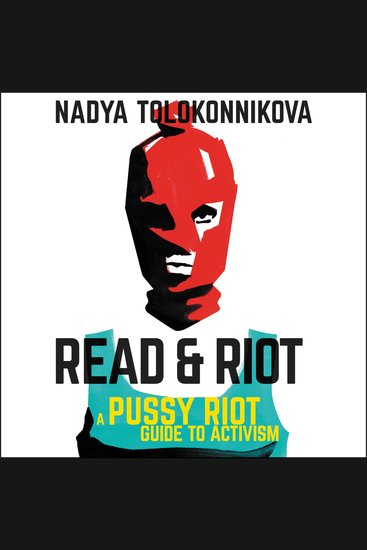
  • Read & Riot - A Pussy Riot Guide to Activism - cover

    Read & Riot - A Pussy Riot Guide...

    Anonyme

    • 0
    • 0
    • 0
    From artist, activist, and Pussy Riot founder Nadya Tolokonnikova, a guerilla guide to radical protest and joyful political resistance. 
    The face of modern protest is wearing a brightly colored ski mask.  
    Nadya Tolokonnikova, founding member of the Russian activist group Pussy Riot, is a creative activist, professional protestor, brazen feminist, shocking visual artist, and force to be reckoned with. Her spontaneous, explosive approach to political action has involved jumping over barbed wire, kissing police officers, giving guerilla performances in crowded subway cars, and going on a hunger strike to protest the abuse of prisoners. She’s been horse-whipped by police in Sochi, temporarily blinded when officers threw green paint in her eyes, and monitored by the Russian government. But what made Nadya an activist icon overnight happened on February 21, 2012, when she was arrested for performing an anti-Putin protest song in a Moscow church.  
    She was sent to a Russian prison for 18 months and emerged as an international symbol of radical resistance, as calls to “Free Pussy Riot” resounded around the world. With her emblematic ski mask, black lipstick, and unwavering bravery, Nadya has become an emissary of hope and optimism despite overwhelming and ugly political corruption.  
    Read & Riot is structured around Nadya’s ten rules for revolution (Be a pirate! Make your government shit its pants! Take back the joy!) and illustrated throughout with stunning examples from her extraordinary life and the philosophies of other revolutionary rebels throughout history. Rooted in action and going beyond the typical “call your senator” guidelines, Read & Riot gives us a refreshing model for civil disobedience, and encourages our right to question every status quo and make political action exciting—even joyful.
    Voir livre
  • A Programme of Absolute Disorder - Decolonizing the Museum - cover

    A Programme of Absolute Disorder...

    Françoise Vergès, Paul Gilroy

    • 0
    • 0
    • 0
    "A complete overhaul of the Western museum tradition" —Publishers Weekly 


    "An impressive critique of the universal museum as complicit in the damages inflicted by colonial power" —Isaac Julien, artist and filmmaker 


    "Should fascinate anyone interested in social justice, post-colonialism and the arts" —Euronews 


    "Powerful and so relevant" —Diacritik 


    The Western museum is a battleground—a terrain of ideological, political, and economic contestation. Almost everyone today wants to rethink the museum, but how many have the audacity to question the idea of the universal museum itself? 


    In A Programme of Absolute Disorder, Françoise Vergès puts the museum in its place. Exploring the Louvre's history, she uncovers the context in which the universal museum emerged: as a product of colonialism, and of Europe's self-appointed claim to be the guardian of global heritage. 


    Vergès outlines a radical horizon: to truly decolonize the museum is to implement a "programme of absolute disorder", inventing other ways of apprehending the human and non-human world that nourish collective creativity and bring justice and dignity to the dispossessed.
    Voir livre
  • The Ethiopian Great Famine of 2000 - A Modern Humanitarian Crisis - cover

    The Ethiopian Great Famine of...

    Sarah Willards

    • 0
    • 0
    • 0
    The Ethiopian Great Famine of 2000 was not an isolated event, but rather the culmination of a complex and interconnected set of factors rooted in the country's historical, environmental, and political landscape. To understand the origins of this crisis, it is essential to look back at Ethiopia’s long history of food insecurity and vulnerability to famine. While droughts have long been a natural part of Ethiopia’s climate cycles, the frequency and impact of famine have often been magnified by human elements, particularly governance and socio-economic structures. 
    In the years leading up to 2000, Ethiopia experienced several severe droughts, but the early signs of the looming crisis were evident by the late 1990s. Climatic shifts, including the failure of critical rainy seasons, devastated crop yields and dried up grazing lands, particularly in the country's eastern and southern regions. For a population heavily dependent on subsistence agriculture, these environmental changes meant immediate food shortages and a rapid decline in household resilience. What might have remained a regional hardship quickly evolved into a nationwide emergency due to the lack of sufficient preventative action. 
    Government response in the early stages was slow and limited by bureaucratic challenges and political distractions, including the aftermath of the Ethiopia-Eritrea war that ended in 2000. Resources were stretched thin, and infrastructure remained underdeveloped, particularly in rural areas where the famine was most severe. Early warning systems existed but were either underutilized or their signals ignored, contributing to the delayed mobilization of aid. The country’s centralization of power also complicated coordination with local authorities, which further hindered rapid intervention efforts.
    Voir livre
  • Vedic Philosophy of the Kali Yuga - Through the Lens of Gnostic Wisdom - cover

    Vedic Philosophy of the Kali...

    HENRY ROMANO

    • 0
    • 0
    • 0
    According to Vedic philosophy, there are four eras in every world cycle. They represent a gradual decline from enlightenment (Satya Yuga) to chaos and ignorance (Kali Yuga) before it starts again. Each of these eras lasts roughly 2160 years. 
    You're probably familiar with the four ages of Hindu philosophy: Satya Yuga, Treta Yuga, Dwapara Yuga, and Kali Yuga. The golden age is when pure knowledge is widespread, and people live in harmony. The dark age is when everything goes wrong—the World falls into chaos, and humanity descends into ignorance. But what happens next? 
    What is the meaning of "the end of the world"?
    Voir livre
  • Secrets & Spires - cover

    Secrets & Spires

    Dominic N. Ashen

    • 0
    • 0
    • 0
    Can they make it to the top before it all comes crashing down? 
    Khazak has been feeling a little lost lately. By the age of thirty, he'd become the youngest Ranger Captain in his city's history. He thought he had the rest of his life figured out until he was betrayed by people he trusted and forced to resign. The one bright spot is David, his human lover and former captive (though "former" doesn't always apply in the bedroom). After coming so close to losing him, Khazak didn't think twice about leaving everything behind to follow after him. Things are still new, but they have all the time in the world for David to grow comfortable with their relationship. 
    David's having a rough time himself. After miraculously surviving a deadly attack, he's left looking for answers and seeking revenge on those responsible. His search brings him to the city of Pákannon, and he's not alone: not only is his entire team behind him—he also has Khazak, the orc who loves him and once owned him (and technically, still does). Just as he's getting used to the idea of people knowing they're together, someone from his past shows up and threatens all of his progress. Lucky for him, a side-quest to a mysterious city in the mountains should be exactly the distraction he needs. It's not like anything bad or dangerous could happen, right? 
    This is a book filled with action, comedy, tent sex, giant snakes, and ghost stories! Read the next chapter of Khazak & David's story and join them as they explore more of the magical world they inhabit. Readers of gay/male-on-male romances that feature kinky power-exchange relationships, BDSM, and Dom/sub elements: this book is for you! 
    Custom Fields
    Voir livre
  • Second Inaugural Address - cover

    Second Inaugural Address

    Ronald Reagan

    • 0
    • 0
    • 0
    Because of extreme cold weather, Chief Justice Warren Burger administered the official oath of office in the White House on January 20, 1985. A public administration of the oath of office and the inaugural address were delayed until January 21, 1985, in the Capitol Rotunda.  
    On the 50th inauguration since George Washington’s, Reagan marvels at America’s growth and inventions, including journeying to the moon and back. “There are no limits to growth and human progress when men and women are free to follow their dreams.” Our values of faith, family, work, and neighborhood were restored “when our economy was finally freed from government’s grip”.  
    America supports "individual liberty, self-government, and free enterprise throughout the world…” We deal best with great challenges when we come “together not as Democrats or Republicans, but as Americans united in a common cause.”  
    “We must never again abuse the trust of working men and women by sending their earnings on a futile chase after the spiraling demands of a bloated Federal Establishment.” “Freedom and incentives unleash the drive and entrepreneurial genius that are the core of human progress.” 
    “We must act now to protect future generations from government's desire to spend its citizens' money and tax them into servitude when the bills come due.” Though “our heritage is one of blood lines from every corner of the Earth, we are all Americans, pledged to carry on this last, best hope of man on Earth.” 
    Rather than relying on mutual assured destruction, we need “a security shield that will destroy nuclear missiles before they reach their target” and “render nuclear weapons obsolete.”  
    We are “one people under God, dedicated to the dream of freedom that He has placed in the human heart, called upon now to pass that dream on to a waiting and hopeful world.” 
    Audio recording courtesy of the Ronald Reagan Presidential Library. 
    AspenLeafMedia.com
    Voir livre