Begleiten Sie uns auf eine literarische Weltreise!
Buch zum Bücherregal hinzufügen
Grey
Einen neuen Kommentar schreiben Default profile 50px
Grey
Jetzt das ganze Buch im Abo oder die ersten Seiten gratis lesen!
All characters reduced
Soldiers - A Global History of the Fighting Man 1800–1945 - cover

Soldiers - A Global History of the Fighting Man 1800–1945

John A Haymond

Verlag: Stackpole Books

  • 0
  • 0
  • 0

Beschreibung

A global study of how soldiers lived, worked, and fought, and how many died, spanning from the Napoleonic War to World War II. No matter the war, no matter the army, no matter the nationality, common threads run through the experiences of men at war. Soldiers highlights these shared experiences across 150 years of warfare, from the Napoleonic Wars through World War II and everything in between, such as the Mexican and Crimean Wars, the American Civil War, the U.S. Indian Wars and Britain’s imperial bush wars, the Boxer Rebellion, the Boer War, the First World War, and more. Haymond explores the experiences that connect soldiers across time and space and draws heavily from firsthand accounts to craft a narrative with flesh-and-blood immediacy. Soldiers is entertaining and informative: history at its best. Praise for Soldiers“What makes Soldiers an interesting read is Haymond’s writing style and technique of comparing the common experiences of fighting men regardless of uniform and time served during the period.... Highly recommended for both scholars and students alike. It is a must for readers interested in the experience and psychology of being a warrior during this period.”—Military Review: The Professional Journal of the United States Army
Verfügbar seit: 14.06.2023.
Drucklänge: 558 Seiten.
Weitere Bücher, die Sie mögen werden

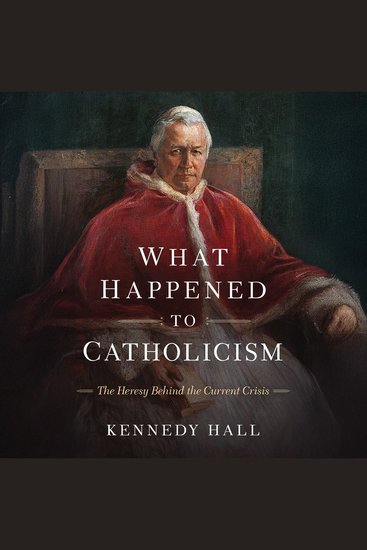
  • What Happened to Catholicism - The Heresy Behind the Current Crisis - cover

    What Happened to Catholicism -...

    Anonym

    • 0
    • 0
    • 0
    It is clear that since the Second Vatican Council, the Church has been plagued with terrible doctrinal and liturgical confusion that has contributed to the worst crisis in the Church since the Arian crisis, and perhaps the worst in history. This incisive book examines the often-overlooked wisdom of Pope St. Pius X on modernism, the synthesis of all heresies, found in his landmark encyclical Pascendi Dominici Gregis. 
    Although Pascendi is a momentous document that lays out virtually all the doctrinal errors we now find, it seems as if St. Pius X’s words have been ignored. Kennedy Hall translates the most salient points of this authoritative work into a readable format so that you can identify the grave problems facing us, problems that were illuminated more than one hundred years ago. 
    In this thought-provoking audiobook, you will find:Three ways to identify a heretic, according to moral theologiansThe Four Horsemen of the “Philosophical Apocalypse”How modernism is like a serial killer, insidiously destroying minds and heartsWhat the Church really teaches regarding scriptural interpretation and personal beliefsHow catechesis is harmed by contemporary thoughtWhy liturgy must center on God, not on man 
    Most Catholics with orthodox faith can sense the prevailing errors but perhaps cannot put into words what they know to be true by sound Catholic intuition. This book will help clarify important concerns, from the relationship between faith and science to the dangers of relativism and subjectivism, so that you can form yourself and your family to withstand this current crisis.
    Zum Buch
  • Rise and Fall of the Third Reich The: The History and Legacy of Nazi Germany under Adolf Hitler - cover

    Rise and Fall of the Third Reich...

    Editors Charles River

    • 0
    • 0
    • 0
    The early 1930s were a tumultuous period for German politics, even in comparison to the ongoing transition to the modern era that caused various forms of chaos throughout the rest of the world. In the United States, reliance on the outdated gold standard and an absurdly parsimonious monetary policy helped bring about the Great Depression. Meanwhile, the Empire of Japan began its ultimately fatal adventurism with the invasion of Manchuria, alienating the rest of the world with the atrocities it committed. Around the same time, Gandhi began his drive for the peaceful independence of India through nonviolent protests against the British. 
    	It was in Germany, however, that the strongest seeds of future tragedy were sown. The struggling Weimar Republic had become a breeding ground for extremist politics, including two opposed and powerful authoritarian entities: the right-wing National Socialists and the left-wing KPD Communist Party. As the 1930s dawned, these two totalitarian groups held one another in a temporary stalemate, enabling the fragile ghost of democracy to continue a largely illusory survival for a few more years.  
    	That stalemate was broken in dramatic fashion on a bitterly cold night in late February 1933, and it was the Nazis who emerged decisively as the victors. A single act of arson against the famous Reichstag building proved to be the catalyst that propelled Adolf Hitler to victory in the elections of March 1933, which set the German nation irrevocably on the path towards World War II. That war would plunge much of the planet into an existential battle that ultimately cost an estimated 60 million lives. 
    Zum Buch
  • Out of Time and Out of Place: A History of Anomalous Objects and Events that Seemingly Appeared in the Wrong Time - cover

    Out of Time and Out of Place: A...

    Editors Charles River

    • 0
    • 0
    • 0
    “Time travel offends our sense of cause and effect - but maybe the universe doesn't insist on cause and effect.” - Edward M. Lerner, physicist and author  
    	We take time for granted as it passes during every moment of our existence. Other things may change, but time remains constant and predictable. The past, the present, and the future exist within a harmonious, reliable, and never-changing system. Or at least that’s how it seems… 
    	It was Albert Einstein who, in 1905, first theorized that time might not be quite as straightforward as that. In one of the most influential papers on physics ever published[1], he proposed something called “time dilatation.” This suggested that time was neither fixed nor constant and that the passage of time was related to the relative speed of the observer. The closer an object approached the speed of light, the more notable this effect was. For example, if it were possible to build an interstellar craft capable of reaching speeds that approached the speed of light, the passengers on that ship might experience the passage of a single year during a voyage, but when they returned to Earth, they might find that dozens of years had passed on the planet. 
    	That was a truly revolutionary idea back in 1905, and it wasn’t until the 1960s that technology had advanced to the point that it was possible to conduct experiments to check Einstein’s theory by measurement. Those experiments and subsequent tests proved that he was entirely correct. Even in 1908, new theories proposed that time was the fourth dimension of spacetime and that it wasn’t fixed at all but governed by the same laws of relativity that applied to other aspects of physics. 
    	These were exciting developments, and current theories of physics have taken this idea even further, suggesting that both space and time are “emergent.”
    Zum Buch
  • Knowing god - cover

    Knowing god

    ANGELA AIRE OJEIKERE

    • 0
    • 0
    • 0
    Knowing God is insightful. It considers if all the diverse religions possess or disclose the true knowledge and revelation of God. It traces how God truly reveals himself and His ways to Man. Remarkably, it answers all those nagging questions about the meaning and purpose of life.
    Zum Buch
  • The Age of Insecurity - Coming Together as Things Fall Apart - cover

    The Age of Insecurity - Coming...

    Astra Taylor

    • 0
    • 0
    • 0
    Finalist, 2024 Writers' Trust Shaughnessy Cohen Prize for Political Writing 


    These days, everyone feels insecure. We are financially stressed and emotionally overwhelmed. The status quo isn't working for anyone, even those who appear to have it all. What is going on? 


    In this urgent cultural diagnosis, author and activist Astra Taylor exposes how seemingly disparate crises—rising inequality and declining mental health, the ecological emergency, and the threat of authoritarianism—originate from a social order built on insecurity. From home ownership and education to the wellness industry and policing, many of the institutions and systems that promise to make us more secure actually undermine us. 


    Mixing social critique, memoir, history, political analysis, and philosophy, this genre-bending book rethinks both insecurity and security from the ground up. By facing our existential insecurity and embracing our vulnerability, Taylor argues, we can begin to develop more caring, inclusive, and sustainable forms of security to help us better weather the challenges ahead. The Age of Insecurity will transform how you understand yourself and society—while illuminating a path toward meaningful change.
    Zum Buch
  • Forgiveness after Trauma - A Path to Find Healing and Empowerment - cover

    Forgiveness after Trauma - A...

    Susannah Griffith

    • 0
    • 0
    • 0
    Susannah Griffith wishes she had spent less time thinking about forgiveness. But as a Christian minister, a biblical scholar, and a survivor of abuse, she has learned a lot about it. 


    In Forgiveness after Trauma, Griffith explores what the Bible says—and doesn't say—about the biblical call to forgive. She helps listeners understand this command in ways that are healing and restorative, framing it within broader concerns around lament, anger, accountability, release and rebirth, and reconciliation. 


    The result is what Griffith calls "trauma-informed forgiveness," which takes seriously God's forgiveness of sinners while centering survivors of abuse and aiding their healing. This view also empowers those who have been harmed in other ways by abuses of power and justice in religious institutions. 


    Listeners will resonate with Griffith's astute biblical analysis and personal reflection, which point to God's love—a love that never includes abuse and strives for justice for the vulnerable.
    Zum Buch