Rejoignez-nous pour un voyage dans le monde des livres!
Ajouter ce livre à l'électronique
Grey
Ecrivez un nouveau commentaire Default profile 50px
Grey
Abonnez-vous pour lire le livre complet ou lisez les premières pages gratuitement!
All characters reduced
The Elective Affinities - cover

The Elective Affinities

Johann Wolfgang von Goethe

Traducteur James Anthony Froude, R. Dillon Boylan

Maison d'édition: DigiCat

  • 0
  • 0
  • 0

Synopsis

In "The Elective Affinities," Johann Wolfgang von Goethe explores the complexities of human relationships through a rich tapestry of metaphor and philosophical inquiry. Set within a narrative framework that intertwines science and emotion, the novel presents a compelling analogy between chemical reactions and romantic entanglements. Goethe's prose, marked by its lyrical quality and intricate character development, delves into themes of love, duty, and the inexorable pull of desire, reflecting the turbulent social milieu of early 19th-century Europe, including burgeoning Romantic ideals and the burgeoning understanding of nature as an intertwining web of connections. Goethe, a preeminent figure of German literature and a key proponent of the Sturm und Drang movement, drew upon his varied experiences in art, science, and philosophy to inform his writing. His immersion in Enlightenment ideas and his personal encounters with love and loss deeply influenced the narrative of "The Elective Affinities," making it not only a story of individual tribulations but also an exploration of societal norms and the natural world. This novel is highly recommended for readers seeking a profound examination of the intricate plays of attraction and social obligation. Goethe's masterful blend of artistry and intellect invites both literary scholars and casual readers alike to ponder the nature of human connections, affirming its timeless relevance and depth.
Disponible depuis: 28/12/2023.
Longueur d'impression: 263 pages.
D'autres livres qui pourraient vous intéresser

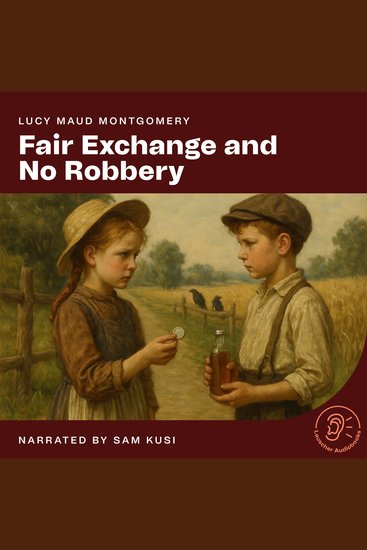
  • Fair Exchange and No Robbery - cover

    Fair Exchange and No Robbery

    Lucy Maud Montgomery

    • 0
    • 0
    • 0
    Lucy Maud Montgomery (November 30, 1874 – April 24, 1942), published as L. M. Montgomery, was a Canadian author best known for a series of novels beginning in 1908 with Anne of Green Gables. The book was an immediate success. The title character, orphan Anne Shirley, made Montgomery famous in her lifetime and gave her an international following.
    Fair Exchange and No Robbery: Katherine Rangely was packing up. Her chum and roommate, Edith Wilmer, was sitting on the bed watching her in that calm disinterested fashion peculiarly maddening to a bewildered packer.
    Voir livre
  • Adventures of Bindle - cover

    Adventures of Bindle

    Herbert George Jenkins

    • 0
    • 0
    • 0
    The Adventures of Bindle is a delightful collection of humorous stories written by Herbert Jenkins. The central character, Mr. Joseph Bindle, first appeared in a novel in 1916 and went on to feature in several sequels. In the preface to the books, T. P. O'Connor described Bindle as "the greatest Cockney that has come into being through the medium of literature since Dickens wrote Pickwick Papers." These stories revolve around the comedic drama of life at work, at home, and all the adventures that unfold along the way.
    Voir livre
  • Anna's Love Letters - cover

    Anna's Love Letters

    Lucy Maud Montgomery

    • 0
    • 0
    • 0
    Lucy Maud Montgomery (November 30, 1874 – April 24, 1942), published as L. M. Montgomery, was a Canadian author best known for a series of novels beginning in 1908 with Anne of Green Gables. The book was an immediate success. The title character, orphan Anne Shirley, made Montgomery famous in her lifetime and gave her an international following.
    Anna's Love Letters:"Are you going to answer Gilbert's letter tonight, Anna?" asked Alma Williams, standing in the pantry doorway, tall, fair, and grey-eyed, with the sunset light coming down over the dark firs, through the window behind her, and making a primrose nimbus around her shapely head.
    Voir livre
  • The Curious Case of Benjamin Button - cover

    The Curious Case of Benjamin Button

    F Scott itzgerald

    • 0
    • 0
    • 0
    The Curious Case of Benjamin Button is a short story by American author F. Scott Fitzgerald, first published in 1922. It tells the story of a man who is born with the appearance and physical condition of an old man, and who ages in reverse throughout his life. The story explores themes such as identity, love, and mortality.
    Voir livre
  • The Girl Who Drove the Cows - cover

    The Girl Who Drove the Cows

    Lucy Maud Montgomery

    • 0
    • 0
    • 0
    Lucy Maud Montgomery (November 30, 1874 – April 24, 1942), published as L. M. Montgomery, was a Canadian author best known for a series of novels beginning in 1908 with Anne of Green Gables. The book was an immediate success. The title character, orphan Anne Shirley, made Montgomery famous in her lifetime and gave her an international following.
    The Girl Who Drove the Cows: "I wonder who that pleasant-looking girl who drives cows down the beech lane every morning and evening is," said Pauline Palmer, at the tea table of the country farmhouse where she and her aunt were spending the summer.
    Voir livre
  • Diary of a Lunatic - From their pens to your ears genius in every story - cover

    Diary of a Lunatic - From their...

    Leo Tolstoy

    • 0
    • 0
    • 0
    Leo Tolstoy was born in 1828 in the Russian province of Tula to a wealthy noble family. As a child, he had private tutors but he showed little interest in any formal education. When he went to the University of Kazan in 1843 to study oriental languages and law, he left without completing his courses.  Life now was relaxed and idle but with some writing also taking place.  Gambling debts forced an abrupt change of path and he joined the army to fight in the Crimean War.  He was commended for his bravery and promoted but was appalled at the brutality and loss of life.  He recorded these and other earlier experiences in his diaries which formed the basis of several of his works. 
    In 1852 ‘Childhood’ was published to immediate success and was followed by ‘Boyhood’ and ‘Youth’. 
    His experience in the army and the horrors he witnessed resulted in ‘The Cossacks’ in 1862 and the trilogy ‘Sevastopol Tales’. After the war he travelled around Europe, visiting London and Paris and meeting such luminaries as Victor Hugo and Charles Darwin.  
    It was now that Tolstoy began his masterpiece, ‘War and Peace’. Published in 1869 it was an epic work that changed literature. He quickly followed this with ‘Anna Karenina’.  
    These successes made Tolstoy rich and helped him accomplish many of his dreams but also brought problems as he grappled with his faith and the lot of the oppressed poor. These revolutionary views became so popular that the authorities now kept him under surveillance.  
    He led a life of asceticism and vegetarianism and put his socialist ideals into practice by establishing numerous schools for the poor and food programmes. He also believed in giving away his wealth, which caused much discord with his wife.  
    His writing continued to bring forth classics such as ‘The Death of Ivan Ilyich’ and many brilliant and incisive short stories such as ‘How Much Land Does A Man Need’.  
    In 1901 Tolstoy was excommunicated from the Church and controversially deselected for the Nobel Prize for Literature. 
    Whilst undertaking a pilgrimage by train in October 1910 with his daughter Aleksandra he caught pneumonia in the nearby town of Astapovo.  Leo Tolstoy died on November 9th, 1910, he was 82.
    Voir livre