Join us on a literary world trip!
Add this book to bookshelf
Grey
Write a new comment Default profile 50px
Grey
Subscribe to read the full book or read the first pages for free!
All characters reduced
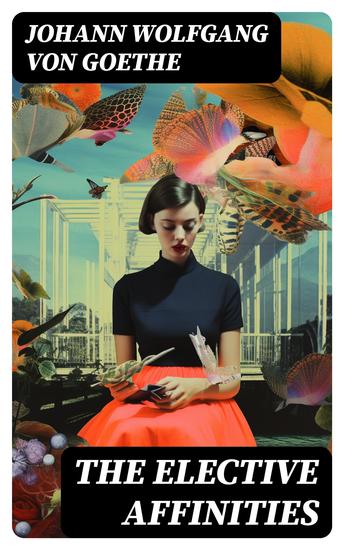
The Elective Affinities - cover

The Elective Affinities

Johann Wolfgang von Goethe

Translator James Anthony Froude, R. Dillon Boylan

Publisher: DigiCat

  • 0
  • 0
  • 0

Summary

In "The Elective Affinities," Johann Wolfgang von Goethe explores the complexities of human relationships through a rich tapestry of metaphor and philosophical inquiry. Set within a narrative framework that intertwines science and emotion, the novel presents a compelling analogy between chemical reactions and romantic entanglements. Goethe's prose, marked by its lyrical quality and intricate character development, delves into themes of love, duty, and the inexorable pull of desire, reflecting the turbulent social milieu of early 19th-century Europe, including burgeoning Romantic ideals and the burgeoning understanding of nature as an intertwining web of connections. Goethe, a preeminent figure of German literature and a key proponent of the Sturm und Drang movement, drew upon his varied experiences in art, science, and philosophy to inform his writing. His immersion in Enlightenment ideas and his personal encounters with love and loss deeply influenced the narrative of "The Elective Affinities," making it not only a story of individual tribulations but also an exploration of societal norms and the natural world. This novel is highly recommended for readers seeking a profound examination of the intricate plays of attraction and social obligation. Goethe's masterful blend of artistry and intellect invites both literary scholars and casual readers alike to ponder the nature of human connections, affirming its timeless relevance and depth.
Available since: 12/28/2023.
Print length: 263 pages.

Other books that might interest you

  • Shoes and Stockings - A Collection of Short Stories - cover

    Shoes and Stockings - A...

    Louisa May Alcott

    • 0
    • 0
    • 0
    A collection of 18 pieces of writing, Shoes and Stockings by Louisa May Alcott comes with stories about war, love and other important topics, making readers laugh at times, bringing them to tears at other times, and always getting them to contemplate.    Louisa May Alcott was one of the most prolific American writers of the 19th century. She wrote novels and poems, and she published her letters written to her family while she was recovering from typhoid after she had started work as a nurse during the Civil War.She also wrote critical articles about hospital management and about the problems she encountered while she was working as a nurse, but what made her name widely known was her short stories.    Many of the female characters in the Shoes and Stockings stories are in fact figures inspired by the author's own life. Alcott's work was largely influenced by her education and her path in life – in her youth, she received education not only from her father, but also from Nathaniel Hawthorne, Ralph Waldo Emerson and other influential figures of the age who were all family friends of the Alcotts.    Louisa May had to start earning her own money at a very young age – she worked as a seamstress, a governess and a teacher, too, experiences that appear in her writing as well. She was also an abolitionist, one of the first feminist writers of her times and a supporter of women's suffrage. She never married and never had children, but she knew and loved children – affection she expressed in her numerous children's stories.    This collection contains stories written for adults, young and old alike, and it includes two of Alcott's most popular pieces, a light-hearted story entitled Kitty's Class Day and Aunt Kipp, another masterfully written story about family and money (or rather, the lack of it).
    Show book
  • A Starry Drive - cover

    A Starry Drive

    Robert Louis Stevenson

    • 0
    • 0
    • 0
    In our rule at Silverado, there was a melancholy interregnum. The queen and the crown prince with one accord fell sick; and, as I was sick to begin with, our lone position on Mount Saint Helena was no longer tenable, and we had to hurry back to Calistoga and a cottage on the green. By that time we had begun to realize the difficulties of our position. We had found what an amount of labour it cost to support life in our red canyon; and it was the dearest desire of our hearts to get a China-boy to go along with us when we returned. We could have given him a whole house to himself, self-contained, as they say in the advertisements; and on the money question we were prepared to go far. Kong Sam Kee, the Calistoga washerman, was entrusted with the affair; and from day to day it languished on, with protestations on our part and mellifluous excuses on the part of Kong Sam Kee.
    Show book
  • Virginibus Puerisque II (Unabridged) - cover

    Virginibus Puerisque II...

    Robert Louis Stevenson

    • 0
    • 0
    • 0
    Robert Louis Balfour Stevenson was a Scottish novelist, poet, and travel writer, and a leading representative of English literature. He was greatly admired by many authors, including Jorge Luis Borges, Ernest Hemingway, Rudyard Kipling and Vladimir Nabokov.
    VIRGINIBUS PUERISQUE II: Hope, they say, deserts us at no period of our existence. From first to last, and in the face of smarting disillusions, we continue to expect good fortune, better health, and better conduct; and that so confidently, that we judge it needless to deserve them.
    Show book
  • The Return of Sherlock Holmes Audiobook - cover

    The Return of Sherlock Holmes...

    Arthur Conan Doyle, Classic...

    • 0
    • 0
    • 0
    The Return of Sherlock Holmes is the sixth book in Arthur Conan Doyle's Sherlock Holmes series and marks the long-awaited return of the world's most famous detective. This collection of thirteen short stories begins with The Adventure of the Empty House, in which Dr. Watson and readers discover that Holmes survived his confrontation with Moriarty at the Reichenbach Falls. Reunited with Watson, Holmes takes on some of his most intriguing cases, including The Adventure of the Norwood Builder, The Adventure of the Dancing Men, and The Adventure of the Six Napoleons. These tales showcase Holmes' unmatched brilliance in solving mysteries that baffle all others. A masterpiece of detective fiction, The Return of Sherlock Holmes reaffirms Holmes' enduring place as one of literature's greatest characters.
    Show book
  • The House of the Dead - Or Prison Life in Siberia - cover

    The House of the Dead - Or...

    Fyodor Dostoyevsky

    • 0
    • 0
    • 0
    The semiautobiographical prison account of convict Aleksandr Petrovich Goryanchikov, from the author of Crime and Punishment.   Originally published in 1862, The House of the Dead is based on Fyodor Dostoyevsky’s own four-year imprisonment in Siberia for his involvement in the Petrashevsky Circle. This masterpiece of Russian literature begins with a nameless narrator coming upon former convict Aleksandr Petrovich Goryanchikov in a remote Siberian town. Previously a nobleman and landowner, Goryanchikov had been given a ten-year sentence of hard labor for the murder of his wife, a crime of passion sparked by jealousy. After Goryanchikov’s death, the narrator finds a handwritten record of his decade of penal servitude. From his first days in the barracks, friendless and broken in spirit, to the removal of his shackles and freedom, Goryanchikov portrays the experiences of a “lost tribe of men,” and the horrors and degradation they experienced.  “Episodic, rambling, full of keen and deliberately stretched-out character sketches, the book is the drama of a person working out how to reproduce prison life in prose: its longueurs, its diversions, its pleasures, traumas, and inurements  . . . If Dostoyevsky’s captors had found the ribald, cacophonous commonplace book he assembled out of overheard insults and tossed-off sayings during his time in prison, they would have recognized that they were dealing with a spirit not easily suppressed.” —The Paris Review  “I know no better book in all modern literature.” —Leo Tolstoy
    Show book
  • Uncle Wiggily’s icicle maker - cover

    Uncle Wiggily’s icicle maker

    Howard R. Garis

    • 0
    • 0
    • 0
    Uncle Wiggily's icicle maker is a fun children's story for wintertime. Uncle Wiggily runs into Jack Frost and he gets an icicle maker from him. Uncle Wiggily helps a lot of his friends with the icicle maker, but then the bad fox wants to catch him... The moral of the story is: The bad guys don't win. Recommended for age 3+.
    Show book